

Meditation has gained recognition as a powerful practice for inner peace. Many people associate meditation with quieting the mind. However, this practice extends far beyond that. At its core, meditation offers profound insights into our true selves. Let us explore this remarkable connection.
The recognition of who we are on the mat
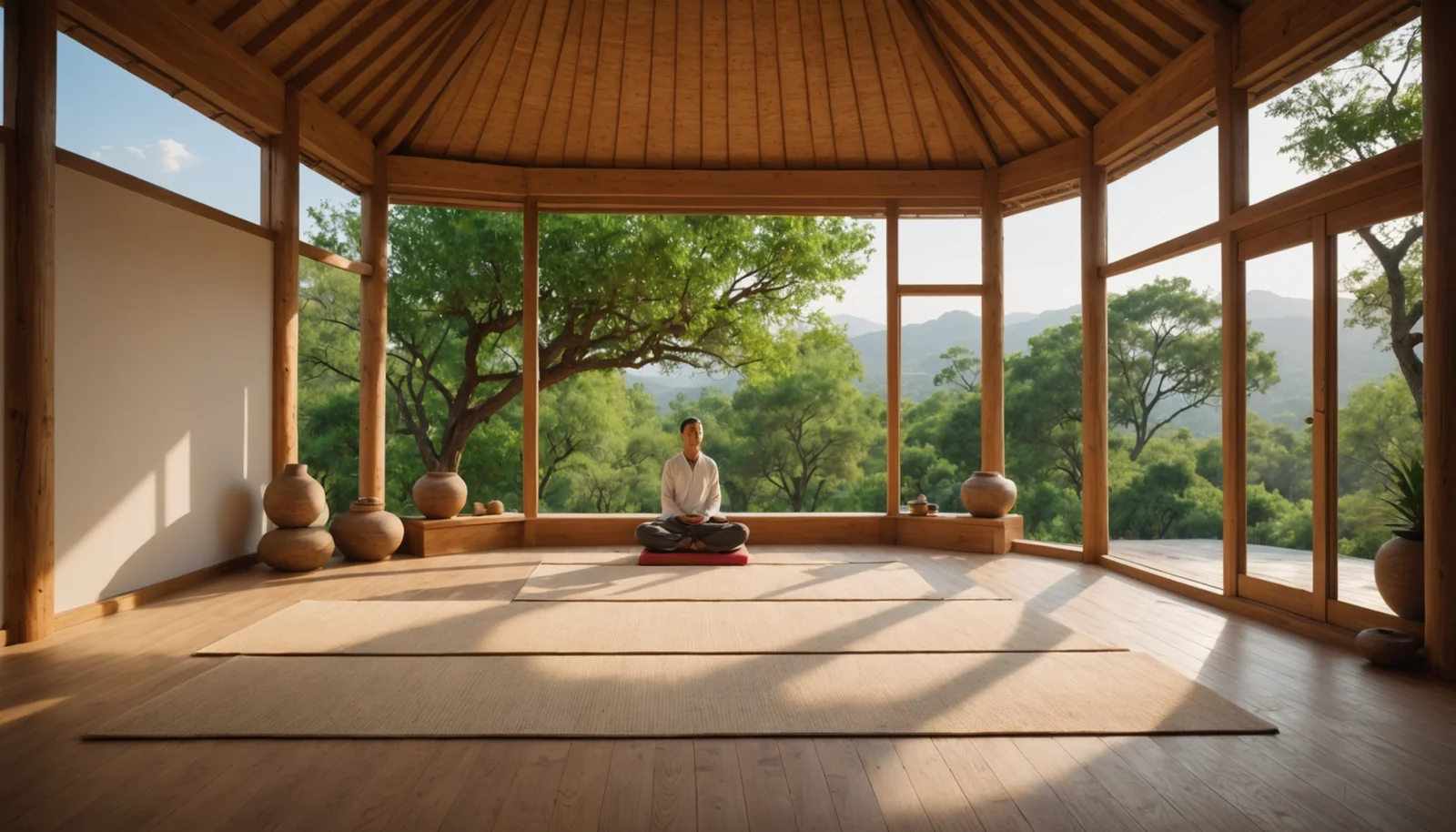
Stepping onto the mat creates a dedicated space for introspection. Our practice allows us to engage with ourselves in a raw and unfiltered way. During meditation, we can go beyond the limits of our thoughts and narratives, allowing us to experience our true essence.
Often, we identify ourselves with a collection of thoughts, feelings and experiences. For example, someone might say, "I am Sarah. I am a mother, I love cooking, and I often feel overwhelmed." In this view, identity is tied to an idea we have of ourselves based on mental constructs and past experiences. This is sometimes referred to as the ego.
Seeing ourselves merely as a collection of thoughts can be limiting and hide a big part of ourselves. Through meditation, freedom can be found by recognising this is not the whole truth, by peeling back these layers and unearthing our deeper essence.
The experience of silence
In meditation, particularly for beginners, there are fleeting moments when the mind starts to quiet and thoughts diminish. As our practice deepens, these moments tend to lengthen and occur more often.
In these quiet moments, we realise that silence and thought cannot coexist. Over time, we learn to recognise a space that exists beyond thoughts: a calm presence that represents who we are. This silence also presents a unique space, allowing us to observe our thoughts without judgement.
Awareness beyond thought
This quiet space is essential for self-discovery. While observing our thoughts, we find a separation between awareness and the ongoing chatter in our minds. This allows us to ponder: if the feeling of "I" does not rely on thoughts or concepts, what is left?
During meditation, we start to notice a part of ourselves that observes. This observing presence remains steady, much like a screen that is always constant as the changing movie of our lives is projected onto it.
What the neuroscience says
The idea of a true essence beyond thought, mental constructs and past experiences is central to many spiritual and philosophical traditions. Jungian psychology refers to "The Self" as the deepest and truest aspect of who we are: not simply the ego or the identity you present to the world, but a deeper, unified whole that integrates all aspects of the psyche.
From a neuroscientific perspective, while there is no definitive proof of a self that exists independently of thought and experience, research suggests that certain brain states correlate with a sense of self that transcends ordinary cognition. Practices like meditation and mindfulness have been shown to temporarily dissolve the boundaries of self, allowing people to experience a state of consciousness where ego and self-referential thinking diminish.
Key studies and insights
- Meditation and self-referential thinking. Zeidan et al. (2010), "The Neurobiological Basis of Mindfulness", demonstrates how mindfulness meditation alters brain activity, particularly in regions linked to self-referential thought such as the default mode network. Regular practice reduces activity in the medial prefrontal cortex, an area associated with ego-centric processing, leading to a greater sense of presence and reduced attachment to the self-concept.
- Non-dual states and ego dissolution. Lutz, Dunne and Davidson (2007), "Meditation and the Neuroscience of Consciousness", explores how advanced meditation practices can induce non-dual states of awareness, where the distinction between self and other dissolves.
- The neuroscience of altered consciousness. Koch (2014), "The Neuroscience of Consciousness", examines altered states of self-awareness and suggests that consciousness is not fixed but a dynamic process, with certain states allowing a temporary dissolution of ego and the emergence of a deeper sense of being.
The realisation of our fundamental identity
With consistent meditation, we begin to realise that this awareness, the feeling of "I", is fundamentally who we are. This understanding reshapes our concept of identity. We start to grasp that a deeper part of us exists, one that goes beyond our physical bodies and our thinking minds. This is an experiential feeling as opposed to something we can describe with words; to do so risks turning it into just another concept to think about.
From recognition to a better quality of life
Self-discovery via meditation brings insights that extend to our daily lives. Much of our identity consists of deeply entrenched beliefs shaped by past experiences, and a great deal of our thinking is repetitive, often leading to unhelpful habits. Meditation helps us differentiate between fleeting beliefs and the stable awareness that represents our true nature. By connecting deeply with this awareness, we gain the ability to challenge limiting beliefs and reshape our responses to life's challenges.
As we gain more control over our responses, we can begin to approach life with more intention. Rather than being driven by habits and automatic reactions, we can engage thoughtfully with each situation, choosing our reactions based on awareness rather than impulse.
Embracing the unknown
Life's unpredictability is a constant. Meditation helps us build a stable relationship with this unknown. We learn that uncertainty can coexist with peace, allowing us to approach life's complexities with openness and confidence. Accepting uncertainty reduces fear, helping us engage more fully with everyday life and see challenges as opportunities for growth rather than burdens to evade.
The practice of deep listening
A significant benefit of connecting with ourselves through meditation is the enhancement of our listening skills. When we commit to being fully present, we can engage meaningfully with others. Deep listening fosters genuine connection, allowing us to share authentically without the distractions of our judgements or preconceptions.
Integrating mindfulness into daily routines
Bringing mindfulness from our meditation practice into our daily routines enhances our presence in all activities. Whether washing dishes, taking a stroll or having a conversation, mindfulness urges us to focus our full attention on that moment. This practice reduces distractions and anxiety, creating a deeper sense of calm and clarity in everyday life.
The journey of self-discovery
Meditation, both on and off the mat, offers a valuable path to understanding our true selves. By nurturing our ability to detach from the whirlwind of thoughts and past experiences, we come closer to recognising our essential identity. Through regular practice, reflection and embracing silence, we strengthen our connection with ourselves, enhancing our ability to respond to life's challenges with poise and wisdom.
To explore a more personalised approach to yoga and meditation, book a free consultation and discover how private one-to-one sessions can support your goals.