
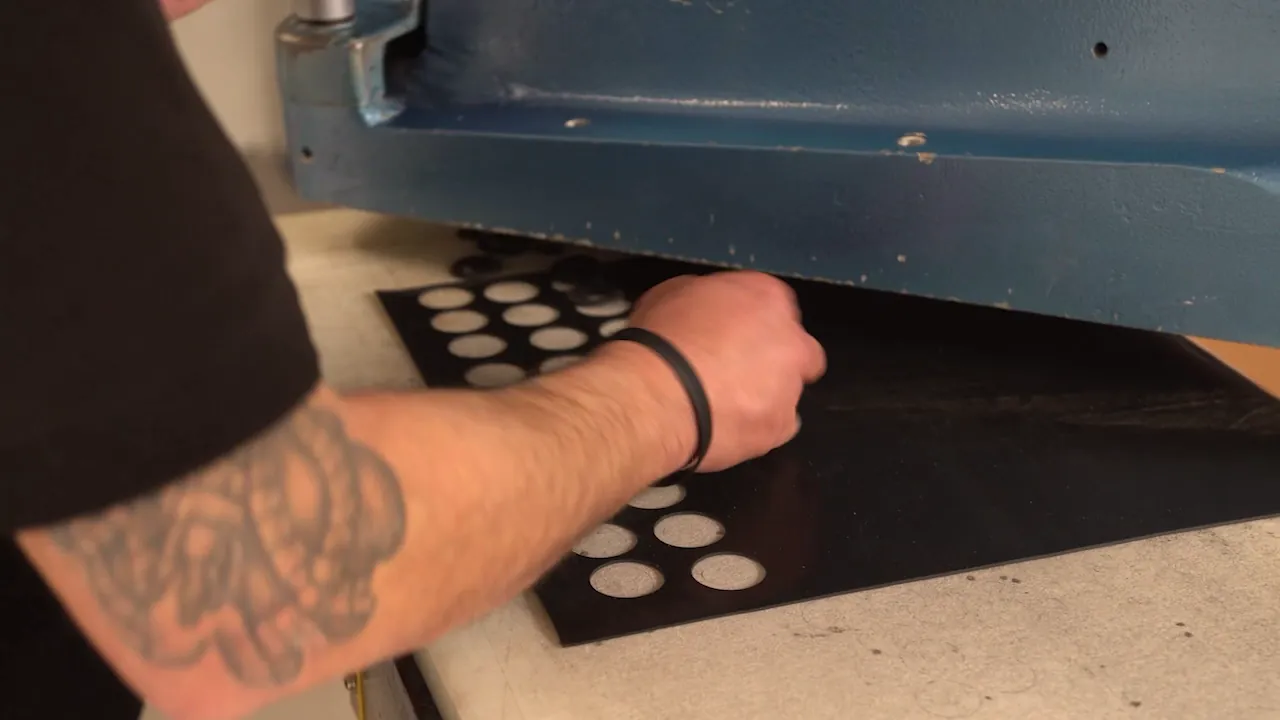
Gaskets cut to your drawing
Send us a DXF, IGES, STP or DWG file, or post us a sample. We cut the gasket in rubber, cork, paper, graphite, PTFE or whatever your job needs, and hold it to ±0.3 mm as standard.
- 24 h quotes
- ±0.3 mm as standard
- No minimum order
What your gasket has to do
A gasket fills the gap between two faces so nothing gets past. Pick a job to see where it happens in a flanged joint, then tell us which ones matter for yours.
Choose the material for the job
Temperature, pressure, the fluid and your budget decide it. Not sure which one you need? Tell us those four things and we will recommend a material.
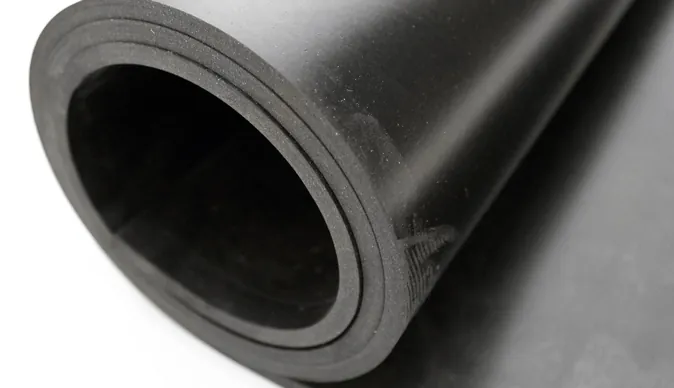
Rubber
Nitrile, neoprene, EPDM, silicone, FKM and natural rubber
Rubber seals well, stays flexible and resists fluids, so it suits a wide range of jobs.
- General sealing
- Fluids
- Flexible joints
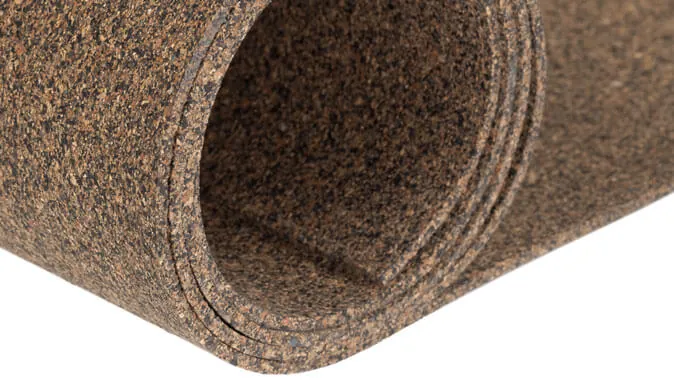
Cork
Cork granules bonded with a binder
Cork compresses easily into uneven faces and springs back. It resists oils, fuels and some chemicals, and suits low pressure joints from -20°C to 120°C.
- Low pressure
- Oils and fuels
- Uneven faces
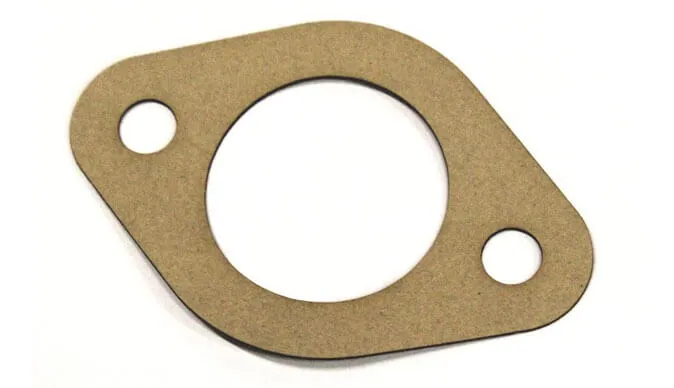
Paper
Cellulose, vegetable fibre and synthetic fibre papers
Paper is one of the cheapest ways to seal a joint. It seals at low bolt loads and suits low pressure jobs with fluids that are not corrosive.
- Low cost
- Low bolt load
- Oil and water
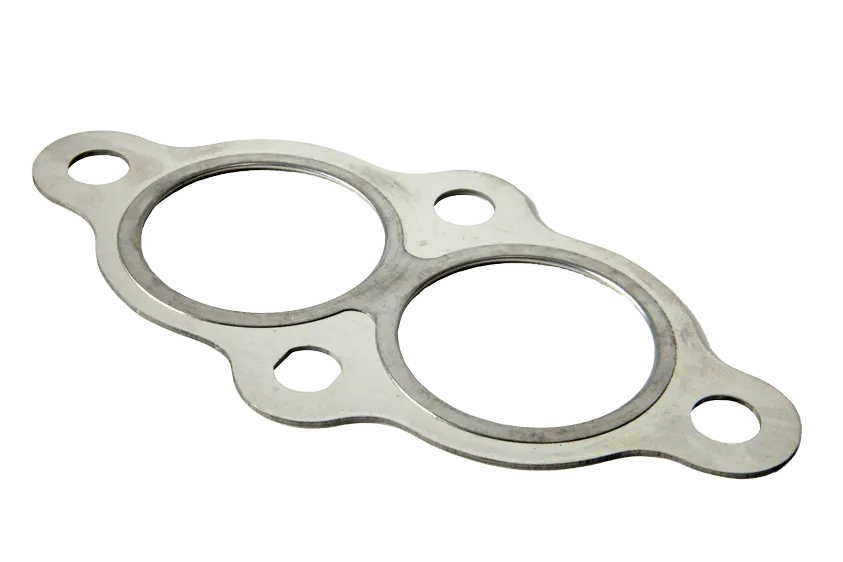
Metal
Stainless steel, copper and aluminium
Metal gaskets are for high temperature, high pressure joints. They are strong and durable and stand up to extreme conditions.
- High temperature
- High pressure
- Durability
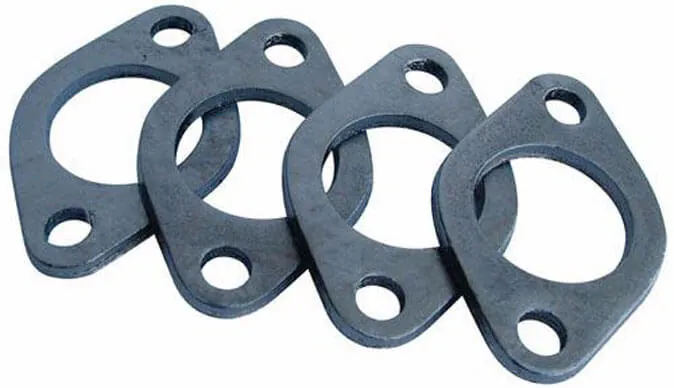
Graphite
High purity graphite, including Klinger grades
Graphite handles high temperatures, corrosive media or both. It copes with thermal cycling and high pressures and keeps its seal over time.
- Steam and heat
- Corrosive media
- Low emissions
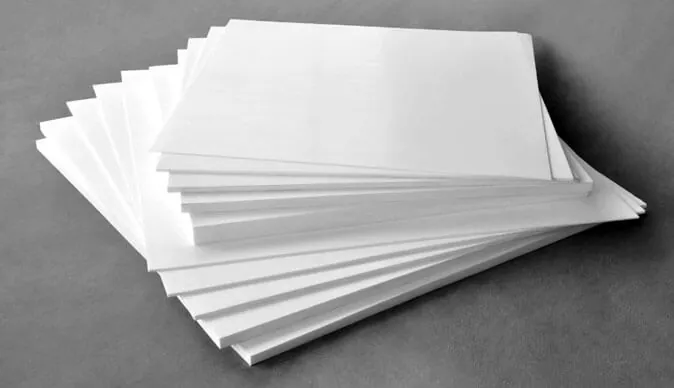
PTFE
Polytetrafluoroethylene, often sold as Teflon
PTFE is chemically inert, so it resists aggressive chemicals. It also takes high temperatures, has low friction and insulates electrically.
- Aggressive chemicals
- Low friction
- Electrical insulation
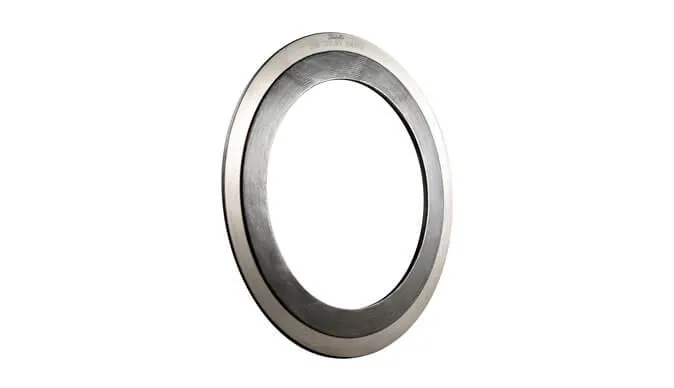
Composites
Aramid or glass fibre set in rubber or another binder
Composites combine materials to get the properties you need. Fibre reinforcement adds strength and durability.
- Strength
- Durability
- Reinforcement
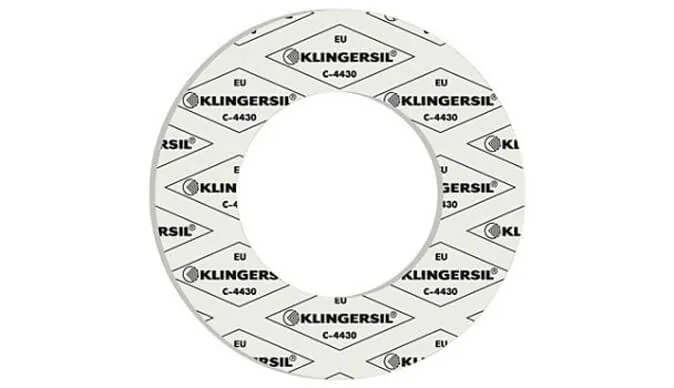
Non-asbestos fibre
Synthetic fibres, fillers and binders
Non-asbestos fibre seals the way the old asbestos sheets did, without the health risk. It takes heat and chemicals and keeps the cost down.
- Heat
- Chemicals
- Safer for workers
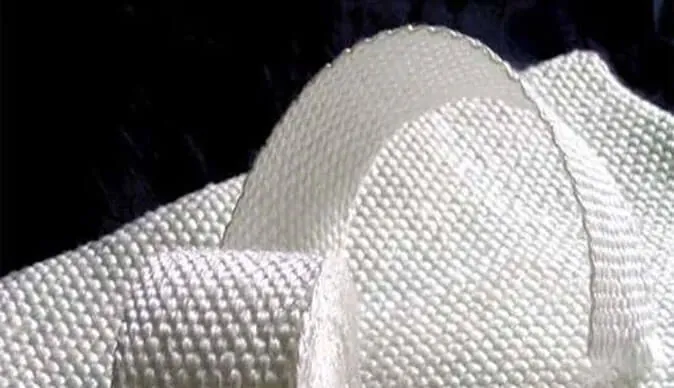
Ceramic
Ceramic fibre materials
Ceramic gaskets are for very high temperatures, where metals and other materials would not survive. They resist heat and chemicals and still seal.
- Extreme heat
- Chemicals
- Thermal resistance
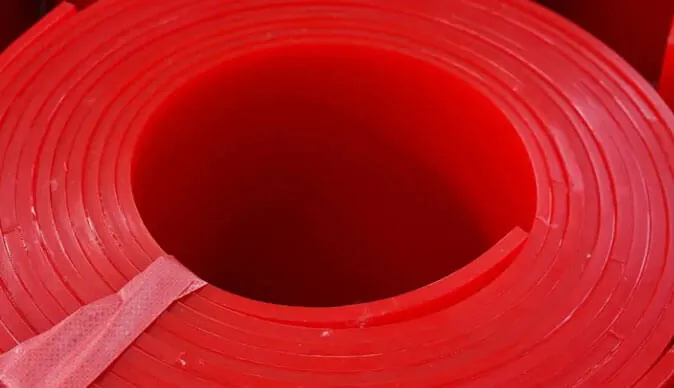
Other elastomers
Polyurethane, TPE and EPR
Polyurethane, thermoplastic elastomers and ethylene propylene rubber are flexible and elastic, and they resist fluids and weathering.
- Flexibility
- Fluids
- Weathering
Gasket types we make
Alongside plain cut gaskets in rubber and sponge, we make these types. Ask us which one suits your joint.
-
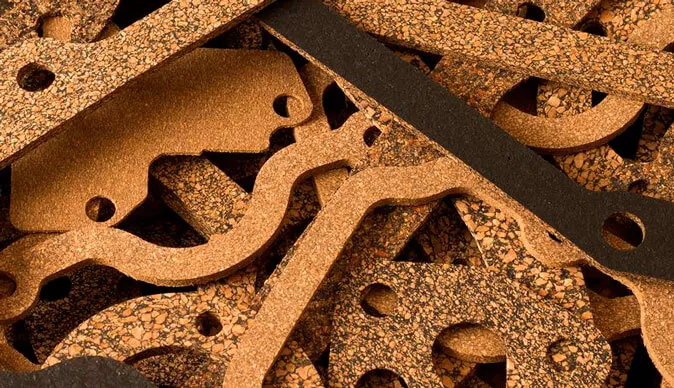 Cork gaskets
Compressed cork that squeezes into uneven faces. For oils, fuels and water from -20°C to 120°C.
-
Graphite gaskets
For heat, steam and corrosive media. We cut Klinger grades and other makes of graphite.
-
Paper gaskets
Low cost and seals at low bolt loads. Flexoid papers for oil, fuel and higher temperatures.
-
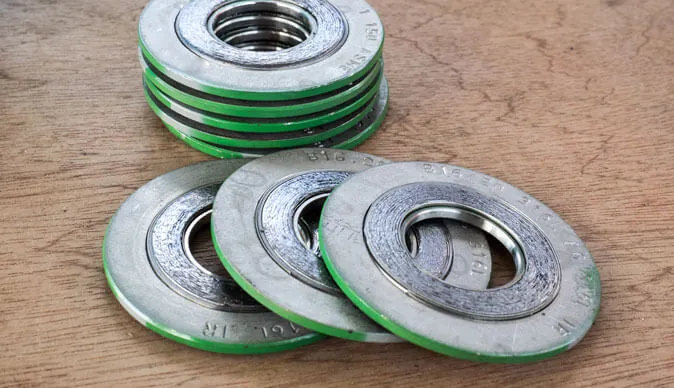 Spiral wound gaskets
A metal winding with a filler material, for flanged joints under high pressure and temperature.
-
Kammprofile gaskets
A serrated metal core faced with graphite or PTFE, for pipe flanges and heat exchangers.
-
Non-asbestos fibre
Synthetic fibres, fillers and binders that take heat and chemicals, without the asbestos.
-
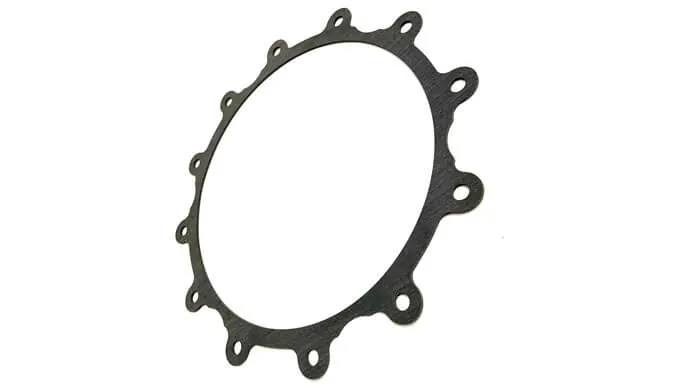 Silicone sponge gaskets
Soft and springy, keeps its shape after repeated squeezing and keeps out dust, water and air.
- Something else? Send us a drawing or a sample and we will tell you which material and cutting method suit it.
From the sheet to your flange
-
We cut it from the sheet
Your drawing goes to the cutting table and the knife follows its line: the outside, every bolt hole and the bore.
-
We check it against your drawing
Cut parts are held to ±0.3 mm as standard. Need it tighter? Ask, and we will tell you what the material and thickness allow.
-
You bolt it up and the leak stops
The gasket fills the gap between the flange faces, so whatever runs through the pipe stays in it.
How we make your gaskets
We choose the cutting method to suit the material, its thickness and how many you need, and we can work from your drawing file or a sample.
-
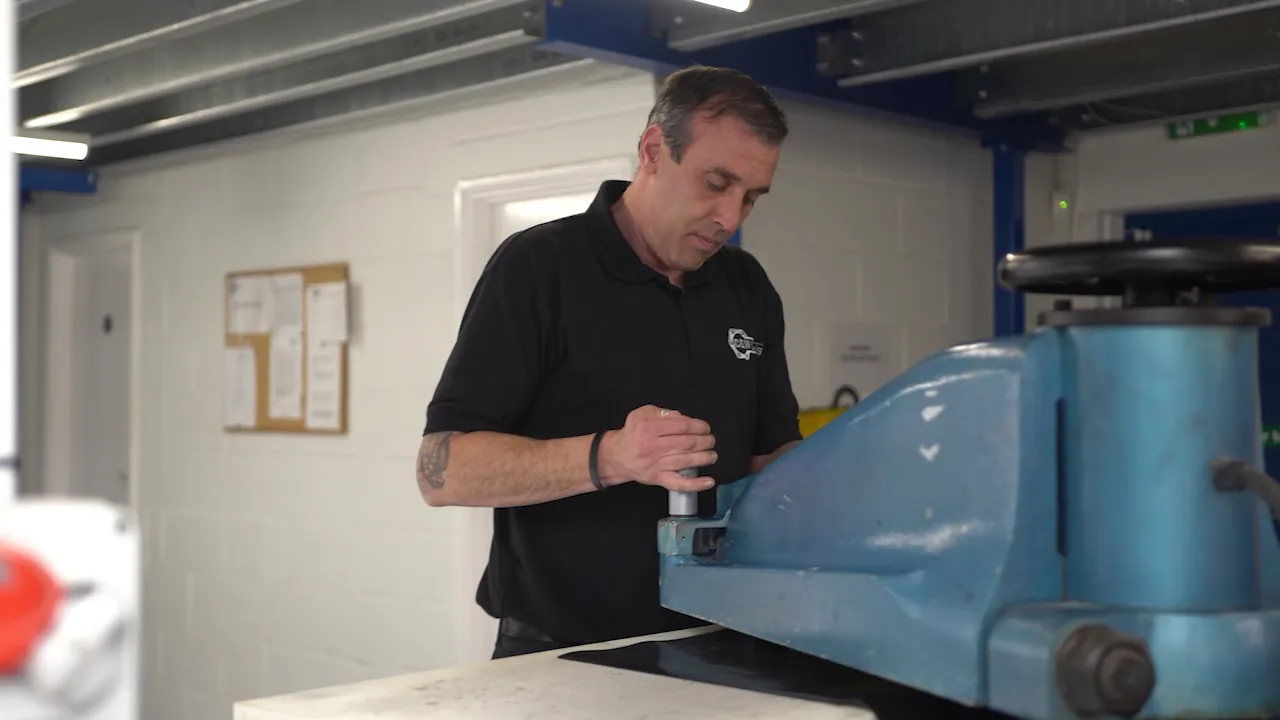 Die cutting
Steel rule dies on our presses for fast, repeatable runs of flat parts.
-
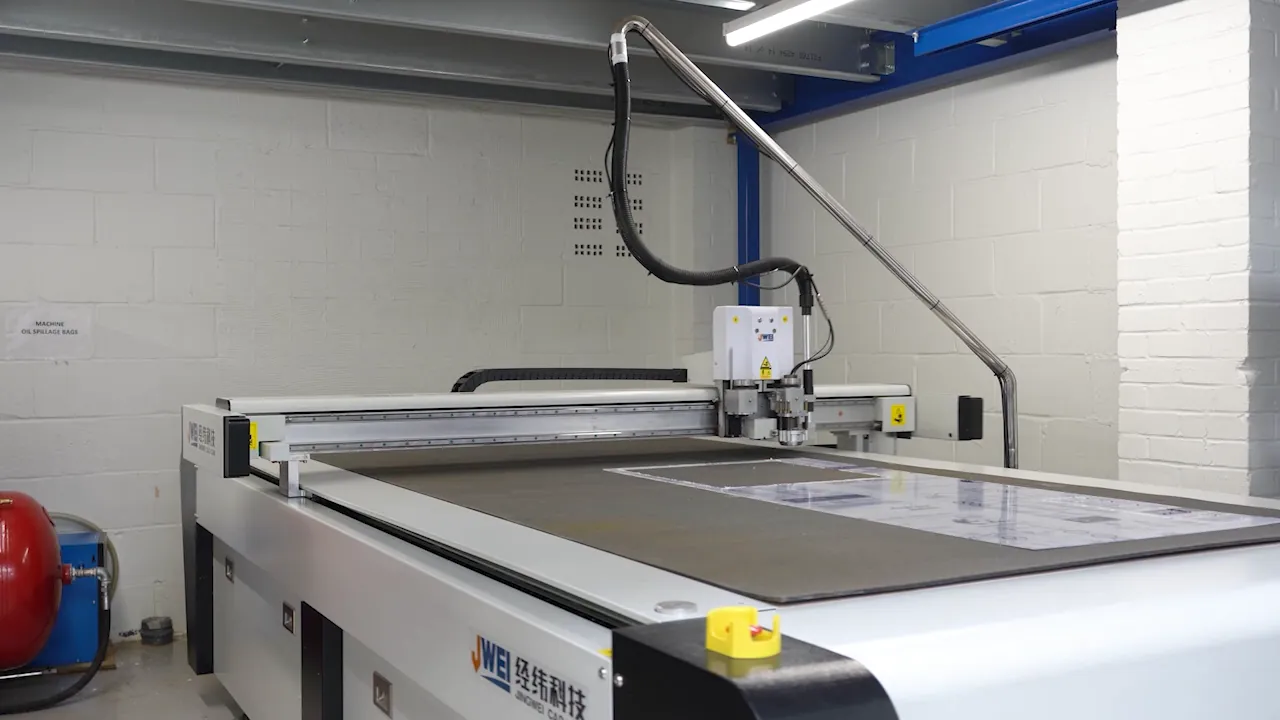 Profile cutting
Knife cutting on the CNC table, programmed straight from your drawing file.
-
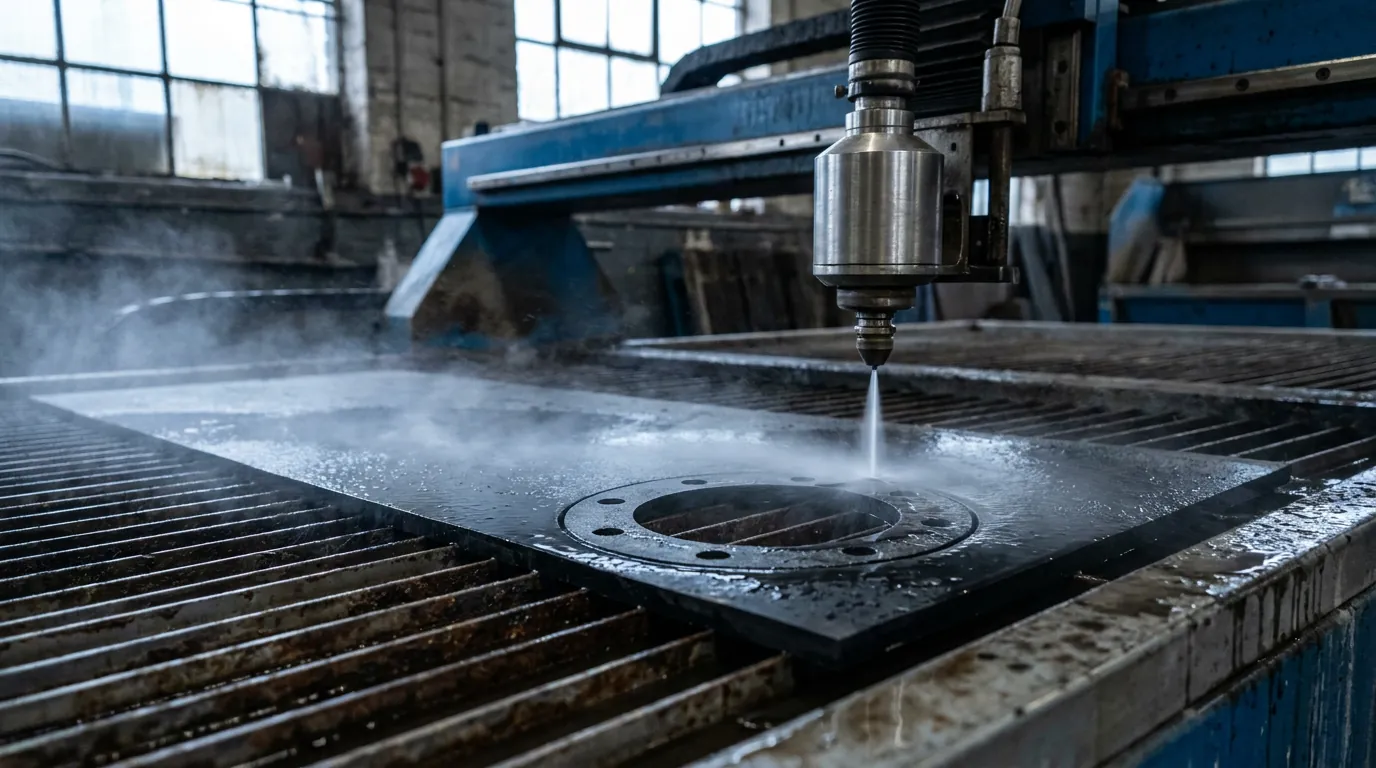 Water jet cutting
Thick or dense materials cut cold, with no heat on the edge.
-
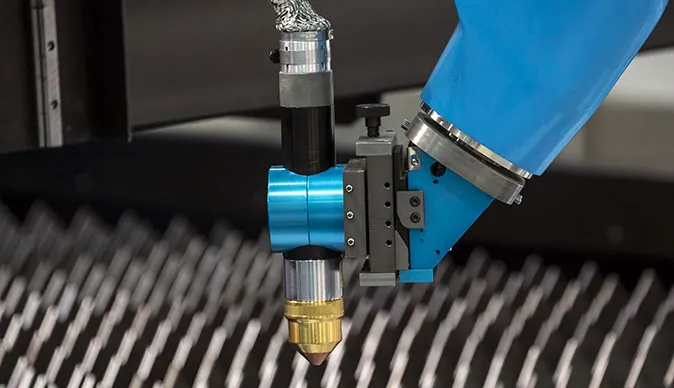 CO2 laser cutting
Clean, fine detail in plastics, films and thin sheet materials.
- Tolerance
- ±0.3 mmas standard on cut parts. Tighter on request, depending on the material and thickness.
- Drawings
- DXF IGES STP DWGNo drawing? Send a sample and we will reverse engineer it. Intricate parts may carry a small drawing charge.
- Sealing design
- IP65 to IP69Design help for your enclosure, plus basic IP testing before you book a test house.
- Order size
- No minimumNo minimum order quantity or value, and there has not been one since we started in 2004.
- Samples
- 1 to 3 daysUsually free on our stocked lines. Special materials may carry a small charge.
Industries that rely on gaskets
Any joint that holds a liquid or a gas needs a gasket. These are ten of the industries that use them, and where the gaskets go.
Ask us about a gasket
Tell us what it seals, the size and how many you need. We will reply within 24 hours.
Send us your gasket drawing and get a price within 24 hours
Attach a DXF, IGES, STP or DWG file, or post us a sample and we will measure it. Tell us the material, the quantity and when you need the parts, and we will come back with a quote.
- No minimum order
- Free samples on stocked lines
- 30 day credit accounts, subject to approval