



EASE Approach logo

You are looking at a preview with example content.

Back to the log in page

Welcome back, Sam

Your technique videos, course materials and quick guides from behaviour support training, ready whenever you want a reminder.

  • technique videos
  • files
  • quick guides
7months Certificate validRefresher due in 7 months
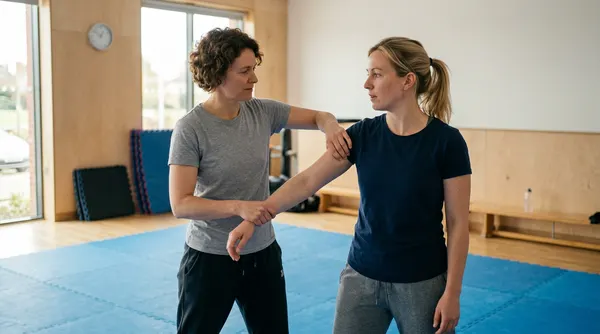
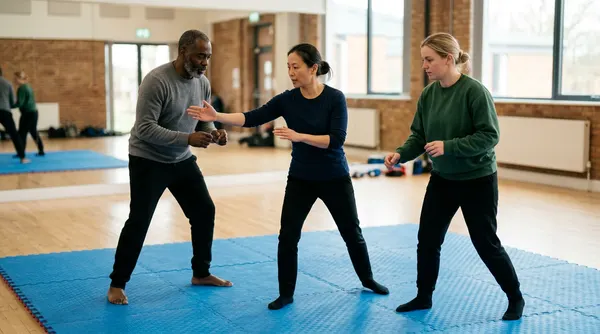
Two course members practising a guiding hold on blue mats, paused part way through

Continue watchingGuiding hold1:30 left

Technique videos

Watch any technique from your course again, step by step. These are example videos with example lengths.

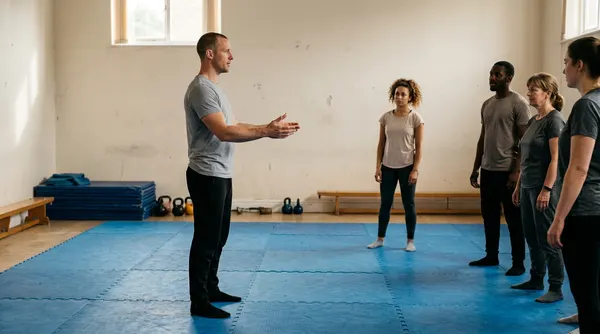
  • Trainer on blue mats showing a group how to stand side on with open hands 3:40

    Where to stand, what to do with your hands and how much space to give.

    De-escalation
  • Trainer talking calmly with a frustrated man while course members watch from chairs 5:05

    Your voice, your words and the pauses that help someone settle.

    De-escalation
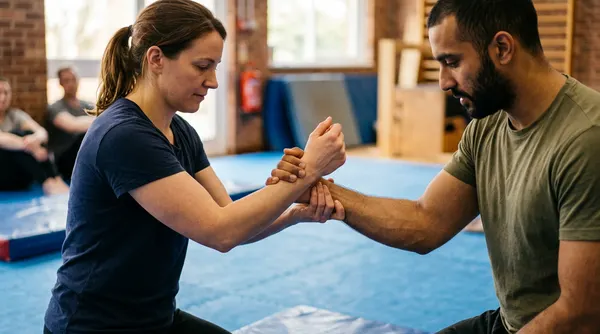
  • Course member practising a wrist release with a partner on training mats 2:55

    Freeing yourself safely if someone grabs your wrist, as you practised on the course.

    Disengagement
  • Two course members practising a guiding hold, one with a hand on the other's arm 4:12

    Guiding someone away from harm with the least force you can.

    Guiding and holding
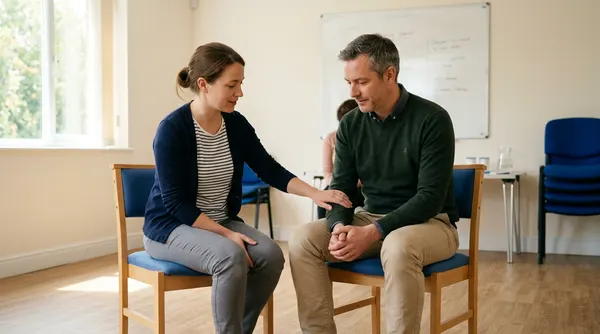
  • Woman sitting beside a man on chairs, practising a calm seated support position 3:25

    Staying alongside someone who is sitting down, keeping you both safe.

    Guiding and holding
  • Three course members on mats practising how a team steps in together 6:10

    Who leads, who supports, and how to swap over when you need to.

    Team approach

Quick guides

Short reminders from the course. Each one takes a couple of minutes to read.

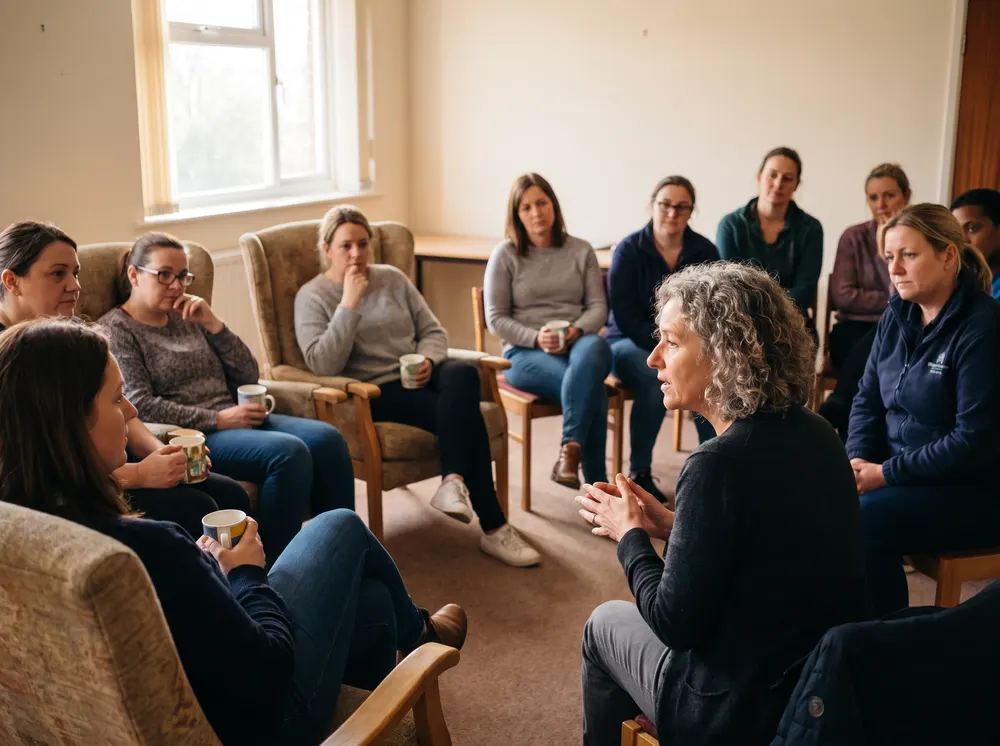
Staff in armchairs with mugs of tea talking through an incident together after a shift

What to do once things have calmed down.

  • Check everyone is safe and get first aid where it is needed.
  • Give the person time to recover before you talk about what happened.
  • Debrief as a team: what happened, what helped, what you would do differently.
  • Write it up clearly and soon, and update the support plan.
  • Look after each other. Staff are often shaken too.

Catch it while it is small.

  • Know what calm looks like for each person you support.
  • Watch for changes in voice, pace, colour, posture or how much they talk.
  • Notice the setting too: noise, crowding, waiting or a change to the routine.
  • Act on small changes early. It is easier to help now than in ten minutes.

Say less, and say it slowly.

  • Use their name and keep your voice low and slow.
  • Name the feeling: "I can see this is really frustrating."
  • Offer two real choices: "Do you want to sit here, or go for a walk?"
  • Leave out "calm down", arguing the point and threats of what will happen.

Room to breathe, for both of you.

  • Stand at an angle, out of arm's reach, with your hands open and in view.
  • Keep a way out clear, for them and for you.
  • Where you can, move other people away rather than moving the person.
  • Silence is fine. Give them time before you ask anything else.

Your calm is catching.

  • Notice your own breathing and slow it down first.
  • If it feels personal or you are getting wound up, ask a colleague to take over.
  • Agree a simple signal with your team for "I need help" and "swap with me".

Time to book your refresher?

Your refresher is due in 7 months. A refresher course lets you practise the techniques again and catch up on anything new. Ask your manager, or get in touch and we will help your team book one.

Example certificate

Certificate of completion

Sam

has completed

Behaviour support training

StatusValid Refresher dueMay 2027
0:00 / 0:00

Open stance

Example video. Your real technique videos play here.