

Original articles & blog content. Written, illustrated and published, on auto-pilot.
We learn your business, write articles in your voice with their own custom images, and publish them to your WordPress site every week. We set everything up and run it for you, so your blog stays active and Google keeps noticing without you writing a word. Choose how many articles you want each week and leave the rest to us.
Choose how many articles you want
Slide to the number of articles a week, see your price, and order. We study your site, plan the topics your customers search for, then write and publish every article for you.
That is 9 articles a month, about £5.00 each.
Each month your first 10 articles are £5.00 each, the next 10 are £4.25, and so on, so every extra article costs less.
Secure checkout by Stripe
Totally hands free, from setup to publishing
Choose your articles, send us your WordPress login, and we look after everything from there.
What you do
- 1 Choose your articles Pick how many you want each week and see the price as you slide.
- 2 Order securely Pay through Stripe. It is billed monthly, with VAT included.
- 3 Send us your login We email you a link to a short, secure form for your website address and WordPress login.
What we do, every week

Study your business
We read your website and look at the competitors already ranking for what you sell.

Plan your topics
We find the questions your customers type into Google and plan articles that answer them.

Write every article
Original articles in your voice, with proper headings and the search basics done for you.

Make every image
Each article gets its own hero image, in a style we choose to suit your brand.

Publish to your site
Articles go live on your WordPress site on the schedule we agree with you.

Keep it topped up
We keep about two weeks of articles scheduled ahead, so your blog stays active.
6 Reasons You Need Fresh Content, Now More Than Ever!
Google has changed. AI search has changed everything else. A dead blog doesn't just stagnate any more, it actively costs you visibility. Here's why posting regularly on your website is no longer optional!
Google rewards sites that publish
Search engines have always favoured sites that show signs of life. Sites publishing original content monthly consistently out-rank otherwise-identical sites that don't. Stop publishing and you slide down the rankings, even if your old posts were great.
AI search can't quote a blank page
ChatGPT, Perplexity, Google's AI Overviews, all of them cite recent, well-structured articles. Every week without new content is another week you're invisible to the fastest-growing slice of search traffic.
Topical authority compounds
Google trusts sites that consistently cover a niche. Ten posts on related topics over six months outperform ten posts dumped on one Tuesday. Steady, themed publishing is how you build real authority.
Long-tail traffic adds up fast
Every article ranks for keywords you'd never think to target, the specific questions your customers type into Google. One post can pull in dozens of search terms over time, completely free.
A dead blog kills trust instantly
Visitors see "last post: 2022" and assume you're out of business. Up-to-date content signals an active, growing operation. It's a five-second trust check before they even read what you wrote.
Posts are assets, not expenses
Ads stop the second you stop paying. Articles keep earning traffic for years. A consistent weekly rhythm builds a compounding library that pays you back long after the post was published.

Search engines have always favoured sites that show signs of life. Sites publishing original content monthly consistently out-rank otherwise-identical sites that don't. Stop publishing and you slide down the rankings, even if your old posts were great.

ChatGPT, Perplexity, Google's AI Overviews, all of them cite recent, well-structured articles. Every week without new content is another week you're invisible to the fastest-growing slice of search traffic.
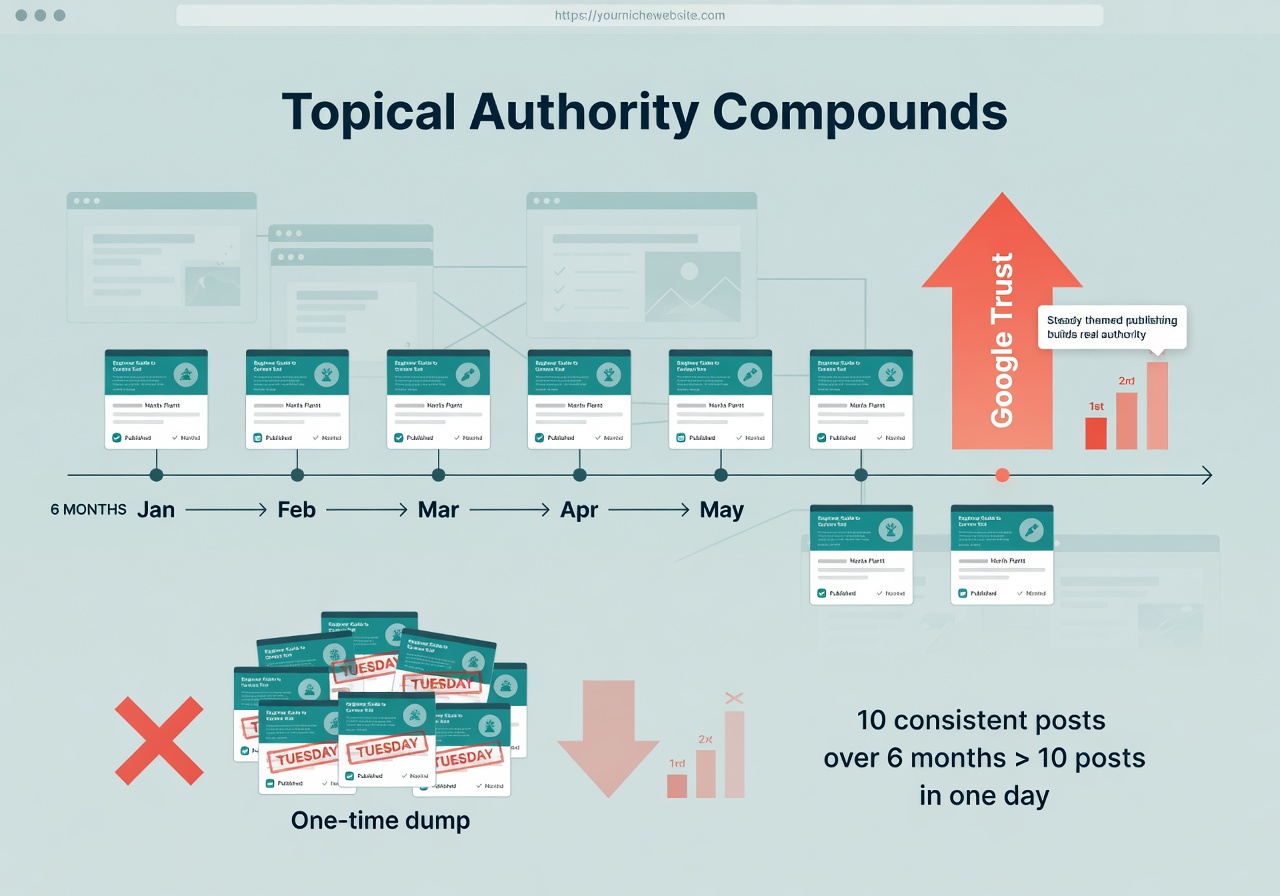
Google trusts sites that consistently cover a niche. Ten posts on related topics over six months outperform ten posts dumped on one Tuesday. Steady, themed publishing is how you build real authority.
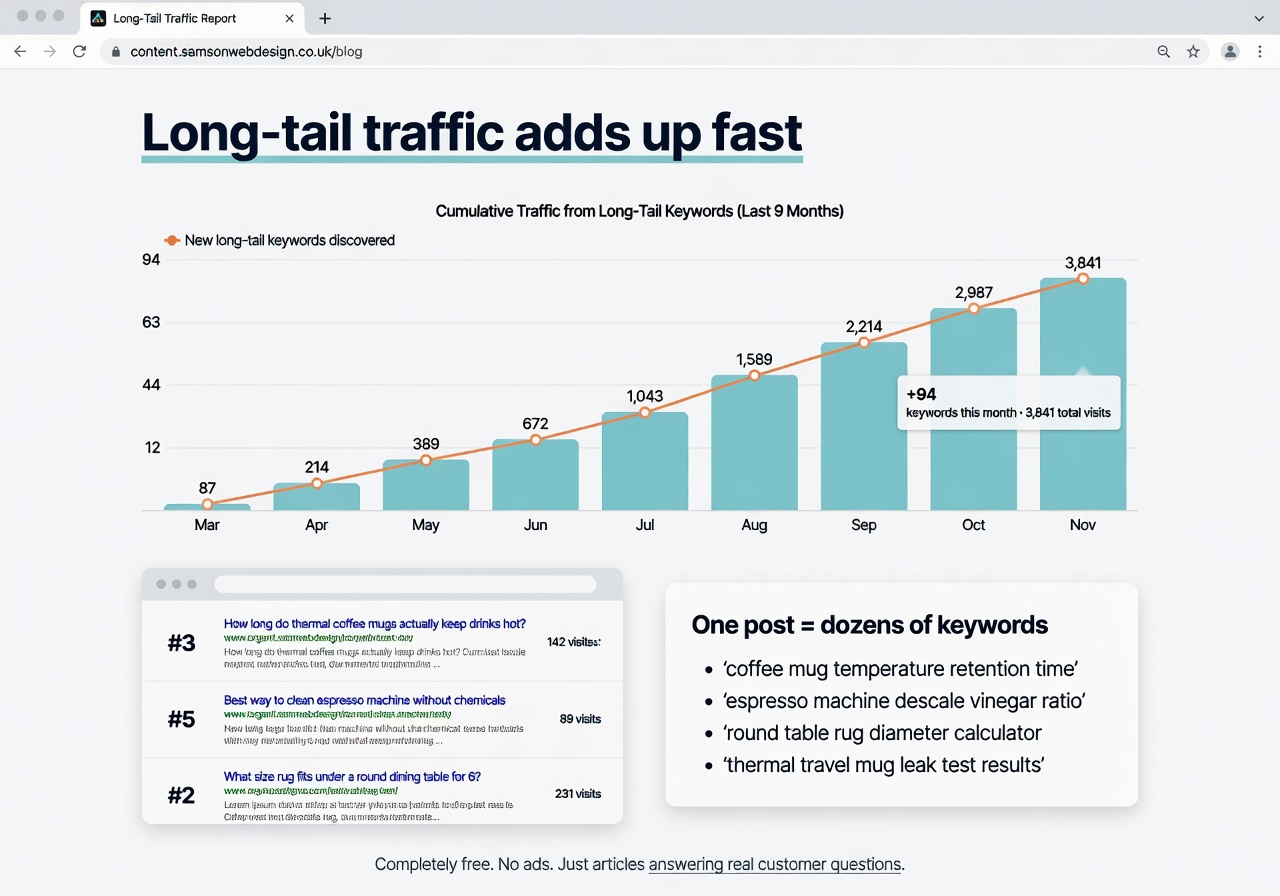
Every article ranks for keywords you'd never think to target, the specific questions your customers type into Google. One post can pull in dozens of search terms over time, completely free.

Visitors see "last post: 2022" and assume you're out of business. Up-to-date content signals an active, growing operation. It's a five-second trust check before they even read what you wrote.
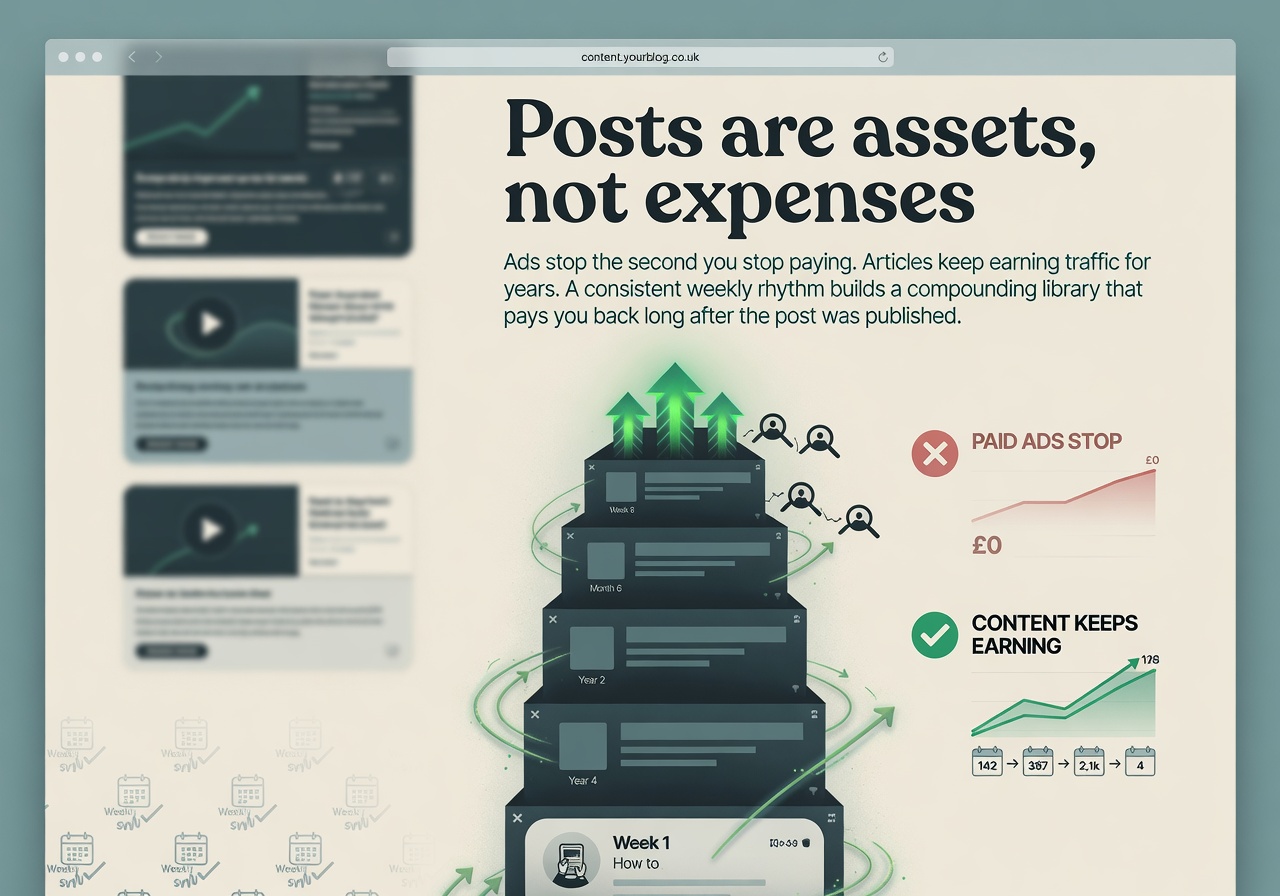
Ads stop the second you stop paying. Articles keep earning traffic for years. A consistent weekly rhythm builds a compounding library that pays you back long after the post was published.
Keep your blog alive without writing a word
Pick how many articles a week you want. We write, illustrate and publish every one, from £25 a month.
Real articles we have written and published
A live sample of articles the Content Engine has written for customer sites. Open any of them and judge the quality for yourself before you order.
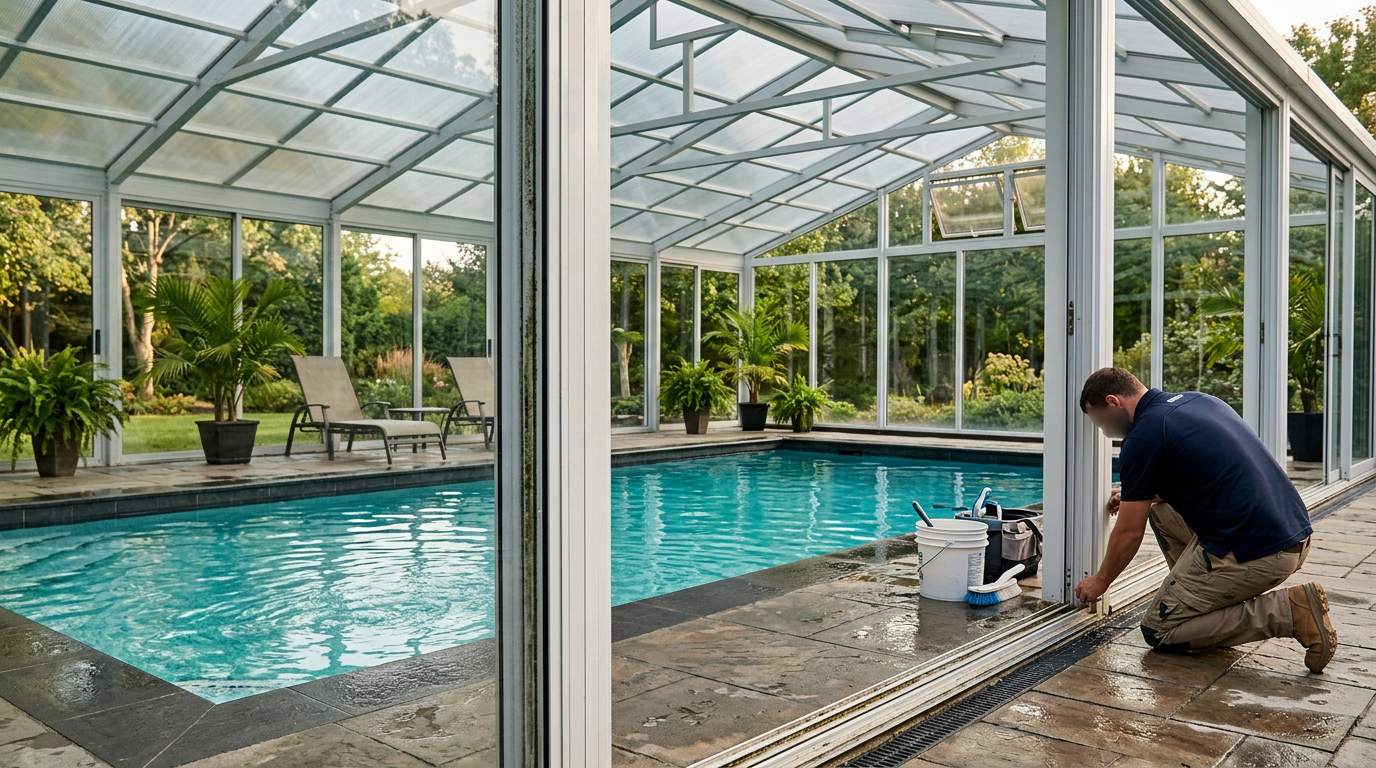
5 Pool Enclosure Mistakes We'd Never Make: Expert Advice from Installation to Maintenance
After years of designing and installing aluminium pool enclosures across the UK, you start to notice patterns. Not in the structures themselves, which when properly specified and maintained perform beautifully for decades, but in the decisions owners make along the way. Some are understandable shortcuts. Others are well-meaning choices that quietly cause problems over years.
Here are the five mistakes we would never make with a pool enclosure, and the reasoning behind each one.
1. Skimping on Ventilation from the Start
A pool enclosure traps heat, which is exactly the point. But without proper ventilation, that same enclosed air becomes saturated with moisture. Warm, humid air sits against glazing panels, frames, and any surrounding structure, and over time that leads to condensation, mould, and corrosion.
The fix is not complicated, but it has to be designed in from day one. Passive vents positioned at ridge level and low on the sides create the stack effect that moves air through continuously. Motorised louvres give you control in different seasons. What you should never do is seal every gap and assume the enclosure will simply self-regulate. It will not.
Poor ventilation is the single most common root cause of enclosure problems we are called in to assess. It also tends to be the one most owners did not think much about at the planning stage.
2. Ignoring the Condition of Your Pool Surround Before Installation
An enclosure does not fix underlying problems with a pool surround. If there is standing water, cracked paving, or drainage issues around the pool before the structure goes up, those problems become harder to address once the frame is in place.
This mirrors a principle well established in building work generally: you do not seal over damp, you resolve it first. We always recommend a thorough survey of the surround before any groundwork begins. Specific things worth checking include:
- Surface drainage gradients around the pool edge
- Existing cracks or movement in paving or copings
- Any signs of water ingress near plant rooms or filtration equipment
- The condition of any existing retaining walls or steps
Addressing these before installation is far cheaper than trying to fix them through a completed enclosure.
3. Choosing a Frame Spec Based on Looks Alone
Aluminium enclosure frames come in different profile depths, wall thicknesses, and structural grades. The aesthetic difference between a lighter domestic profile and a heavier commercial-grade section is often minimal. The structural difference is significant.
We would never specify a frame purely on visual appeal without running the numbers for wind loading, snow loading, and span distances. UK weather is not predictable, and pool enclosures sit in exposed positions, often beside open gardens. A frame that looks elegant but is underspecified for its site will flex, creak, and eventually fail at fixings or joints.
Ask your manufacturer to show you the engineering calculations. A reputable supplier will have them. If the conversation starts and ends with colour swatches, that is worth noting.
4. Blocking Access for Routine Maintenance
Pool enclosures need periodic cleaning, glazing checks, and seal inspections. This sounds obvious, but we have seen installations where roof panels are effectively inaccessible without specialist equipment, or where the frame layout makes it impossible to clean the inner glazing surfaces without removing sections.
Designing for maintenance access is not glamorous, but it matters. When assessing a proposed layout, we always think about:
- How roof sections will be reached for annual cleaning
- Whether sliding sections travel far enough to allow full access to pool edges
- Where drainage channels sit and whether they can be cleared without dismantling anything
- Access to any embedded fixings or base connections
A structure you cannot maintain properly will deteriorate faster than one you can. Build maintenance into the brief, not as an afterthought.
5. Treating the Enclosure as a Set-and-Forget Investment
High-quality aluminium enclosures are durable, but they are not maintenance-free. The mistake we see most often in older installations is simple neglect: frames left uncleaned for years, glazing seals that have dried and cracked without being replaced, and sliding track systems that have been forced when stiff rather than lubricated and adjusted.
A straightforward annual routine keeps an enclosure performing well for decades. It does not need to be involved. The core tasks are:
- Wash down aluminium frames and glazing with clean water and a mild detergent, avoiding abrasive cleaners
- Inspect all rubber gaskets and seals for hardening, cracking, or displacement
- Lubricate sliding tracks and rollers with a silicone-based lubricant (avoid oil-based products near pool water)
- Check all base fixings and anchor points for movement or corrosion
- Clear any debris from drainage channels before winter
Catching a failing seal early costs very little. Waiting until water has been tracking through a joint for a season costs considerably more.
The Bigger Picture
Most of these mistakes share a common thread: they happen when the enclosure is treated as purely a cosmetic addition rather than a functioning piece of engineering. A well-specified, properly ventilated, and routinely maintained enclosure will extend your swimming season to twelve months, protect your pool investment, and add genuine value to your property.
The decisions that determine whether your enclosure delivers on that promise are mostly made before the first panel goes up. Get the spec right, resolve any site issues in advance, and build a simple maintenance habit from year one. That is genuinely all it takes.
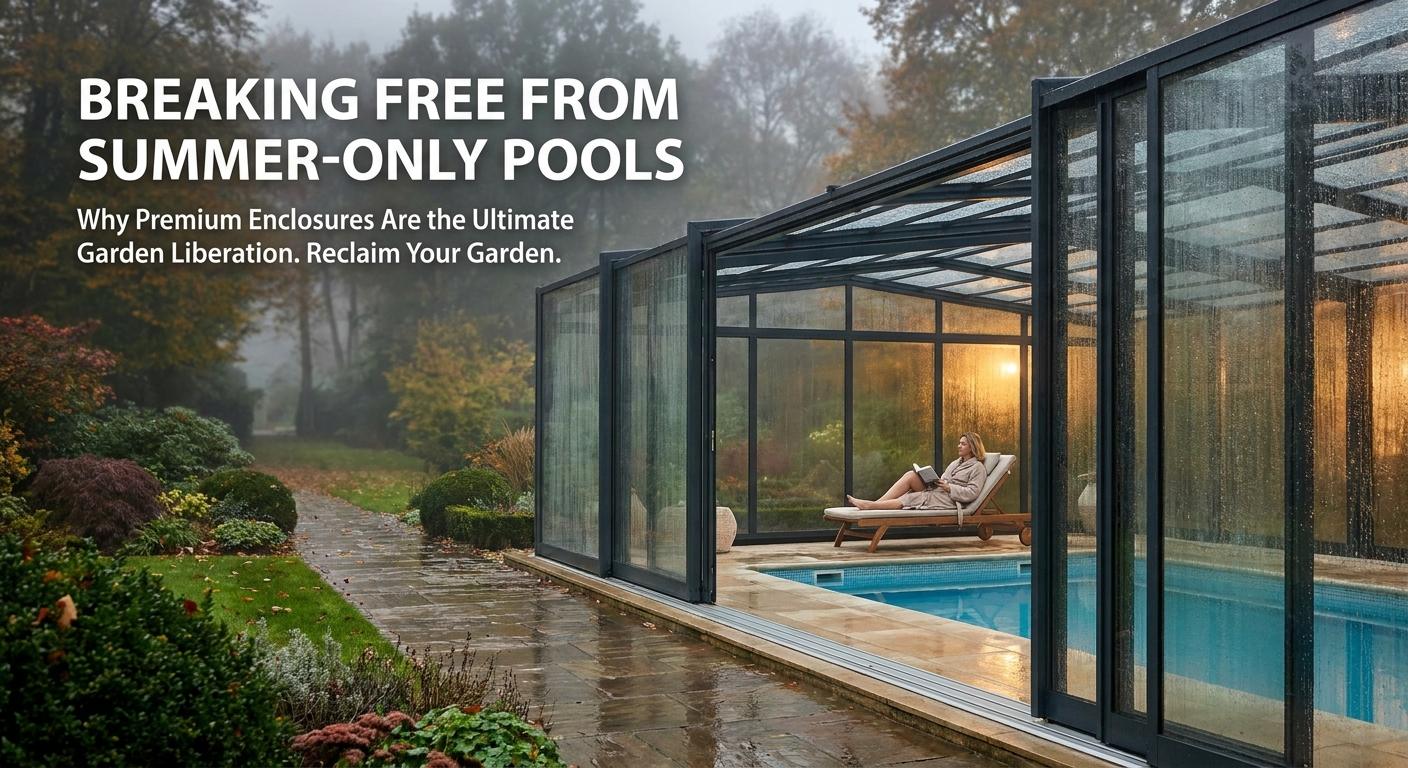
Breaking Free from Summer-Only Pools: Why Premium Enclosures Are the Ultimate Garden Liberation
Most outdoor pools in the UK sit under a cover for roughly eight months of the year. That is not a slight exaggeration or a worst-case figure. It is the typical reality for pool owners from the north of England to the south coast, and it matters far more than most people account for when they are making the original investment.
The 16-week window from late May to mid-September is generous by UK standards. In a cool or wet summer, which is not an unusual event, that window narrows further. What fills the remaining months is not enjoyment. It is cost, dead space, and a nagging awareness that one of the most expensive things in your garden is doing nothing.
The Eight-Month Silence That Is Costing You More Than You Think
An idle pool is not a free pool. The pump runs year-round to prevent stagnation, algae, and structural damage from freeze-thaw cycles. Chemicals still need to be balanced even when nobody is swimming, because an untreated pool in October will greet you in May with green water and a blocked filter. When you add up the electricity, chemicals, and routine maintenance visits across the inactive months, you are typically looking at several hundred pounds per month for a pool that is giving you nothing back.
To put a working number on it: a mid-sized residential pool of around 8 metres by 4 metres typically costs between £300 and £500 per month to maintain in an inactive state once you account for pump electricity at current UK rates, a basic chemical dosing programme, and an annual pre-season service call. At the conservative end, that is £2,400 across an eight-month closure. At the higher end, closer to £4,000. Over five years of ownership, the dormant-season bill alone can reach £12,000 to £20,000, with nothing to show for it. That is before you factor in the cost of the original installation, which for a quality concrete pool in the UK typically starts at £50,000 and rises sharply from there. The closure cost, viewed as a percentage of the asset, is significant.
Over a single winter, that figure compounds quietly. Over five winters, it becomes a number that most pool owners would rather not calculate. The money itself is frustrating enough, but the physical reality of the garden is arguably worse. A large rectangular structure draped in a grey or black safety cover does not enhance a garden. It dominates one. It interrupts sightlines, fills the space where you might otherwise sit in autumn sunshine, and signals to anyone looking out of the kitchen window that the outdoor season is definitively over.
This matters because the original case for buying a pool was almost never "I want a covered structure in my garden for most of the year." It was about lifestyle. It was about using the garden more, exercising at home, giving children somewhere to be, entertaining in summer. A pool without an enclosure delivers some of that for a short window, then actively works against it for the rest. The covered pool does not just fail to add living space during autumn and winter. It removes it, because the footprint it occupies cannot be used for anything else while it sits dormant.
The real cost of an unenclosed pool is therefore not just the running expenses during closure. It is the compounded lifestyle deficit across eight months of every single year. That is the number worth holding in mind before any conversation about enclosure costs begins.
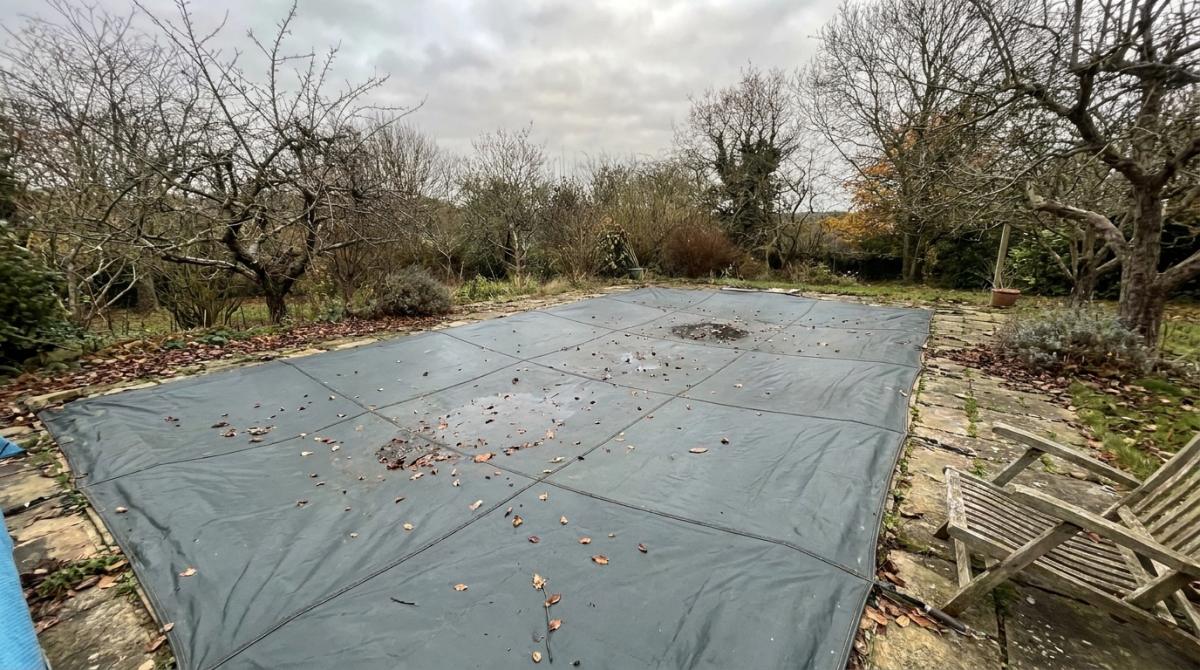
What Premium Aluminium Enclosures Actually Do to Your Swimming Calendar
The shift from an unenclosed pool to a well-specified aluminium enclosure is not a marginal upgrade. It is a structural change to how much of the year your pool is genuinely useful. The average unenclosed outdoor pool in the UK is comfortably swimmable for around 16 weeks. A premium aluminium enclosure, paired with a modest heat pump, pushes that figure to 40 weeks or more. That means a pool that currently runs from late May to mid-September becomes one you can use from February through to November.
The mechanism behind this is straightforward. Enclosures trap solar gain during daylight hours, which raises water temperature passively without additional heating energy. On a clear day in March or October, the air temperature inside an enclosure can be significantly warmer than the outside ambient temperature, simply because the glazing panels allow solar radiation in and prevent heat from escaping. This passive warming does real work. It reduces the load on any supplementary heat pump, cutting running costs while extending the comfortable temperature range into months that would otherwise be impossible without expensive constant heating.
In practical terms, an unenclosed pool in the south of England might reach a comfortable 24 degrees Celsius on a warm August day with a heat pump running. The same pool under a well-specified aluminium enclosure can hold that temperature in April or October with the same heat pump running at a fraction of the load, because the enclosure is doing the bulk of the thermal work passively. On a clear March afternoon, internal enclosure air temperatures of 10 to 15 degrees above the outside ambient are achievable. That gap is the difference between a 12-degree pool that nobody will get into and a 22-degree pool that the whole family will use on a Sunday morning.
A concern that comes up consistently with enclosures is the loss of the open-air feeling. Premium aluminium structures address this directly. High-quality glazing panels used in properly engineered enclosures transmit UV light, meaning swimmers still get the benefit of natural daylight and the psychological openness of being under glass rather than indoors. The difference between sitting under a quality glazed enclosure and swimming in an indoor pool is substantial in practice, even if the protection from rain and wind is similar.
Why the Material and Engineering Matter
Budget pool domes made from polycarbonate frames and thin glazing panels can extend the season modestly. But they introduce their own problems: limited headroom, condensation management issues, difficulty ventilating on warm days, and a tendency to look temporary rather than designed. Premium aluminium profiles change the geometry of what is possible. Aluminium extrusions can span wider distances without intermediate supports, which means larger glazed panels, better sightlines from inside the enclosure, and a structure that reads as a designed part of the garden rather than a protective afterthought.
The condensation problem in particular is one that budget structures handle badly and that catches owners off guard. When warm, humid pool air meets a cold polycarbonate panel, moisture condenses on the interior surface and drips. In a low-grade structure with inadequate ventilation, this creates a permanently damp environment that accelerates corrosion of fixings, encourages algae growth on the frame, and makes the enclosure unpleasant to sit in. Properly engineered aluminium systems use thermally broken profiles, which reduce the temperature differential at the glazing surface, combined with designed ventilation channels that allow controlled air movement without undermining thermal performance. The result is a dry, comfortable interior rather than a dripping greenhouse.
Internal headroom is not a minor point. A low-clearance dome that requires you to duck at the pool edge or prevents you from standing comfortably on the steps changes the experience of the pool entirely. Walk-in height enclosures allow the space to function as a covered outdoor room, usable for towelling off, sitting, and socialising, not just as a roof over the water.
There is also the question of structural performance in actual UK conditions. Wind loads in exposed British gardens, particularly in coastal areas or elevated sites, bear little resemblance to the conditions a structure designed for southern European markets is tested against. Arch Enclosures engineers its systems specifically to UK wind and snow load ratings, which means the structure is built for the weather that will actually arrive, not the weather of a sunnier default location. That is not a small distinction when you are talking about a permanent installation.
The practical result of all this is concrete and measurable. A family pool that was previously opened in the last week of May and drained or covered by mid-September becomes a facility used across nine or ten months, available on a clear Saturday in late February and still warm enough for a brisk swim on a November afternoon with modest heating support.
Telescopic Versus Fixed: Choosing the Design That Matches How You Actually Live
The choice between a fixed enclosure and a telescopic sliding one is less about budget and more about how your household actually uses outdoor space across the year. Both protect the pool, extend the season, and reduce maintenance. They solve the problem differently, and the right answer depends on priorities you probably already know if you think about them honestly.
Fixed Enclosures
A fixed enclosure creates a permanently sealed pool environment. The glazing panels and aluminium frame stay in place through every season. For households where the priority is maximum thermal efficiency, minimal intervention, and the lowest possible ongoing maintenance burden, a fixed structure is the stronger choice. The pool is always protected, the temperature is always managed by the enclosure's passive solar gain, and there are no moving parts to maintain. It is the most predictable option.
The trade-off is that you are always inside the structure. On a genuinely hot July day when you want to swim in open air, a fixed enclosure does not give you that option. For some households this is irrelevant. For others, particularly those who use the pool socially during summer, it matters.
Telescopic Sliding Enclosures
Telescopic systems solve the July problem by allowing individual sections of the enclosure to retract. On a warm day the sections slide back over each other, leaving the pool fully open to the sky. When the weather turns, or the season changes, they extend back out to form a complete enclosure. This is the format that suits UK summer conditions particularly well, precisely because British summers are inconsistent. The ability to have a fully open pool on a hot August weekend and a fully enclosed pool on a wet September evening, without any permanent compromise in either direction, is genuinely useful rather than just theoretically appealing.
Motorised telescopic systems remove the effort barrier entirely. Solar-powered slimline motors, fitted within the track system, can open or close the full enclosure in under two minutes. There is no manual pushing of heavy glazed sections, no reason to leave the pool enclosed on a nice day because opening it feels like a task. The ultra low telescopic format takes this further, keeping the profile close to the water surface so the enclosure is visually discreet from the rest of the garden when closed and almost invisible when sections are retracted.
It is worth being precise about how telescopic sections actually stack. A typical four-section telescopic enclosure covering an 8-metre pool will compress into a stacked depth of around 2 metres when fully open, sitting at one end of the pool. The remaining 6 metres of pool are fully open to the sky. That stacked section is low enough that it reads as a boundary feature rather than a structure, particularly in the ultra-low profile. Guests using the pool on a July afternoon may not notice it is there at all. When rain arrives and you close the enclosure, those same four sections extend back along their tracks and lock into a weatherproof seal in under two minutes.
The Practical Decision Framework
Low-profile enclosures prioritise one thing: access to the water. They sit close to the pool's edge, reduce visual bulk in the garden, and are the right choice for households where swimming is the point and the enclosure is purely functional. Walk-in height enclosures add a covered outdoor living dimension. The space inside becomes usable in its own right: a poolside area that works in November, somewhere to sit in early spring before the water is quite warm enough, a covered social space that extends the garden's usability well beyond the pool itself.
- Households that want a covered social space in all seasons should prioritise walk-in height, fixed or telescopic.
- Households that want unrestricted swimming access with minimal visual impact on the garden should look at low-profile telescopic options.
- Households in exposed or high-wind locations should factor UK-rated structural performance into the specification from the start, not as an afterthought.
The edge case that most people get wrong at this stage is treating the decision as purely aesthetic. A walk-in enclosure that sits on a site with a 130mph design wind speed (common on elevated or coastal sites in the UK, and a real figure in planning assessments) must be specified to that load from the outset. Retrofitting structural reinforcement to an underpowered frame is expensive and disruptive. Getting the structural specification right at the design stage costs nothing extra and prevents a category of problem that no amount of good glazing or smart motors can solve after installation.
The decision is ultimately about which constraint bothers you more: the loss of open-air swimming on hot days, or the visual footprint of a taller structure in the garden. Neither answer is wrong. Both are solvable.
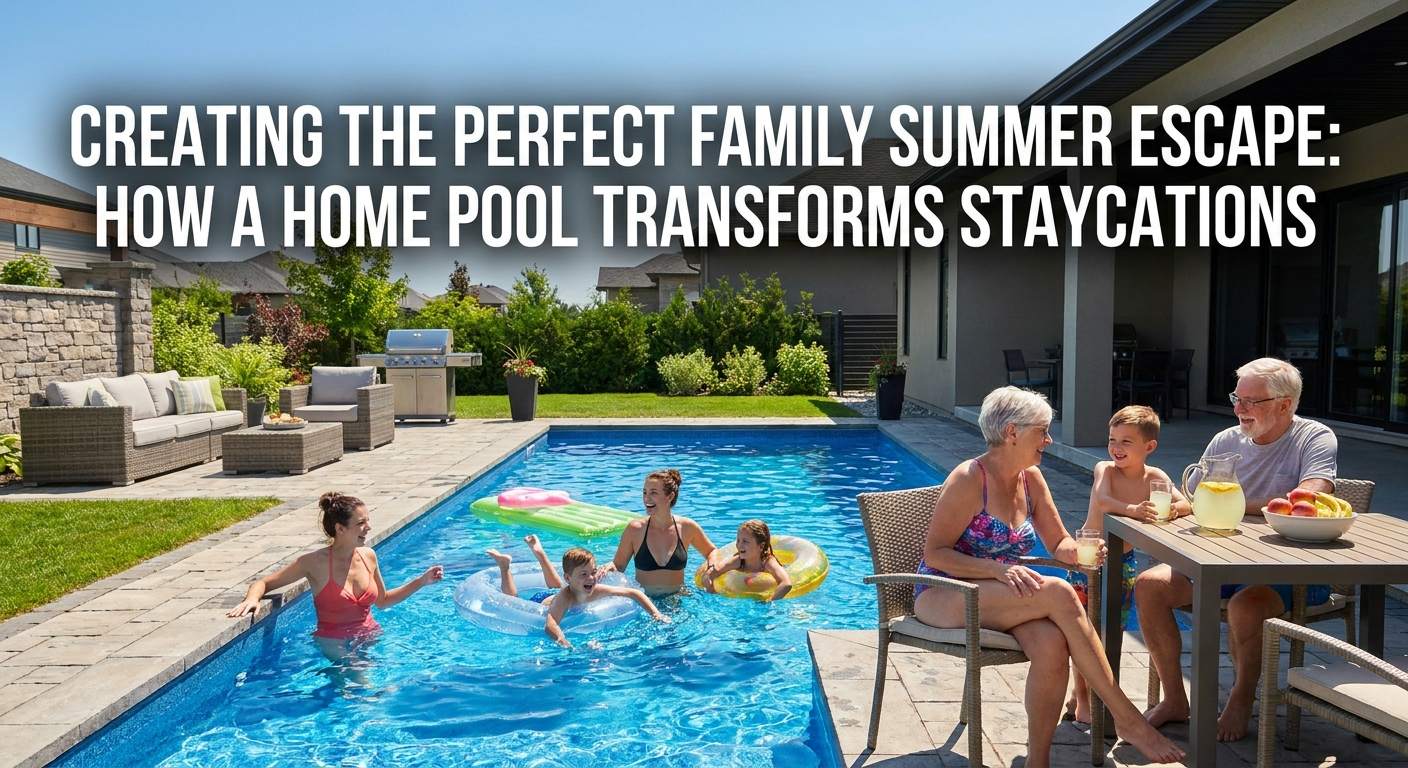
Creating the Perfect Family Summer Escape: How a Home Pool Transforms Staycations
The idea of booking a resort for a week of lazy rivers, poolside snacks, and splash sessions with the children has obvious appeal. But for a growing number of UK families, the best version of that experience is already waiting in the back garden. A well-designed residential pool does not just add convenience; it reshapes how your household spends its summers, turning ordinary weekday afternoons into something worth remembering.
The Staycation Shift Is Permanent
Post-pandemic travel habits changed in ways that have proved surprisingly durable. British holidaymakers who rediscovered the pleasure of staying close to home found that domestic breaks offered something overseas trips rarely can: total control over the environment, no transfer stress, and the freedom to follow a toddler's nap schedule without worrying about a departure gate. Post-pandemic mobility shifts accelerated investment in home-based leisure across the UK, and that appetite has not faded.
The conditions driving this trend are well understood. Rising costs, environmental awareness, and a simple preference for privacy have combined to push more families toward home improvements that deliver holiday-quality experiences on their own terms. A swimming pool sits at the top of that list.
Why a Pool Outperforms a Resort for Families
Think about what actually makes a resort pool memorable for children. It is the freedom to jump in whenever they want, the snacks on demand, the fact that nobody is watching the clock. A home pool delivers every one of those things, and removes the parts that exhaust parents: the early check-in queues, the crowded changing rooms, the trek back to the room when a small child melts down at 2pm.
At home, the pool is open at seven in the morning if that is when your five-year-old wants to swim. It is available after dinner when the summer light lingers until nine. There are no strangers in the lane, no posted rules about inflatable toys, and no corkage fee on the prosecco. The experience is genuinely yours, shaped entirely by what your family enjoys.
For families with younger children especially, the ability to control depth, temperature, and supervision distance is significant. A constant-depth pool removes the anxiety that comes from graduated pool floors, letting toddlers and early swimmers move around with adults close by and confident about the water beneath them.
Designing the Space Around the Experience
The pool itself is the starting point, not the whole picture. What turns a residential pool into a genuine staycation destination is the environment built around it. Consider the elements that make resort poolside areas feel special and work backwards from there.
- Generous paving or decking around the pool edge for loungers, towel rails, and a small table for drinks and snacks
- Shade structures, whether a parasol, pergola, or fixed canopy, so younger children can take breaks from direct sun without being sent indoors
- Outdoor speakers for music, connected to a phone so the playlist changes with the mood of the afternoon
- A small poolside storage unit for toys, goggles, and sun cream, so nothing requires a trip back into the house mid-session
- Ambient lighting for evening swims, which extends the usable season well beyond the July peak
None of these additions are complicated or expensive relative to the pool investment itself. Together, they transform a functional garden feature into something that feels deliberately designed for pleasure.
The Ritual Side of Staycation Swimming
What families recall most vividly about holidays is not the individual activities but the rhythms around them. The morning swim before breakfast. The post-lunch splash that sends everyone back inside sun-warmed and ready for a nap. The evening where the children stay in the water for an extra half hour because it is still warm and nobody is in a rush.
A home pool creates those rhythms naturally. Because it is always there, the sessions become habitual rather than one-off events. Summers begin to organise themselves around the pool in the same way school-holiday resort weeks do, except the experience is available every weekend from May to September rather than for a fortnight in August.
Parents who have made this investment consistently describe a version of the same realisation: what they had been paying for on expensive resort breaks was not the travel or the room, but simply the quality time spent together near water. Once that time is available at home, the equation looks very different.
Choosing a Pool That Grows With Your Family
A pool purchased when your children are toddlers will still be in daily use when they are teenagers. That longevity is worth thinking about at the design stage. A model with a generous swim zone at one end and a shallower social area at the other accommodates everything from early swimming lessons to serious lap training a decade later.
Composite fibreglass pools are particularly well suited to family use over the long term. The surface is smooth and kind on small knees, the structure requires significantly less chemical maintenance than concrete alternatives, and the colour-stable finish does not fade or stain after years of heavy use. Leisure Pools' composite construction uses Alpha Resin technology through the full thickness of the shell, which means the structural integrity is backed by a lifetime warranty rather than a ten-year guarantee on a surface layer.
Size matters for families, but so does shape. A wider pool gives children room to play alongside each other without getting in each other's way, while still leaving a clear lane for adults who want to swim seriously. If space is a constraint, a well-chosen compact model can still deliver an experience that feels generous rather than cramped.
The Property Argument, If You Need One
The lifestyle case for a home pool is strong on its own, but the financial context is worth understanding. Residential pool ownership in the UK has grown consistently since 2020, driven by the same combination of factors visible across Europe: rising disposable incomes, a preference for home-based leisure, and buyers who actively seek staycation-ready properties when choosing where to live.
A well-installed, well-maintained pool adds measurable value to a property. It also signals something to buyers about how a home has been looked after and what lifestyle it enables. For many families, the investment decision is not primarily financial, but it is reassuring to know that the pool does not sit outside that calculation entirely.
The more honest framing, though, is this: a residential pool gives your family the kind of summer that resort brochures promise but rarely quite deliver. It is yours every year, every weekend, every school holiday, without the packing, without the queues, and without the bill at the end of the week. For families investing in how they spend their time together, that is a genuinely compelling offer.
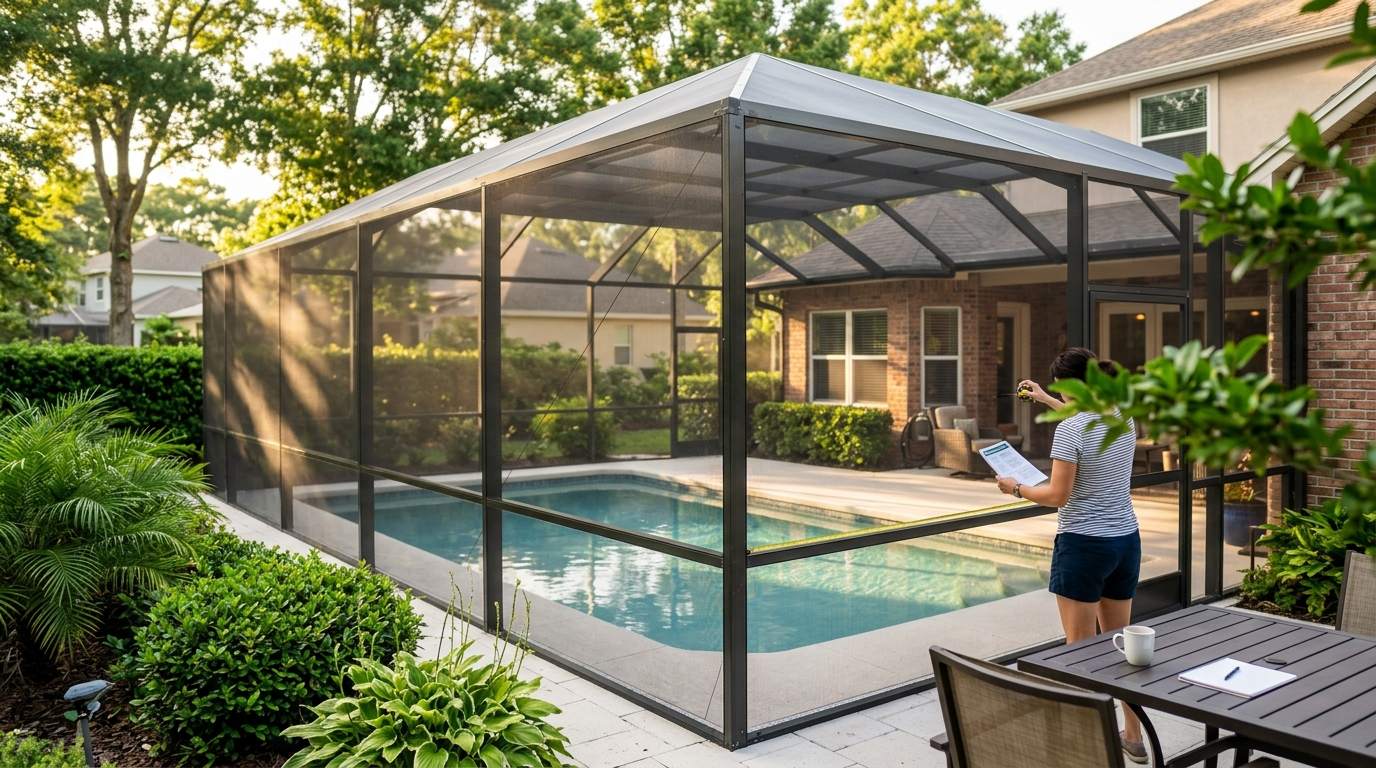
Planning Regulations for Pool Enclosures: What You Can and Can't Install Without Permission
A story doing the rounds recently involves a homeowner in Wakefield who was ordered to remove a four-foot gorilla statue from the front of her house or face a fine of up to £20,000. Whatever you think of the decision, it's a sharp reminder that planning rules apply to more than just extensions and loft conversions. Anything permanently attached to or significantly altering your property can attract scrutiny, and pool enclosures are no exception.
The good news is that the rules around pool enclosures are fairly well defined once you know where to look. Many domestic installations fall comfortably within permitted development rights, meaning no formal planning application is needed. But get the dimensions wrong, or overlook a local condition, and you could find yourself in a costly and frustrating situation.
What Permitted Development Actually Means
Permitted development (PD) rights allow homeowners to carry out certain types of building work without submitting a full planning application to the local authority. These rights are set out in the Town and Country Planning (General Permitted Development) (England) Order 2015, with equivalent legislation covering Scotland, Wales, and Northern Ireland.
For garden structures including pool enclosures, the relevant permitted development class is Class E, which covers buildings and enclosures within the curtilage of a house. Several conditions apply, and they matter.
The Key Limits for Garden Enclosures
If your pool enclosure sits within the garden of a residential property, here are the thresholds that typically determine whether PD applies:
- Height: A detached structure must not exceed 2.5 metres in height if it sits within 2 metres of a property boundary. Beyond that setback, the maximum height rises to 4 metres for a dual-pitched roof or 3 metres for any other roof type.
- Footprint: The total area of all outbuildings, sheds, and enclosures must not exceed 50% of the total garden area (excluding the original house footprint).
- Position: Structures must not be positioned forward of the principal elevation of the house, which effectively means in front of the front wall facing the highway.
- Purpose: The structure must be for domestic use only, not as a separate unit of accommodation.
Most domestic pool enclosures, particularly the low-profile retractable systems common in the UK market, are specifically designed to sit within these limits. A typical residential enclosure from Arch Enclosures, for example, can be configured at heights that comfortably clear the 2.5-metre threshold where setback conditions allow.
When You Will Need Planning Permission
Certain scenarios take you outside permitted development and into formal application territory. These include:
- Structures that exceed the height limits described above.
- Enclosures installed in front of the principal elevation of the house.
- Properties in designated areas such as National Parks, Areas of Outstanding Natural Beauty (AONBs), or conservation areas, where PD rights are often more restricted.
- Listed buildings, where almost any external alteration requires listed building consent in addition to, or instead of, standard planning permission.
- New-build properties where the developer has removed permitted development rights via a planning condition (Article 4 directions).
- Enclosures covering a pool that is deeper than the footprint or height parameters allow when combined with ground excavation works.
It is worth noting that swimming pools themselves do not generally require planning permission under PD rules, provided the pool is domestic in use, not built forward of the principal elevation, and the excavation does not materially alter the external appearance of the house beyond the surface level. However, when you add a substantial enclosure on top, the combined structure is what gets assessed.
Conservation Areas and Listed Buildings: Different Rules Apply
If your property sits in a conservation area, the standard Class E permitted development rights are restricted. In most conservation areas you cannot erect any structure to the side of the house under PD, and rear structures may also be subject to additional controls. Always check with your local planning authority before proceeding.
For listed buildings, the bar is higher still. Even a modest enclosure over a garden pool could require listed building consent if it would affect the character or setting of the listed structure. Local conservation officers are generally approachable at the pre-application stage, and a quick conversation can save a great deal of time and expense.
Certificate of Lawful Development: Worth Getting
Even when you are confident your enclosure falls within permitted development, applying for a Lawful Development Certificate (LDC) is a sensible step. An LDC is a formal confirmation from the council that the works are lawful, and it protects you if questions arise during a future sale of the property.
The application costs around £206 in England (as of recent fee schedules), takes roughly eight weeks to process, and gives you a document that sits on the planning record permanently. For an investment the size of a pool enclosure, that is modest insurance.
Talking to Your Installer Before You Commit
A reputable enclosure manufacturer will ask about your site conditions before quoting, not after. Relevant details include the proximity of the structure to boundaries, the orientation of the pool relative to the house, and whether you are in a designated area. These factors directly shape which product configuration is suitable and whether any planning work needs to happen first.
At Arch Enclosures, part of the early conversation with clients is always about regulatory compliance. Getting a structure installed that then needs to be modified or removed is a poor outcome for everyone, and in most cases it is entirely avoidable with the right preparation. The gorilla statue saga is a colourful reminder of what happens when assumptions are made without checking the rules first.
A Practical Checklist Before You Start
- Confirm whether your property has any Article 4 directions removing PD rights (check with your local planning authority).
- Measure the setback distances from the proposed structure to all relevant boundaries.
- Calculate the combined footprint of all existing outbuildings to ensure the 50% rule is not breached.
- Check whether the property is listed or in a designated area.
- Decide whether to apply for a Lawful Development Certificate for peace of mind.
- Speak to your enclosure supplier early, before finalising dimensions or layout.
Pool enclosures are a practical, year-round investment that adds genuine value to a home. Getting the planning side right from the start means the only thing you need to think about once it is installed is what temperature to set the water.
Choosing the Right Website Builder: A Practical Guide for UK Small Business Owners
There are dozens of website builders out there, and every one of them claims to be perfect for small businesses. The reality is more nuanced. The right platform for a local plumber in Worthing looks very different from the right platform for a growing online clothing retailer in Manchester. Getting this choice wrong costs you time, money, and often a complete rebuild a year down the line.
This guide walks you through a clear decision process so you can pick the tool that actually fits your business, not just the one with the best marketing.
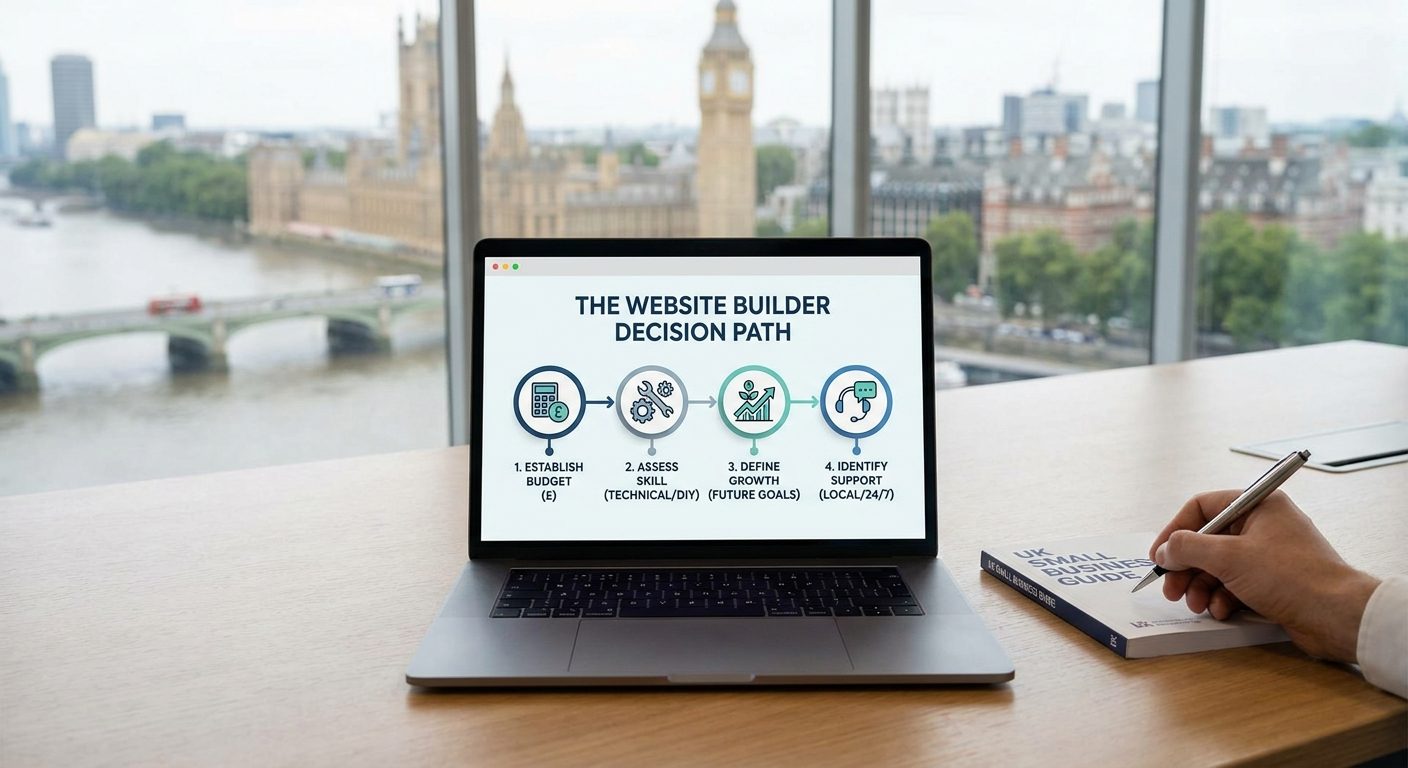
Start With Your Budget (Be Honest About It)
Before you look at features, nail down what you can realistically spend each month. Most website builder pricing has two layers: the platform subscription and the extras that pile on top.
Here is what realistic monthly costs look like in 2026:
- Free or near-free tiers: Wix and WordPress.com both offer free plans, but they come with the platform's branding on your domain, which looks unprofessional to customers.
- Entry level (around £10-£20/month): Enough to get a clean, branded site on Wix, Squarespace, or WordPress.com without major restrictions.
- E-commerce ready (£25-£60/month): Shopify's core plans sit here, as do Squarespace's Commerce tiers and Wix's Business plans.
- Growth and scale (£60+/month): Advanced Shopify, Wix Enterprise, or moving to a self-hosted WordPress setup with premium hosting.
Factor in your domain name (typically £10-£15 per year), any premium themes, and paid apps or plugins. A Shopify store with five apps can quietly creep from £29 to £80 a month before you have noticed.
Be Realistic About Your Technical Skill Level
Website builders exist on a spectrum from fully visual drag-and-drop to code-optional tools that reward people who know their way around HTML and CSS. Placing yourself honestly on that spectrum saves a lot of frustration.
If you want to build the site yourself with minimal technical knowledge, Wix is genuinely the most forgiving option. Its editor is visual and immediate, and it covers the majority of small business use cases well. Squarespace is slightly more structured but produces cleaner-looking results out of the box and suits businesses where design matters, such as photographers, studios, or consultancies.
If you are comfortable following tutorials and do not mind a learning curve, WordPress.com (or self-hosted WordPress.org) gives you far more control and flexibility. It powers roughly 43% of all websites globally, which means there is a solution to almost every problem somewhere in the community. The trade-off is that you need to manage updates, plugins, and occasionally troubleshoot things yourself.
Webflow sits at the more technical end of the DIY spectrum. It is excellent for custom designs but expects you to understand layout concepts. Unless you have a background in design or development, it is probably overkill for a small business site.
Think About What Your Site Actually Needs to Do
A website builder that is great for a portfolio is not necessarily great for selling products. Map out your core requirements before you compare platforms.
Ask yourself:
- Do I need to take online payments, or just display products and take enquiries?
- Will I be running a blog to attract search traffic?
- Do I need booking or appointment functionality?
- Will I be managing the content myself on a regular basis?
- Do I need to connect the site to tools like Mailchimp, a CRM, or accounting software?
For straightforward service businesses (trades, consultants, local shops without online sales), Wix or Squarespace covers everything comfortably. For anyone planning to sell products online at any real volume, Shopify is worth the extra cost. Its checkout, inventory management, and payment processing are purpose-built for e-commerce in a way that the others simply are not.
Consider Your Growth Plans
The cheapest option now can become the most expensive option later if it forces a rebuild. Think 18-24 months ahead.
If you expect to grow from 10 products to 500, or from a local audience to a national one, you want a platform that scales without charging you at every step. Shopify handles high-volume e-commerce well. WordPress, particularly self-hosted with WooCommerce, gives you the most flexibility for complex growth scenarios because you own your setup completely.
Wix and Squarespace are excellent for small to medium-sized businesses, but both have ceilings. Very large product catalogues, complex membership systems, or highly customised functionality can strain them. If those are on your horizon, factor that in now.
Do Not Underestimate Support
When something breaks or you cannot figure out how to do something, where do you turn? This matters far more than most people expect when they are setting up.
Wix and Squarespace both offer 24/7 customer support, which is genuinely useful for non-technical business owners. Shopify's support is well-regarded and has live chat. WordPress is supported by a huge community of forums, documentation, and developers, but there is no single help desk to call, so you either need to know someone or be comfortable searching for answers.
If you would rather hand the whole thing to a professional and focus on running your business, a web design agency builds on these same platforms (or bespoke code) and handles everything from setup to ongoing changes. For many small business owners, that is the right call, particularly when the site needs to work hard from day one.
A Simple Decision Framework
Use this as a quick reference:
- Service business, DIY, low budget: Start with Wix on a Core or Business plan.
- Design-led business (studio, photographer, consultant): Squarespace gives you a polished result without much effort.
- E-commerce from the start: Shopify, even if you only have a handful of products. It grows with you.
- Blog-heavy or content-driven site: WordPress.com, or self-hosted WordPress if you want full control.
- Complex requirements or no time to manage it yourself: Work with a web design professional who can recommend and build the right setup for your specific needs.
One Final Thing to Remember
No platform is perfect. Every one of them has limitations and trade-offs. The goal is not to find the flawless tool. It is to find the one that fits your business right now, with enough room to grow, at a price that does not hurt.
If you are still unsure after working through this, talking to a local web design agency costs nothing upfront and can save you from an expensive wrong turn. The best website for your business is the one that brings in customers. Everything else is secondary.
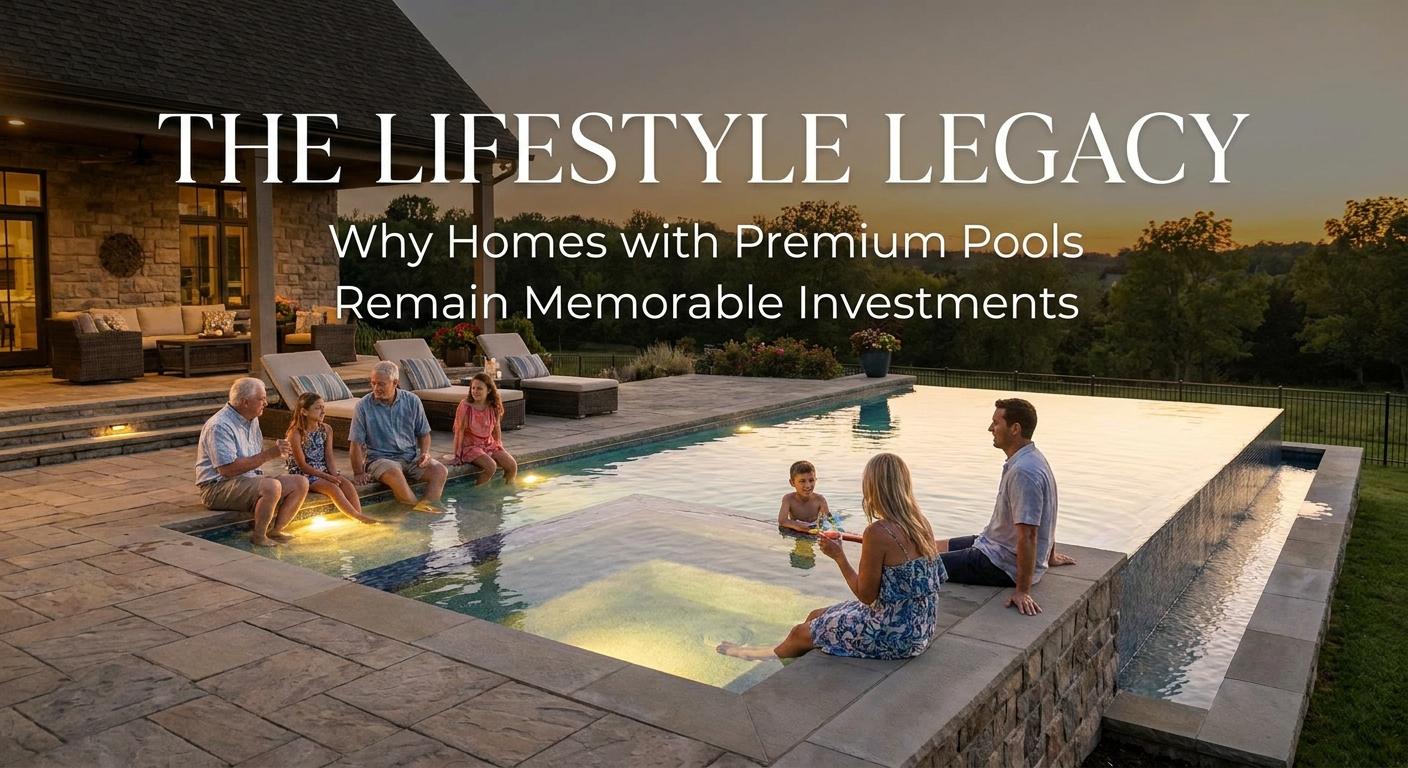
The Lifestyle Legacy: Why Homes with Premium Pools Remain Memorable Investments
Ask someone who has sold a home with a bespoke swimming pool what the hardest part was, and they rarely mention the solicitors, the chain, or the moving costs. They mention the pool. A family in Aberdeenshire, whose story circulated widely enough to prompt genuine public sympathy, described leaving their pool-equipped property as one of the most emotionally charged moments of their adult lives, not because of what the pool was worth financially, but because of everything it had witnessed. Summer birthdays. Early-morning lengths before work. A teenager learning to dive properly. The last barbecue before a child left for university.
That kind of attachment does not come from a kitchen extension or a new bathroom. It comes from a feature that changes how a family actually lives, week after week, season after season, for years on end.
The Day You Realise You Are Selling More Than a House
The moment usually arrives during viewings, when a prospective buyer stands at the edge of the pool terrace and asks a perfectly neutral question about filtration cycles or heating costs. The seller answers, but something else is happening simultaneously: a quiet, involuntary inventory of every memory attached to that water. The purchase rationale, whatever it was at the time, whether it was fitness, entertaining, or adding a premium feature to a property, has long since been eclipsed by something much harder to price.
This shift from asset to place is not sentimental weakness. It is the entirely rational outcome of spending years building a life around a feature that sits at the physical and social centre of a home. A pool does not just occupy garden space; over time it reorganises the family's relationship with that space, with each other, and with the house itself.
What this article sets out to explore is why that happens, and why it happens so consistently with premium, bespoke installations rather than with standard home improvements. The argument is straightforward: a well-designed, well-built pool does not simply add square footage to a property or a line to an estate agent's particulars. It generates a lifestyle legacy, a layered accumulation of memory, habit, and identity that reshapes what a home means to the people who live in it.
To make that case properly, it is worth moving through the full picture: the psychology of personalisation that creates deep attachment from the very first design consultation; the construction quality that ensures the physical structure supports those memories for decades rather than years; the family milestones a pool makes permanent; the way thoughtful landscaping and outdoor design multiply its value both practically and emotionally; and finally what the financial evidence actually says about premium pools and UK property values. Each layer reinforces the others. Together they explain why selling a pool-equipped home so often feels like selling more than bricks and mortar.

Why Bespoke Pools Create Attachments That Standard Renovations Cannot
There is a well-documented phenomenon in behavioural economics called the endowment effect: people assign greater value to things they own than to identical things they do not, and that premium increases substantially when they have had a hand in creating or customising the object. Daniel Kahneman and Richard Thaler's work on this is extensive, but its implications for pool ownership are direct and practical. The more design decisions a homeowner makes during the specification process, the more psychologically invested they become in the outcome before a single machine has broken ground.
A bespoke composite pool installation from a manufacturer like Leisure Pools involves dozens of those decisions. Shell colour and finish come first: options range from deep volcanic blues and greens that give water a Mediterranean depth to lighter aquamarine and pearl tones that suit a more contemporary aesthetic. Then comes the coping style, the material and profile of the surround that defines how the pool meets the patio. Step configuration follows, including whether to use wide tanning ledges, traditional corner steps, or integrated benching for hydrotherapy. Water feature placement, lighting zones, and equipment housing all require active input.
By the time a homeowner has worked through that process, they have not simply purchased a pool. They have authored one. Every detail in the finished installation reflects a choice they made, often after lengthy deliberation, sometimes after changing their minds twice. That cognitive and emotional investment is precisely what a standard renovaton cannot replicate. A new kitchen, however well-specified, largely conforms to conventional expectations of what a kitchen should look like. It does not ask its owner to imagine a life and then design the physical expression of it.
The contrast with a generic liner pool is instructive here. A basic vinyl liner installation is, in essence, a transactional purchase: a hole, a frame, a printed sheet of plastic. The homeowner chooses from a limited palette of standard sizes and a handful of liner patterns. The result is functional but impersonal, carrying none of the deliberate lifestyle intent embedded in a bespoke composite shell. Research from Starline Install notes that buyers view a premium one-piece composite pool very differently from an aging liner pool, and that difference in perception mirrors the difference in the emotional relationship the original owner develops with each type.
Leisure Pools offers more than 40 shell designs across its ranges, including Fibreglass, Radiance, and Reflections, meaning that even two neighbours installing pools in the same year are unlikely to end up with identical results once personalisation options are applied. That breadth of choice is not a marketing detail; it is the mechanism through which genuine attachment forms. A homeowner who spent three months working with a designer to specify the exact step radius, the precise gelcoat colour, and the position of the in-floor cleaning nozzles does not forget those decisions. Years later, looking at the finished pool from a kitchen window, they see the sum of all those choices, and that is a different experience entirely from looking at something that arrived as a catalogue standard.
This is the root cause of the attachment homeowners describe when they eventually come to sell. They are not being irrational or overly sentimental. They are responding to something real: the fact that this particular pool, in this particular garden, reflects a version of their life that they imagined, designed, and then actually lived. Colour range choices alone can take weeks to finalise, because the water's apparent hue shifts with light and depth, and homeowners instinctively understand they are choosing the visual character of their home's most prominent outdoor feature.
How Composite Construction Turns a Pool Into a Generational Asset
Emotional attachment to a pool requires one condition that is easy to overlook during the excitement of installation: the pool has to remain worth being attached to. A structure that develops osmotic blistering at year eight, requires full resurfacing at year twelve, and begins showing cracks in the shell by year eighteen does not anchor family memory. It becomes a source of stress and expenditure, and the emotional relationship with it curdles accordingly.
This is where construction technology moves from being a technical specification into being the foundation of a lifestyle legacy. Leisure Pools builds its shells using Composite Armour technology, a multi-layer system that combines hand-laid fibreglass reinforcement, vinyl ester resin barriers, and a structural composite shell. Each layer serves a specific function. The vinyl ester resin resists water permeation, which is the primary cause of osmotic blistering in lower-grade fibreglass shells. The fibreglass layers distribute structural load and resist the ground movement that affects all buried structures, particularly in the UK's varied soil conditions. The outer gelcoat surface is non-porous and chemically resistant, maintaining its colour and smoothness over decades of exposure to chlorinated water and UV light.
The practical consequence of this construction method is a shell that Leisure Pools backs with a lifetime structural warranty. That is not a marketing phrase. It means the physical structure of the pool is designed to outlast not just the installation itself but the typical 25-year mortgage attached to the property it sits within. A family that installs a Leisure Pools composite shell when their children are young can reasonably expect that same shell to be structurally sound when those children return as adults with families of their own.
The financial comparison with alternative construction methods makes this durability tangible. A concrete pool, while initially robust, requires resurfacing every 10 to 15 years because the plaster or render finish degrades with continuous water exposure. That resurfacing process typically costs between 10,000 and 15,000 pounds, sometimes more depending on the pool's size and the extent of the surface deterioration. Vinyl liner pools present a different recurring cost: liners need replacement every 7 to 12 years, and while a single replacement is less expensive than concrete resurfacing, the cost accumulates across a 25-year ownership period and the disruption is not insignificant. The pool is out of use for the duration of the work, which in a UK summer context means losing weeks of usable swimming time.
A one-piece moulded composite shell sidesteps both of these maintenance cycles entirely. There is no grout to deteriorate, no porous surface for algae to colonise in the joins between tiles, and no liner to wrinkle or tear at the seam. The smooth, non-porous interior surface reduces the chemical load required to maintain water clarity, which is a practical benefit that compounds over years of ownership. For an average family pool, weekly maintenance time with a well-specified composite shell runs to approximately 30 minutes, covering chemical testing and dosing, filter backwashing when required, and a basic brush-down of the walls. That figure assumes a properly balanced water chemistry regime rather than reactive intervention, but it is achievable and consistently reported by composite pool owners.
Durability is not only a financial argument. A pool that looks as clean and well-defined after 20 years as it did the summer it was installed continues to serve as a gathering point, a landmark in the family's spatial memory of home. The coping still feels solid underfoot. The water still carries that particular colour the homeowner chose during the specification process. The steps are exactly where they were designed to be. None of that can be taken for granted with a structure that has needed repeated intervention to stay functional. The integrity of the physical space is what makes it possible for the emotional associations to remain positive and cumulative rather than being overlaid with the stress of repairs and the disruption of downtime.
For UK homeowners thinking about what it means to build something genuinely lasting, the case for composite construction is inseparable from the broader case for long-term pool investment. The shell is the one component that cannot be swapped out or upgraded without essentially starting again. Getting it right at the outset is the single decision that determines whether a pool becomes a generational asset or an ongoing liability.
The First Summer: How a New Pool Rewrites the Family Calendar
Something shifts in the first week. You had expected to use the pool regularly, but you had not anticipated how completely it would rearrange the rhythm of daily life. The school run ends, the bags hit the hallway floor, and the children are already changing before you have put the kettle on. That Tuesday evening swim after school, the one you imagined as an occasional treat, becomes a non-negotiable fixture within a fortnight.
The staycation effect is well documented among pool owners. Families with private pools consistently report a dramatic reduction in the impulse to fill summer weekends with outings to public leisure centres, waterparks, or organised activities. The destination is already at home, and it requires nothing more than opening the back door. Holiday budgets shift. Weekend plans stop being plans at all and become something more spontaneous and therefore more honest about what the family actually enjoys.
A typical week in a pool-owning household during a UK summer develops its own internal logic quickly. A parent steals a quiet Saturday morning for solo laps before the rest of the house stirs, using the water the way other people use a gym or a long run. By Saturday afternoon, the dynamic reverses entirely: the barbecue is lit, neighbours have appeared with a bottle of something cold, and the pool has become the centrepiece of an afternoon that nobody planned but everyone will mention the following Monday. On Sunday evening, two children who would normally be arguing over a screen are in the water until it gets too dark to see.

Research into families with private swimming facilities consistently finds that recreational time spent at home increases substantially in the first year of ownership. One study cited by pool industry bodies found that families with backyard pools spend a significantly greater proportion of their leisure hours at home compared to those without, with the figure often exceeding 70 percent of available summer weekends. A pool is not a luxury item you use occasionally; it is infrastructure for daily life.
What pool owners describe as the magnetic quality of the space is real and observable. Friends who previously required a formal invitation begin arriving informally. Extended family members, cousins, grandparents, aunts, discover reasons to visit that they had not found before. The home acquires a social gravity it did not previously possess, and with that comes a shift in the family's role within its community. You become the gathering place. That is not a small thing.
Neurological research into memory formation supports something that pool owners describe instinctively: repeated positive experiences tied to a specific physical environment produce unusually strong and durable associative memories. The combination of sensory richness, water temperature, light on the surface, the particular sound of splashing in a known space, and social warmth creates the conditions under which long-term memories are encoded with exceptional clarity. This is why homeowners who have sold properties with pools, years or even decades later, can recall specific afternoons there with a vividness that escapes other memories of the same period. The first summer is not just the beginning of pool ownership. It is the opening chapter of a much longer story the family will keep returning to.
Milestone Moments That Pools Make Permanent
There is a particular image that stays with almost every pool-owning parent: the moment a toddler enters the water for the first time, one hand gripping a parent's fingers, legs moving instinctively, face a mixture of alarm and delight. That image does not fade. It sits in the mind with the sharpness of a photograph, not because it was documented, though it often is, but because the combination of physical sensation, parental anxiety, and genuine joy etches it into memory at a depth most experiences never reach.
Pools accumulate these moments across every stage of family life. The toddler who needed a hand underneath them at the shallow end becomes the eight-year-old who swims the length without thinking. The eight-year-old becomes the teenager who throws a pool party that her friends talk about for years as the definitive summer of their adolescence. The couple who watched all of this happen find themselves one summer evening, the children gone, swimming quietly under the landscape lighting they chose together a decade earlier, marking an anniversary in the space that has held so much of their shared history.
This is what pools do that other home improvements cannot replicate: they compress time. A parent teaching a child to swim is simultaneously in the present moment and in a longer arc that stretches forward. You feel, without being able to articulate it exactly, that one day this child will stand in this same water with their own child, doing what you are doing now. The pool becomes a site of intergenerational continuity in a way that a kitchen renovation or a new extension simply cannot be.
The story of the Aberdeenshire homeowners who spoke publicly about the sadness of leaving their property illustrates this precisely. Their grief at selling was not about square footage or postcode. It was about the stored life that the pool contained. When they described what they would miss, they listed moments: specific summers, specific people, specific sounds. The pool was not a feature of the house. It was the house's emotional centre.
Water confidence and swimming proficiency are skills with genuinely lifelong health implications, and parents who invest in a private pool are giving their children something that outlasts the property itself. Children who learn to swim early and well, who grow up comfortable in water, carry that physical confidence into adulthood in ways that connect to broader health outcomes and physical literacy. The emotional investment a parent makes in that process is therefore not sentimental excess; it is rational recognition that the pool is shaping a person, not just providing entertainment.
Many Swimpools customers describe a tradition that takes hold almost without deliberate intention: the annual family photograph at the pool. Sometimes it happens on the same date each year, a birthday or a school holiday benchmark. Sometimes it evolves from a single photograph that turned out particularly well. Over years, these images become a physical archive of the family's history, with the pool's familiar tiles and water colour as the constant backdrop against which change becomes visible. Children grow. Adults age. The water stays the same. There is something profoundly moving about that continuity, and it is one of the reasons that leaving a pool behind feels, to the families who have lived with one for years, like leaving part of themselves behind.
Designing the Space Around the Pool to Multiply Its Value
A pool installed in isolation misses most of its own potential. The water is the centrepiece, but the space around it determines whether the whole area becomes a destination people want to spend time in or simply a feature they walk past. Getting the wider outdoor environment right is not cosmetic. It directly affects how often the pool is used, how long it remains usable across the year, and what a future buyer sees when they stand at the back door for the first time.
The most effective pool environments are built around complementary zones: a lounging terrace with space for proper outdoor furniture, an outdoor dining area positioned to work with the prevailing sun angle, and landscaped planting that provides both visual softness and genuine privacy. Natural stone coping at the pool edge does more work than its cost alone suggests; it reads immediately as quality, ages well, and connects the water to the wider garden in a way that precast concrete alternatives never quite manage.
In the UK climate, the single greatest multiplier of value, both daily enjoyment and eventual resale appeal, is the extension of the usable season. A pool without any form of enclosure is viable in the UK for roughly 10 to 12 weeks of the year without significant heating investment. Add a well-designed pool enclosure, such as those available through Swimpools, and that figure shifts dramatically. Season extension to 30 or more weeks per year is achievable, which fundamentally changes the return on investment calculation. A pool used across three seasons rather than one is not three times more valuable; in terms of the lifestyle it delivers and the impression it makes on buyers, it is considerably more than that. For a full breakdown of heating options that support year-round use, the heated pools guide covers the key systems in detail.
Specific design decisions within the pool itself also carry weight. Recessed LED lighting transforms the pool from a daytime feature into an evening destination, fundamentally changing how the space is used after dark. Heat pump integration, managed via smartphone automation, means the water is always at the right temperature without manual intervention, removing friction from spontaneous use. These are not optional extras in the premium segment; they are the details that separate a pool that becomes central to daily life from one that feels like an occasional feature.
The principle of creating zones within the water itself is equally important. A shallow lounge area with a tanning ledge serves a different purpose to a deeper swim zone, and both serve a different purpose to a water feature such as a cascading wall that adds sensory ambience without requiring active use. A pool designed with these distinctions built in serves more people across more moods and more times of day, which means it is used more often and valued more deeply.
What buyers respond to during property viewings, often without being able to explain it analytically, is the quality of the complete outdoor picture. They are not evaluating the pool's technical specification. They are standing at the back of a house, looking at a space that is already coherent and alive, and they are imagining their own Sunday mornings and their own summer evenings inside it. A well-designed pool environment makes that imaginative leap almost involuntary. That is why it carries outsized emotional weight in a viewing, and why it translates into the kind of buyer attachment that shortens negotiation and strengthens final price.
What UK Property Data Actually Says About Pools and House Prices
Anyone who tells you a swimming pool automatically adds a fixed percentage to any UK home is oversimplifying. The honest picture is more nuanced, and understanding it properly is what allows homeowners to make a genuinely informed decision rather than an optimistic one.
The UK is not Australia or southern Europe. A pool in Queensland gets used for nine or ten months of the year as a matter of course. In Surrey or Cheshire, the season runs from late May to early September in most years, and even then it depends on the weather and the heating system. That seasonal reality affects buyer psychology, and any honest assessment of pool value has to start there.
That said, the data is more encouraging than sceptics suggest. Research cited by RICS and several major estate agencies points to a well-designed, well-maintained pool adding between 7% and 20% to a property's market value, particularly in premium South East locations, rural estates, and high-value suburbs where outdoor living is part of the lifestyle expectation. A property worth £1.2 million in the Surrey Hills or the Cotswolds could realistically see a £84,000 to £240,000 uplift if the pool is genuinely well-executed. Those are not trivial numbers.
What the same research makes very clear is that not all pools are equal in the eyes of buyers or valuers. RICS and the major agencies draw a sharp distinction between a premium one-piece composite installation and an aging concrete shell or tired liner pool. The former signals quality, low maintenance liability, and considered investment. The latter can actively concern buyers, who see resurfacing costs, chemical issues, and structural uncertainty before they even get to lifestyle appeal. The type of pool matters as much as the fact of having one.
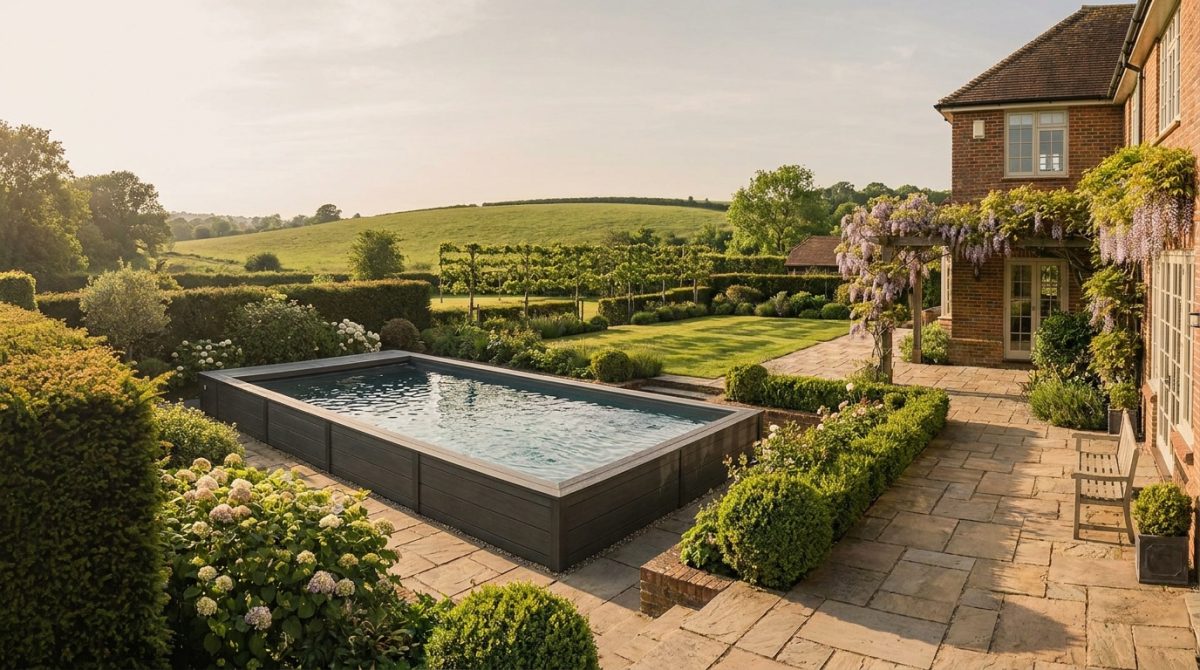
In rural and high-value locations, the dynamic shifts further. A pool in that context does not just add a percentage to an existing price bracket; it can move the property into an entirely different buyer segment. A buyer searching for a complete lifestyle package, a property where the outdoor environment is as finished as the interior, is not comparing your home directly against a poolless neighbour. You have effectively removed yourself from that price comparison entirely, and that is a powerful commercial position to occupy.
The timeline matters too. Homeowners who plan to stay for five years or more see the strongest financial case. They capture the full lifestyle return across multiple seasons, the property market has time to appreciate around them, and the pool itself demonstrates a track record of being well-maintained rather than newly installed and untested. Buyers respond to evidence of longevity.
It is also worth being clear about market segmentation. A premium pool does not appeal to every buyer, and nor should it need to. Not every family wants the responsibility, and that is fine. What a high-quality installation does is powerfully attract the specific buyer willing to pay a premium for turnkey luxury, and that is precisely the buyer a seller wants. Competing for that buyer on grounds other than price is a fundamentally stronger position than competing on square footage alone. For a deeper look at how the property market is shifting, UK homebuyer priorities around pools make for instructive reading.
The Maintenance Reality and Why Quality Prevents Regret
The question that sits quietly at the back of almost every initial pool enquiry is some version of the same thing: how much work is this actually going to be? It is a fair question, and the honest answer is that it depends almost entirely on the quality of the installation you choose in the first place.
Maintenance anxiety is the single biggest barrier between genuine intent and a completed project. Prospective buyers imagine mysterious chemical problems, green water, cracked walls, and weekends lost to manual labour. Some of those fears come from real experiences, but they almost always come from real experiences with the wrong kind of pool.
What Realistic Annual Costs Look Like
For a composite pool in the UK, the ongoing costs are predictable and manageable once you understand them properly. Water chemistry chemicals typically run between £300 and £600 per year for a standard residential pool, varying with size, bather load, and how well the water is balanced from the outset. A heat pump, which is the most energy-efficient heating method for a UK outdoor pool, costs roughly £1,000 to £2,000 per season depending on pool volume, target temperature, and how long into autumn you choose to extend your season. An annual service visit from a qualified technician adds a few hundred pounds and catches any small issues before they become expensive ones.
These are not negligible sums, but they are also not the financial horror story that pool sceptics sometimes describe. Set against the lifestyle value of the pool and its contribution to the property's appeal, they sit comfortably within the operating costs of any serious home asset.
Why the Shell Material Makes a Measurable Difference
The non-porous surface of a quality composite shell reduces chemical consumption compared to concrete, which is a porous material that absorbs sanitiser and creates ongoing demand for higher doses. Composite pools also do not harbour algae in the same way, which means chemistry is easier to hold in balance. Modern automation systems, including those compatible with Leisure Pools installations, can dose chemicals automatically via integrated dosing units and send alerts directly to a smartphone app when pH or sanitiser levels drift out of range. The homeowner's role shifts from manual testing and correcting to monitoring and confirming. That is a fundamentally different relationship with maintenance.
The contrast with lower-quality installations is stark and worth being direct about. Liner pools require liner replacement every eight to fifteen years, at a cost that can run into thousands of pounds, and the work involves draining and refilling the pool, disrupting the season. Concrete pools need periodic resurfacing, grout resealing, and acid washing, all of which are disruptive and expensive. More importantly for the long-term owner, a tired pool that has had several rounds of patching and replastering begins to look exactly like what it is: a pool that has been expensive to maintain and will continue to be. At the point of sale, that perception is damaging in a way that is very difficult to reverse.
Choosing a premium composite installation from the outset is the single most effective decision a homeowner can make to ensure the pool never becomes a source of regret, either in the day-to-day experience of ownership or at the moment when the property goes to market. The cost difference at installation is real, but it is front-loaded. The savings and the peace of mind compound over the life of the pool.
How Swimpools Guides UK Homeowners from Vision to Legacy
There is a significant difference between buying a product and building something that becomes part of your home's identity. Swimpools operates firmly in the second category. The company's role is not simply to supply a shell and leave the rest to the homeowner; it is to guide the entire journey from the first conversation about what a pool might mean for a particular family and property, through to a finished outdoor environment that works as a coherent whole.
That process starts earlier than most people expect. Before any dimensions are discussed or any model is shown, there is a site consultation that takes in the specific characteristics of the plot: its aspect and sun exposure, the soil conditions and drainage, the relationship between the proposed pool position and the house, and the practical questions about access for installation equipment. These are not details that can be sorted out later. Getting them right at the design stage is what separates a pool that feels like it belongs from one that feels like an afterthought.
Working with an authorised Leisure Pools distributor matters in ways that go beyond access to a product range. Homeowners who come to Swimpools get the full catalogue of Leisure Pools shell designs, each backed by the manufacturer's lifetime structural warranty. That warranty means something tangible: it is a written commitment from the manufacturer that the shell will not crack, delaminate, or fail structurally, and it transfers to a subsequent owner if the property is sold. Equally important is the installation expertise. UK groundwork is not the same as groundwork in Australia or the United States, where most of the Leisure Pools range was originally developed. Soil conditions in the UK, drainage requirements under building regulations, and the specific challenges of working in established residential gardens all require specialist knowledge. Swimpools brings that knowledge to every project.
Planning is an area where many homeowners are surprised to discover how straightforward the process often is. In most residential settings, outdoor swimming pools fall within permitted development rights and do not require a formal planning application. The exceptions include listed buildings, properties in conservation areas, and installations that exceed certain dimensions or encroach on boundary limits. Swimpools helps customers understand which category their project falls into at an early stage, avoiding the delays and costs that come from discovering a planning requirement midway through a project.
The design brief itself is collaborative in the genuine sense of the word. Swimpools takes time to understand how the family actually intends to use the pool across different seasons: whether it is primarily for children's play and family gatherings, for lap swimming and exercise, for entertaining, or for the kind of quiet early-morning swim that makes a heated pool worth every penny of the running cost in October. Those answers shape the shell design, the heating specification, the lighting scheme, and the enclosure choice. Year-round swimming is a genuine possibility in the UK with the right heating and enclosure combination, and building that capability in from the start is far simpler than retrofitting it later.
The finished result that Swimpools delivers is not a pool sitting in isolation in a garden. It is a considered outdoor environment where the pool, the surrounding paving, the enclosure if one is chosen, the heating system, the lighting, and the landscaping work together as a single coherent project. That coordination matters because the pool is only as valuable as the space around it, and the space is only as valuable as the pool at its centre.
Building Something Your Family Will Never Fully Leave Behind
There is a particular kind of sadness that comes not from loss but from fullness. Homeowners who eventually sell a pool property rarely describe the transaction in purely financial terms. They talk about the last morning swim before the removal van arrived, the way the light hit the water on a quiet Tuesday, the echo of a child's laugh that seems to linger in the tiles. Physical places hold memory in a way that a share portfolio or a savings account simply cannot. A pool is not an abstraction. It is somewhere things actually happened.
That is what a lifestyle legacy means in practice. The children who learned to swim in a Swimpools installation, who celebrated their first lengths and their last summers at home before university, carry that experience forward. Decades on, when they are choosing where to raise their own families, that embodied memory shapes the standard they set. They know what it felt like to grow up with a space like that. They want it again. The pool their parents chose becomes the benchmark their children return to.
And when a family does eventually move on, the pool they designed and built does not stop working. It begins generating the same depth of memory for the next family. The choices made at the design stage, the composite shell specification, the proportions of the pool, the orientation to catch the afternoon light, all of those decisions become an act of generosity toward people the original owners will never meet. Good construction is permanent in that way.
The financial case is real and worth stating plainly: a well-specified premium pool can add between 7% and 20% to a property's value in competitive UK markets, particularly in rural and premium locations where buyers are seeking a complete lifestyle package. That figure matters. But it is not the reason people describe leaving a pool home with something close to grief. The money is the secondary story.
If you are considering whether this is the right moment to begin, Swimpools offers a no-obligation consultation to explore exactly what a bespoke installation could look like for your specific home, garden, and family. There is no pressure and no fixed template. Just a conversation about what you want to build, and how long you want it to last. Reach out to the Swimpools team and start that conversation today.
Ocean vs. Pool Goggles: Preparing Your Home Pool for Open Water Triathlon Training
Pool swimmers heading into their first triathlon face a familiar shock: everything they trained for still applies, but almost nothing feels the same once they hit open water. No lane lines, no clear visibility, no walls to push off, and a field of competitors who think your personal space is negotiable. The good news is that a well-equipped home pool can prepare you for most of it, including helping you dial in the right goggle choice before race day.
Why Your Pool Goggles Won't Cut It in the Ocean
Standard pool goggles, the kind most competitive swimmers have worn for years, are built for a controlled environment. Small, hydrodynamic lenses sit tight against the orbital bone to reduce drag in the water. They work brilliantly in a lane, but they are not designed for open water conditions.
The core difference is field of vision. Open water goggles use much wider, curved lenses that give you a panoramic view above and below the waterline. When you are sighting in a choppy sea, looking for a turn buoy, or trying to spot a guide boat, that extra peripheral vision matters enormously. A pair of TYR Socket Rockets will serve you well in a 50-metre pool; in the ocean, the narrow view and lack of UV protection make them a liability.
Open water goggles also tend to have thicker rubber gaskets rather than hard silicone, which creates a softer, more watertight seal against the face during rough conditions. Many models come with tinted or mirrored lenses to cut surface glare from sunlight reflecting off the water. These are features your regular pool goggles simply do not need to offer.

Train in Your Race Gear From Day One
The most practical advice any triathlon coach will give you is this: train in the same kit you intend to race in. That includes goggles. If you wait until the week before your event to try on a new pair of wide-lens open water goggles, you will spend race morning adjusting the strap and worrying about leaks rather than focusing on your start position.
This is where your home pool becomes genuinely valuable. Use it to break in new gear methodically. Swim a full set in your open water goggles to check for pressure points or fogging. Test your wetsuit buoyancy and how it changes your stroke rate. Practice sighting by picking a fixed point at the far end of the pool and lifting your head every six to eight strokes, exactly as you would in the sea to spot a buoy.
Your home pool also removes every barrier to consistency. You do not need to book a lane, fight for space, or drive to a leisure centre. Regular short sessions throughout the week add up fast, and swimming as a sport rewards frequency above almost everything else.
Skills to Build in the Pool Before You Hit Open Water
Open water racing requires a specific set of techniques that are best learned somewhere safe, repeatable, and without a current. Your home pool is ideal for building all of them.
- Sighting: Lift your eyes forward just before your breathing stroke. Practise this every few lengths until it becomes automatic and does not break your stroke rhythm.
- Bilateral breathing: Racing in chop or wind may force you to breathe on a specific side. Develop both sides in the pool so you are never caught out.
- Beach starts and finishes: Triathlon swim legs usually end with a run up the shore. Practise transitioning from horizontal swimming to standing quickly, then stepping out and running. Even walking briskly out of your pool and into a light jog builds the muscle memory.
- Drafting position: In pool training with a partner, practise sitting just behind and to the side of another swimmer's hips to catch their slipstream. Legal and effective in triathlon, but it takes practice to hold the position without colliding.
- Pace judgement: Open water has no pace clock on the wall. Do time trials in the pool without looking at the clock, then check your split. Learning to feel your pace internally is a skill that transfers directly to race day.
Choosing the Right Pool Dimensions for Serious Training
If you are planning a pool installation and triathlon training is part of the picture, dimensions are worth considering early. A longer pool means fewer turns and more genuine swim fitness per session. For most swim training purposes, a pool of at least 8 to 10 metres gives you enough distance to work on stroke mechanics and aerobic conditioning without constant interruptions at the wall.
The Encore pool from the Swimpools range, for example, suits narrower garden plots while still offering a proper flat-bottom lane for continuous lengths. For larger spaces, longer rectangular shells give you the closest approximation to a club or competition environment at home.
Depth is also relevant. A consistent depth across the full pool length, rather than a sloping bowl profile, gives you a more uniform feel throughout your stroke and suits interval training formats better. Some triathlon coaches also recommend practising in cooler water to simulate open water temperatures, so a pool with heating controls that you can dial down deliberately gives you one more way to adapt before your event.
Structuring a Triathlon Swim Block at Home
A home pool makes it easy to run structured swim blocks rather than just doing lengths. In the twelve weeks before a sprint or Olympic distance triathlon, a useful weekly swim plan at home might look like this:
- Session one: Technique focus. Drills for catch, pull, and rotation. Use a pull buoy to isolate your upper body and check the feel of your stroke with open water goggles on.
- Session two: Threshold work. Short rest intervals at race pace or slightly faster. Aim for sets of 100 to 200 metres with 15 to 20 seconds rest.
- Session three: Race simulation. Continuous swim at your target race pace wearing your full race kit, goggles included, to practise sighting at regular intervals.
Complement these home sessions with at least one open water swim per week in the six to eight weeks leading up to your race. The pool builds your fitness and technique; the open water builds your confidence and acclimatisation to conditions you cannot replicate at home.
Making Your Home Pool Work Harder
A residential pool built for leisure can double as serious training infrastructure with minimal additions. A waterproof pace clock mounted at the end wall is inexpensive and transforms your session quality. Resistance bands or a fixed swim tether let you practise high-effort strokes in a small pool. Good underwater lighting means you can train after dark through winter months without losing consistency.
If you are at the planning stage, the pool accessories available through Swimpools include heating systems and equipment options that extend your usable season well beyond the British summer. Year-round access to your own water is, for a triathlete, arguably the most useful training investment you can make.
Transitioning from pool swimming to open water racing is less about fitness than it is about familiarity. The more variables you can solve in a controlled environment before race morning, the more you can focus on performance when it counts. Your home pool is exactly that controlled environment, and with the right goggles on and the right drills dialled in, it is a more powerful training tool than most triathletes realise.

Broker Comparison for Active Traders: MT4/MT5 Features, Spreads, and Slippage on Index Pairs
Most traders spend weeks refining their market structure setups, then pick a broker almost at random. That is backwards. The broker you trade through determines your real entry price, your effective risk-reward, and whether your MT4 or MT5 indicators even work as intended. Get the broker wrong and a solid strategy underperforms. Get it right and the edge compounds in your favour.
This comparison focuses on the four factors that matter most for traders running market structure, reversal, and pullback strategies on forex pairs and major stock indices.
Spreads: The Cost You Pay Before the Trade Even Moves
The spread is the immediate drag on every position you open. For a strategy that targets, say, 30 to 50 pips on EUR/USD or a 15-point move on the S&P 500 CFD, paying 2.5 pips in spread versus 0.6 pips is not a minor detail. It is the difference between a positive expectancy model and a break-even one.
Brokers set spreads based on their business model, their liquidity providers, and the instrument in question. ECN-style brokers typically pass raw interbank spreads to the client and charge a flat commission per lot. Market makers bundle their margin into a wider spread and charge no separate commission. Neither model is automatically better, but the ECN route almost always wins for high-frequency or structure-based traders who trade at precise levels.
When comparing brokers, pull the average spread on your actual instruments during your actual session. EUR/USD at 0.8 pips during London open can widen to 3 pips in the 30 minutes before the New York close. Ask for session-specific data, not just the headline figure the broker advertises.
Leverage and Margin: Sizing Your Structure Trades Properly
Leverage is a tool, not a shortcut. For position traders running multi-day structure plays on the Nasdaq 100 or DAX, higher leverage allows you to size correctly relative to your account without tying up excessive margin. For day traders targeting intraday pullbacks on forex, it provides the flexibility to manage multiple setups simultaneously.
Regulatory environment shapes what is available. Retail clients in the UK and EU are capped at 30:1 on major forex pairs under ESMA rules, and significantly lower on indices. Offshore-regulated brokers may offer 100:1 or higher, which matters if your strategy requires it. However, higher leverage also increases broker risk, which is why some offshore brokers have weaker execution infrastructure. The leverage ceiling is one factor; the execution quality behind it is another.
Before selecting a broker based on leverage alone, check what margin is required on your primary instruments. A broker offering 50:1 on EUR/USD might still require a higher dollar margin per contract on the ES or NQ equivalent than a 30:1 broker with better index pricing.
MT4 and MT5 Platform Support: Non-Negotiable for Indicator Users
If you are running custom MT4 or MT5 indicators, expert advisors, or dashboard tools, the broker must natively support the platform version you need. This sounds obvious, but plenty of brokers offer a stripped-down bridge version of MetaTrader that limits the number of custom indicators, caps the tick history available, or restricts EA permissions.
Key questions to ask any broker before opening a funded account:
- Do they offer MT4, MT5, or both? MT5 has depth of market, more timeframes, and a proper economic calendar built in, which matters for structure traders watching sessions.
- Are custom indicators and EAs fully permitted, or are there restrictions on automated trading?
- What is the tick data retention period? Backtesting and optimisation require years of quality tick data, not just daily bars.
- Do they have a VPS service or co-location option for traders who need low-latency EA execution?
A broker that supports MetaTrader but throttles tick data or limits custom MQL4/MQL5 files will undermine any systematic or semi-systematic approach to market structure trading. Test it thoroughly on a demo account before going live.
Slippage and Order Execution: Where Strategies Live or Die
Slippage is the difference between the price at which you place an order and the price at which it actually fills. According to research from B2Broker, slippage is not a system failure but a structural feature of how electronic markets match orders across fragmented liquidity pools. That framing is important: some slippage is unavoidable. The question is how a broker handles it.
There are broadly two execution models relevant here:
- Symmetric slippage: The broker fills orders at the best available price, which may be better or worse than requested. This is the most transparent model for traders.
- Asymmetric slippage: The broker only passes negative slippage to the client, keeping positive slippage internally. This is a significant red flag and effectively a hidden cost.
For market structure strategies, slippage matters most at two points: your entry trigger (especially if you use pending orders at structural levels) and your stop loss. A broker with consistent positive slippage on stop losses is costing you real money on every losing trade, even if spreads look competitive on paper.
The best way to measure execution quality is to look at a broker's requote frequency, average fill time (ideally under 50ms for ECN brokers), and their stated slippage policy in their legal documentation. Some ECN brokers publish execution statistics quarterly. That transparency is a good sign.
What Actually Matters When You Compare Brokers Side by Side
Here is a practical checklist for evaluating brokers specifically for market structure and index trading:
- Average spread on your primary pair or index during your trading session, not the advertised minimum
- Commission structure (flat per lot vs. variable spread) and the total round-trip cost per trade
- Leverage limits relative to your regulatory jurisdiction and strategy requirements
- Full MT4 or MT5 support including custom indicators, EAs, and sufficient tick history for backtesting
- Execution model (ECN, STP, or market maker) and published fill quality data
- VPS access or server proximity to major liquidity hubs (London, New York, Tokyo) for latency-sensitive setups
- Slippage policy, particularly whether positive and negative slippage are treated symmetrically
No single broker wins on every dimension. An ECN broker with tight spreads may have a higher minimum deposit. A market maker with a polished MT5 bridge might widen spreads during news events. The right choice depends on your strategy timeframe, position sizing, and how actively you trade.
The Bottom Line
A high-probability market structure setup executed through the wrong broker can still produce a losing month. Spreads erode your edge trade by trade. Slippage on structural entries distorts your risk-reward. Poor MT4/MT5 support breaks the tools you rely on for spotting reversals and pullbacks.
Take the time to stress-test any broker on a live micro account before scaling up. Run your indicators, check your fill quality, and compare the actual round-trip cost against your expected average trade profit. That data will tell you more than any broker's marketing page ever will.
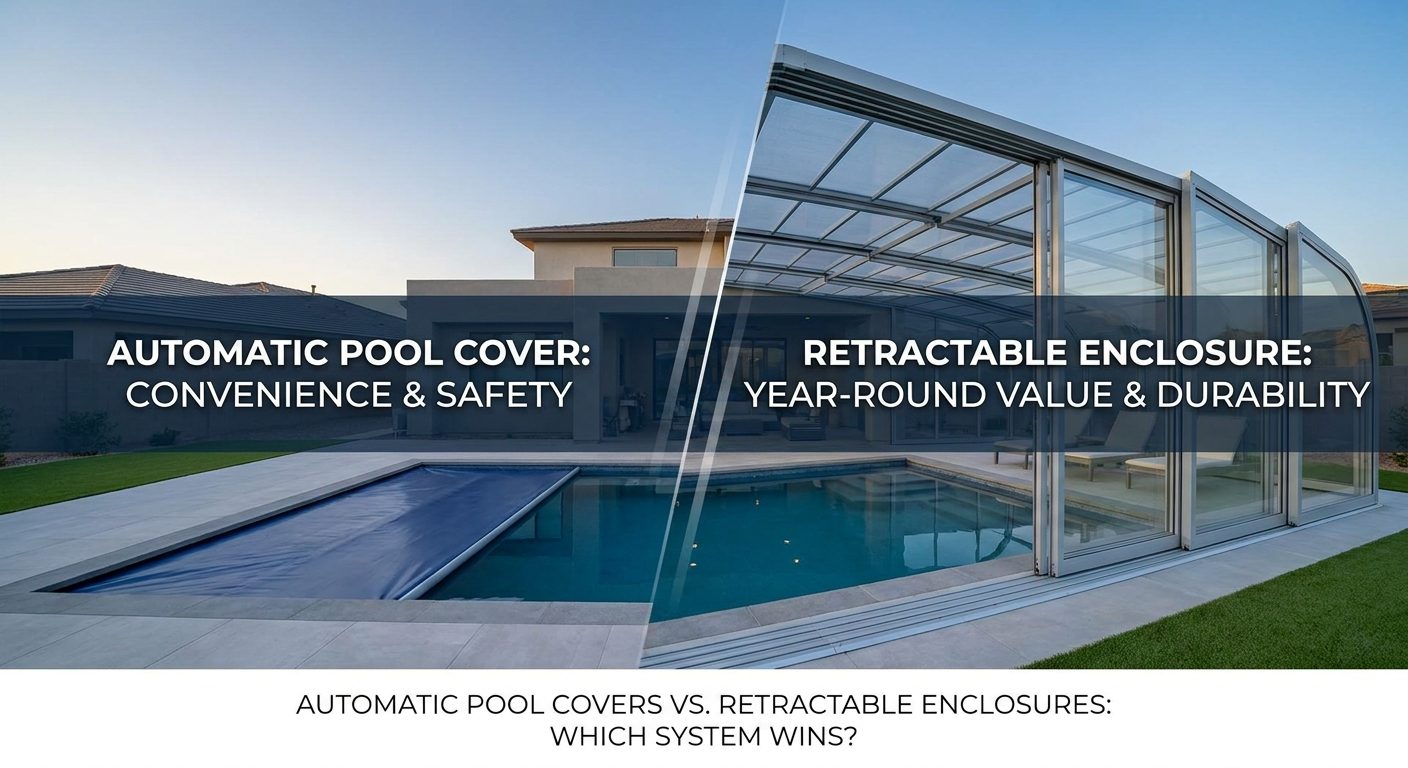
Automatic Pool Covers vs. Retractable Enclosures: Which System Wins?
Most homeowners looking at pool protection start with the same shortlist: an automatic cover or a retractable enclosure. Both are sold on broadly similar promises, and both carry price tags that require serious thought. The mistake is assuming they are roughly equivalent options sitting at different points on a cost spectrum. They are not. They solve the same surface-level problem through completely different engineering logic, and picking the wrong one means paying for a capability you cannot actually use.
In the UK, the outdoor swimming season without any intervention runs to roughly 14 to 18 weeks, typically late May through mid-September in a reasonable year. Everything outside that window involves either heating costs, weather misery, or both. What you choose to put over your pool determines how much of that remaining 34 to 38 weeks you can realistically reclaim.
Two Very Different Answers to the Same Problem
An automatic pool cover is a motorised fabric or slatted sheet. It rolls across the water surface, sits on or just above the pool, and protects the water itself from debris, evaporation, and heat loss. That is the full extent of its function. It is a lid for your pool, a very well-engineered lid, but a lid nonetheless.
A retractable enclosure is something structurally different. It is a building that moves. Interlocking aluminium arch or flat-roof segments sit on wheeled base rails and telescope open or closed over the entire pool area, including the surrounding deck. When closed, you are standing inside a sheltered structure. When open, the pool is fully exposed to the sky. The cover protects a surface; the enclosure protects an environment.
That distinction is not semantic. It determines which activities each system can support, which safety standards each can realistically meet, and which climates each handles well. A cover cannot keep wind off a swimmer. An enclosure cannot be fitted to an irregular freeform pool in 48 hours. Each product has a specific engineering logic, and the best choice depends entirely on matching that logic to your actual priorities.
The UK temperate climate makes this comparison particularly pointed. Fourteen to eighteen usable weeks is not enough for most families who have invested in a pool. Both systems claim to extend that season, but the degree to which they deliver on that claim differs substantially. A cover can add passive heat retention and reduce the maintenance burden during closure. An enclosure can turn a UK outdoor pool into something functionally equivalent to an indoor facility for the full twelve months.
This article compares both systems across five decision-making criteria: how the mechanics work, what safety regulations actually demand, year-round usability, long-term durability and costs, and finally which specific situations suit each product. The goal is a clear framework, not a sales pitch for either option.
How Each System Actually Works
Understanding the mechanics matters because it tells you where each system is vulnerable and what it can realistically do. Both products involve motors, tracks, and moving parts, but the engineering challenges they face are quite different in scale.
Automatic pool covers: the mechanics
A typical automatic pool cover uses a deck-mounted or underground motorised reel mechanism running on a 240V supply. The motor drives a shaft that winds or unwinds the cover, which travels along tracks set into both long edges of the pool. A standard domestic installation deploys the cover fully in under 60 seconds. The cover itself is either reinforced PVC, a foam-core fabric, or polycarbonate slats depending on the specification.
The cover floats on or just above the water surface. For this to work reliably, the tracks must be perfectly aligned, parallel, and free from debris. Pool shape matters enormously here. Rectangular pools are straightforward. L-shapes, kidney curves, or pools with steps and ledges introduce complications that often require a custom cover cut to shape, which increases both cost and the risk of edge gaps where the cover does not fully seal.
The reel housing can be positioned at one end of the pool, built into a bench or recess in the pool surround, or installed in an underground pit below the pool deck. Underground installations are visually cleaner but significantly more expensive to access for maintenance. Deck-mounted reels are easier to service but occupy usable space at the pool end.
Motor, track, and drive system repairs are the main ongoing cost of automatic cover ownership. Debris in tracks, UV degradation of the cover material, and reel mechanism wear all accumulate over time. Replacement cover fabrics typically last 8 to 12 years before they need replacing, even with good maintenance.
Retractable enclosures: the mechanics
A retractable enclosure is a fundamentally different engineering proposition. Arch Enclosures builds its structures from structural-grade aluminium profiles, using interlocking arch or flat segments fitted with high-impact polycarbonate or toughened glass panels. The segments sit on wheeled base rails fixed to the pool surround and telescope one over another when retracted, stacking at one or both ends of the pool.
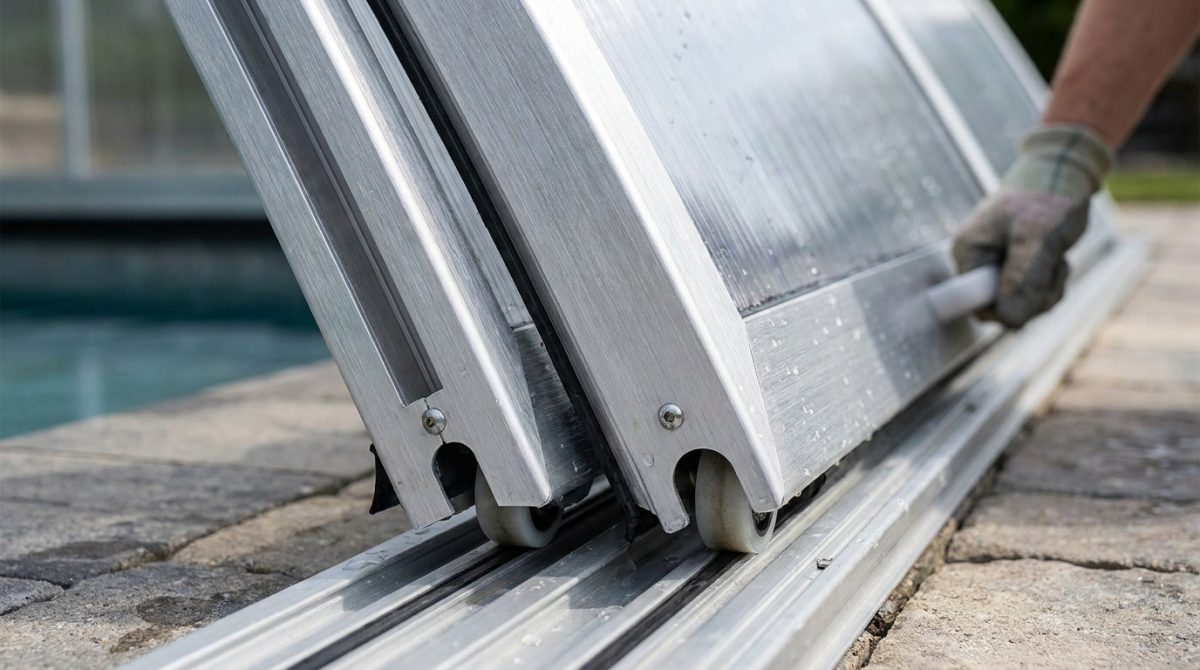
The movement can be motorised or manual. Manual enclosures are pushed by hand along the rails, which is straightforward for low-profile models but requires more effort on taller high-rise structures. Motorised systems use a 240V drive, similar in concept to a cover motor but operating across a much larger and heavier structure. The key mechanical difference is that the load being moved is measured in hundreds of kilograms rather than tens.
Because the enclosure sits above the pool deck rather than on the water surface, it is not constrained by pool shape in the same way a cover is. The rails run along the outer edges of the pool surround, so the pool itself can be any shape. The enclosure spans over it. This makes retractable enclosures considerably more adaptable to non-rectangular pools than fabric or slatted covers.
The mechanical difference between the two systems produces a critical functional difference. A cover protects only the water surface. An enclosure protects the entire pool environment: the water, the surrounding deck, the air temperature above the water, and the space where swimmers and their families actually spend time. This is why enclosures can accommodate integrated heating systems and ventilation as part of the structure itself, while a cover can only passively retain heat already in the water.
Both systems can be connected to automation controllers, allowing scheduled opening and closing, remote operation via smartphone, and integration with pool heating and lighting systems. The enclosure can additionally accept integrated LED lighting within its structure, forced ventilation to manage humidity and condensation, and heating sources that warm the air inside the enclosure rather than just the water. A cover has no equivalent add-on capacity because there is no enclosed air space to work with.
Safety Standards: What the Regulations Actually Require
Pool safety is an area where the difference between a cover and an enclosure becomes legally and practically significant, particularly for families with young children, pet owners, and commercial operators. The regulatory framework in the UK does not treat surface covers and structural barriers as equivalent, and understanding why matters when making a purchase decision that will affect your pool for decades.
The regulatory framework
UK pool safety sits under BS EN 13451 for pool equipment standards and Health and Safety Executive guidance on preventing drowning in private pools. These distinguish clearly between barrier protection, which prevents access to the pool area, and surface protection, which covers the water once access has already been gained. The two functions are not interchangeable in the eyes of the guidance.
A compliant automatic pool cover can meet BS EN 13451-1 as a barrier device, but only if it carries a sufficient load rating. For a cover to function as a safety barrier, it must be capable of supporting an adult's weight without submersion, typically rated at 100kg per square metre or above. The principle is that if a child falls onto a closed, compliant cover, they land on a surface rather than entering the water. Some covers on the market, particularly lightweight solar covers and basic manual versions, do not meet this load rating and cannot be claimed as safety barriers at all.
However, even a fully compliant, load-rated automatic cover only provides its safety function when it is in the closed position. This is a critical limitation that is frequently underplayed in product marketing. An open cover offers zero protection. A cover in an intermediate position, half deployed during a fault or a power cut, offers unpredictable protection at best. A cover that has been left open after the last swim because the children wanted one more quick dip offers nothing.
The structural barrier advantage
A retractable enclosure operates under a different safety logic. Because it is a physical structure with lockable sliding doors and continuous wall panels, it acts as a perimeter barrier regardless of whether the roof section is open or closed. A child cannot walk into the pool area unobserved when the enclosure doors are locked, even if the roof segments have been pushed back to open the pool to the sky. The barrier function is independent of the roof position.
This distinction is particularly relevant for commercial pools in the UK. HSE guidance for leisure centres and hotel pools effectively requires a physical barrier preventing unsupervised access rather than relying on a surface cover as the primary safety mechanism. This is one reason Arch Enclosures systems are regularly specified for commercial leisure facilities, where the consequences of a safety failure are both human and regulatory.
For domestic settings, families with young children or pets face a specific risk gap with automatic covers that deserves honest acknowledgment. Mechanical failure in the cover motor, a power cut removing electrical supply, or a cover left in an intermediate position after an interrupted closing cycle all eliminate the safety function entirely. These are not theoretical risks. Track debris causing partial deployment, motor controller faults, and covers left open by adults who intended to close them later are all common real-world scenarios.
The enclosure does not remove all risk, and no pool safety system replaces supervision. But the structural perimeter barrier provided by a locked enclosure is a fundamentally more reliable safety mechanism than one that depends on a cover being fully deployed and mechanically functional at every moment when the pool is unattended. For families where unsupervised access is a genuine concern, this difference in safety architecture is arguably the most important factor in the comparison.
Year-Round Usability: The Seasonal Maths
An automatic pool cover does one thing very well: it keeps heat in the water. When deployed overnight, a quality cover reduces heat loss by up to 70 percent, which meaningfully cuts the energy cost of maintaining pool water at a swimmable 28 degrees Celsius. For a heated outdoor pool in the UK, that saving on gas or heat pump running costs is real and worth having.
The problem is that warm water alone does not make outdoor swimming comfortable. An automatic cover does nothing to change the ambient air temperature around the pool. Stepping out of a warm pool into near-freezing October air in the UK, towelling off in a wind, and walking across cold wet paving is not a pleasant experience regardless of what the water thermometer reads. The cover protects the water; it does not protect the swimmer.
In practice, the benefit of a cover is measured in weeks at either end of summer. A pool that would otherwise be usable from late May to mid-September, roughly 18 weeks, can be pushed to roughly 26 weeks with a good automatic cover in place. That is an extension of four to six weeks at each shoulder of the season. For many families, that extra time in late April or early October has genuine value. But the pool still closes for the winter, and the months from November through March remain completely off the table.

A retractable enclosure changes the equation entirely. By trapping solar gain and the heated air rising from the pool surface, an enclosure raises the internal ambient temperature by 8 to 15 degrees Celsius above outside air temperature on a typical UK autumn day. On a day when it is 9 degrees outside, it can feel like 20 degrees inside the enclosure. That is the difference between a pool you cannot use and one you can comfortably swim in, sit beside, or entertain around.
The result shows up clearly in how homeowners actually use their pools. Those with enclosures commonly report using their pools 10 to 12 months per year. Cover-only pools typically see 5 to 6 months of genuine use. That is roughly a doubling of value from the same pool infrastructure investment, without any change to the pool itself.
There is also a dimension that the seasonal swimming calendar does not fully capture. An enclosure creates a usable outdoor room. On a rainy Tuesday in November, it may be too cold to swim, but the enclosure space is still dry, sheltered, and comfortable for exercise, a family gathering, or simply sitting with a coffee. None of that is possible with a cover. The cover folds up and the pool sits in the open air, unusable and exposed. The enclosure converts a single-use seasonal asset into a multi-functional space that earns its keep across the whole year.
Durability and Maintenance Over a 25-Year Horizon
When comparing these two systems, it helps to think beyond the installation invoice and look at what you are actually committing to over the life of the pool. Both systems have ongoing costs, but the nature of those costs is very different.
Automatic pool cover fabric and slat materials typically carry manufacturer warranties of 5 to 10 years. Real-world replacement cycles tend to run 8 to 12 years, depending on UV exposure and, critically, the chemical balance of the pool water. Chlorine off-gassing and pH fluctuations are hard on cover materials, and a pool that is slightly over-dosed on a regular basis will shorten the cover's lifespan noticeably. When the fabric or slats go, the entire covering surface needs replacing, not just the damaged section.
The mechanical components are a separate concern. The motor and drive system on an automatic cover require annual servicing and are particularly vulnerable to the corrosive environment above a chlorinated pool. When motors fail, replacements cost between 600 and 1,500 pounds depending on the system. Track repairs, reel servicing, and electrical faults add further unpredictable expense on top of that.
Across a 25-year period, the maths is not kind to automatic covers. Most owners will face two full fabric or slat replacements and a string of mechanical interventions. The initial installation cost looks reasonable, but the accumulated maintenance spend over two decades often surprises owners who did not plan for it. pool ownership costs over the long term look quite different once those replacement cycles are factored in.
Retractable enclosures built from marine-grade aluminium alloy and UV-stabilised polycarbonate panels operate in a different durability category. These structures are engineered to withstand hurricane-force winds and heavy snow loads. A well-maintained enclosure is designed to last 25 to 30 years without structural replacement. That is not a marketing claim; it reflects the material properties of the components involved.
Aluminium does not rust. It oxidises on the surface, forming a protective layer that actually slows further corrosion rather than accelerating it, as mild steel would. Polycarbonate panels have their own longevity profile: UV-stabilised grades resist yellowing and brittleness for decades, and if a panel is damaged by an impact, it can be individually replaced without touching the rest of the structure. Maintenance is component-level, not whole-system.
Annual enclosure maintenance typically involves cleaning the tracks to remove grit and leaf debris, checking roller bearings on the sliding sections, and inspecting the panel seals for any gaps that could let in moisture or cold air. Done properly, this is a straightforward job that typically costs between 150 and 300 pounds per year when carried out by a specialist. Compare that to the unpredictable mechanical repair costs of a motorised cover system, where a single motor failure can cost more than two years of enclosure servicing in a single callout.
The 25-year picture for an enclosure is one of steady, predictable, modest maintenance costs against a capital investment that holds its structural integrity throughout. The 25-year picture for an automatic cover is lower initial cost followed by escalating replacement and repair spend that compounds over time. Which one works out cheaper depends on the specific products chosen and the local conditions, but the enclosure's cost profile is far more controllable.
The Real Cost Comparison: Installation, Running Costs, and Hidden Expenses
Price is usually the first question, and the headline numbers do favour the automatic cover. For a standard 8m x 4m residential pool, a fully motorised automatic cover installed in the UK typically costs between £4,000 and £10,000, depending on whether you choose a basic semi-automatic version with a hand crank assist or a fully automated system with a key-switch controller and integrated deck box. That is a significant but digestible outlay for most pool owners.
A retractable aluminium enclosure covering the same pool starts at roughly £12,000 to £15,000 for a low-profile telescopic system and rises to £30,000 to £50,000 for a full high-rise enclosure with motorised roof panels, integrated heating provision, and glazed side panels. The upfront gap is real, and it would be dishonest to pretend otherwise.
The picture changes substantially once you look across a 25-year horizon. An automatic cover fabric is not a lifetime purchase. Most manufacturers specify a replacement cycle of eight to twelve years under normal use, which means two fabric replacements across the life of the pool. Each replacement costs between £3,000 and £6,000 including labour, so the fabric alone adds £6,000 to £12,000 to the total bill. Motor and drive system failures are not unusual either, and each incident typically costs between £500 and £1,500 to resolve.
Neither of those figures accounts for what is arguably the largest hidden cost: heating a pool that loses heat through an unenclosed water surface every night. Even with a cover in place, a pool that is uncovered for several hours daily while in use loses a significant proportion of its heat through evaporation and convection. An enclosure traps solar gain during the day and drastically reduces overnight heat loss, cutting gas or heat pump running costs by an estimated 30 to 50 percent compared to a cover-only pool. For a household spending £2,500 to £3,000 per year on pool heating, that represents a saving of £800 to £1,500 annually, or between £20,000 and £37,500 across 25 years. For a fuller breakdown of how heating choices interact with enclosure performance, the article on heating your enclosed pool covers the numbers in detail.
Property value adds another financial dimension that many buyers overlook. Estate agents consistently report that a quality pool enclosure is treated as a permanent home improvement, adding 5 to 8 percent to assessed property value in the same way that a well-built garden room or extension does. An automatic pool cover, however well specified, adds minimal assessed value because it is regarded as a movable accessory rather than a structural feature.
When you bring together the fabric replacement cycles, motor servicing costs, annual energy savings, reduced chemical consumption from lower evaporation, and property value uplift, the 25-year total cost of enclosure ownership becomes competitive with, and in many cases superior to, a series of cover replacements on a pool that remains only usable for five or six months of the year. The cover wins on day one. The enclosure wins over time.
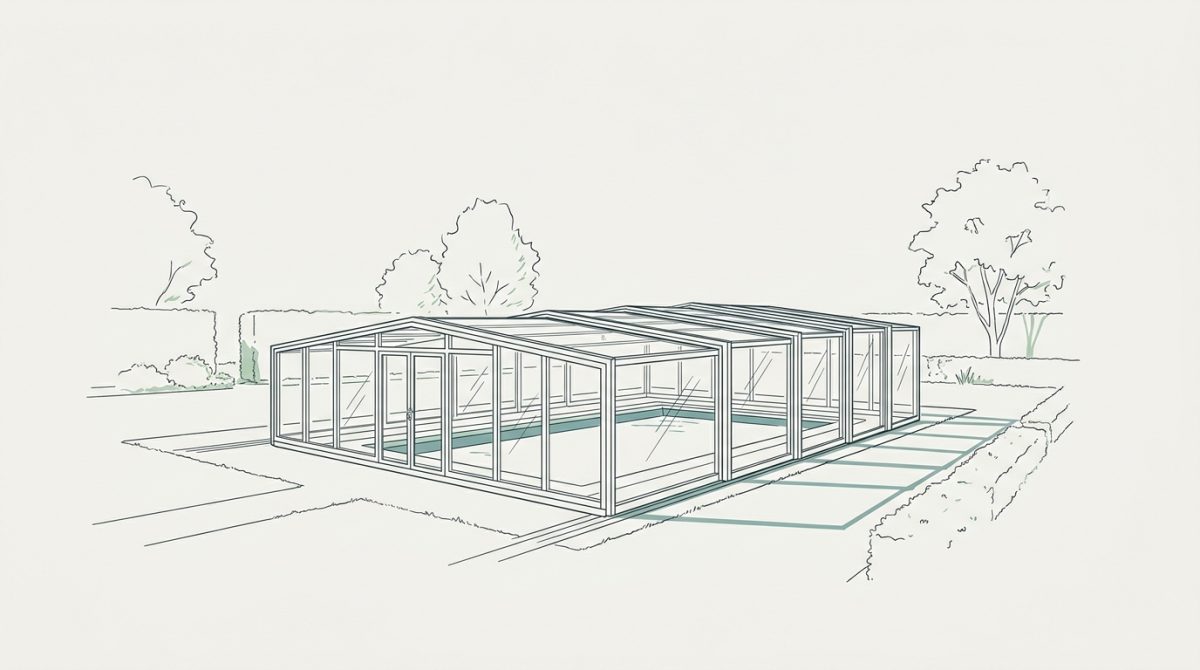
Chemical Management and Water Quality Differences
Water chemistry is not the most glamorous topic, but it has a direct effect on both running costs and the experience of swimming. The two systems behave quite differently here, and the differences are worth understanding before you commit.
Automatic pool covers perform well on water chemistry when they are deployed. A closed cover cuts evaporation by up to 95 percent, which means less water lost overnight and significantly less chlorine destroyed by UV radiation from sunlight. Most pool owners find that consistent cover use reduces their annual chemical spend by 20 to 40 percent, which on a typical UK residential pool translates to savings of £150 to £400 per year depending on pool size and baseline usage.
The qualification matters, though. Those savings only apply during the hours the cover is actually on the water. During an active swim session, and for some time afterwards while the cover motor cycles and the water settles, the pool is open to the sky. UV degradation of chlorine continues normally during those windows, and in warm weather that degradation can be rapid. If your household swims daily, the cover may be off the pool for four to six hours out of every twenty-four, and the chemistry savings are proportionally reduced.
A retractable enclosure with polycarbonate panels takes a different approach. Polycarbonate filters out the majority of UV radiation year-round, which slows chlorine photodegradation even when the roof sections are open for ventilation. The enclosed air space also dramatically cuts wind-driven evaporation, which is one of the most underestimated sources of water and chemical loss in outdoor pools in the UK. On a breezy day, an open pool can lose more water to wind-driven evaporation than it does through simple surface evaporation in calm conditions. An enclosure removes that variable almost entirely.
There is also a debris factor. An enclosed pool sees far less organic matter entering the water because leaves, pollen, insects, and airborne particulates are largely excluded. Organic loading is one of the main drivers of chloramine formation, the compound responsible for the eye irritation and strong smell that many people mistakenly associate with too much chlorine. Less organic matter means less chloramine, less frequent shocking, and water that simply feels better to swim in.
For pools that use UV or ozone sanitation alongside chlorine, the controlled environment inside an enclosure makes those systems more effective. UV and ozone work best when water chemistry is stable and consistent. An enclosed pool with lower evaporation rates, less debris ingress, and reduced chlorine photodegradation provides exactly that stable baseline, allowing the supplementary sanitation system to operate at its design efficiency rather than constantly catching up with external variables.
Aesthetic Integration and Planning Considerations in the UK
Both systems have distinct aesthetic profiles, and being honest about those differences at the design stage saves a great deal of frustration later.
Automatic pool covers, when retracted, are designed to disappear. The fabric rolls into an underground housing or a low deck-level box that can be tiled or decked over to match the surrounding surface. In the open position, the pool looks exactly as it would without a cover at all. For homeowners who invested in a landscaped garden and want to preserve the open-air aesthetic during summer, this near-invisibility is a genuine selling point. There is no structure to accommodate, no sight lines to consider, and no permanent visual presence in the garden during the swimming season.
Retractable enclosures are visible structures, and it is worth being straightforward about that. The aluminium frame and polycarbonate panels occupy space above and around the pool, and their visual impact is part of the design conversation from day one. Profile colour, panel opacity, arch or flat roof geometry, and the relationship of the enclosure height to surrounding garden features all affect whether the structure enhances or dominates its setting.
Modern low-profile telescopic enclosures are designed with exactly this concern in mind. Manufacturers such as Arch Enclosures produce systems with slim aluminium sightlines and optically clear polycarbonate panels that preserve garden views rather than blocking them. A well-specified low enclosure, positioned correctly relative to the house and boundary, can read as a considered piece of garden architecture rather than an industrial addition. The key is treating the enclosure as part of the garden design from the outset, rather than retrofitting it as an afterthought.
On the planning side, the news for most homeowners is more straightforward than they expect. In the UK, most retractable pool enclosures fall under permitted development rights for domestic properties and do not require a formal planning application. The relevant provision is Class E of Schedule 2 to the Town and Country Planning (General Permitted Development) Order 2015, which covers buildings, enclosures, and structures within the curtilage of a dwellinghouse. Provided the enclosure meets the applicable height and footprint restrictions, and is not positioned forward of the principal elevation, permitted development rights generally apply without the need to engage the local planning authority at all.
There are exceptions. Listed buildings and their curtilages sit outside the permitted development regime entirely, meaning any external structure requires listed building consent and, in most cases, a full planning application. Conservation areas introduce additional restrictions on certain types of development. Some local authorities have also removed permitted development rights from specific estates or streets through Article 4 Directions, which are not always obvious from the property deeds. Early informal contact with the local planning authority before specifying an enclosure is strongly advisable in any of these circumstances.
Automatic covers have no planning implications in virtually all cases. The housing mechanism sits at or below deck level and the cover itself is not a structure in any planning sense. For homeowners in conservation areas, listed properties, or anywhere that planning permission is uncertain, this can be a genuinely decisive practical advantage, not just a minor convenience. Where the enclosure option might trigger a planning process with an uncertain outcome, the cover provides a usable solution without regulatory risk.
When an Automatic Cover Is the Right Choice
An automatic cover makes genuine sense when the budget sits below £10,000 and the primary goals are reducing heating costs and keeping debris out, rather than fundamentally changing how often or how late in the year the pool gets used. If those two objectives cover everything a homeowner wants, a cover delivers them efficiently without the capital commitment of a full structure.
Households planning to sell within five years, or renters who have installed a pool and want a practical solution they can take with them, will often prefer the lower outlay and the fact that an automatic cover leaves the garden layout and planning position completely untouched. A retractable enclosure adds permanent value to the property, but that value only realises if you are staying long enough to capture it.
Geography matters here more than people expect. Pools in the southwest of England, particularly in Cornwall, Devon, and coastal parts of Dorset, sit inside microclimates where average September temperatures remain comfortable for outdoor swimming. In those locations, the natural season already stretches further into autumn, which means a cover extends usability by a meaningful margin without needing to become a full enclosure. The same cover installed in Northumberland adds far less practical value because the ambient season is already short at both ends.
A cover also fits households where the pool is genuinely a high-summer facility and no one in the family is asking to swim in March. If the objective is energy efficiency, cleanliness, and reduced chemical use during the months the pool is already in use, an automatic cover handles all of that well. It reduces evaporation, limits debris ingress, and keeps heat in overnight, and for a summer-only pool those benefits are real and measurable.
For commercial pools where the physical safeguarding function is already provided through perimeter fencing, access-controlled gates, and supervised operation, an automatic cover can complement that existing safety infrastructure without needing to replace it. In that context it functions as an operational tool rather than a primary barrier, and its cost profile suits that role.
When a Retractable Enclosure Delivers Better Long-Term Value
The clearest case for a retractable enclosure is a homeowner who is staying in the property for more than seven to ten years. Over that timeframe, the compounding effect of year-round usability, lower heating costs across twelve months rather than five or six, reduced chemical expenditure, and uplift to the property's market value stacks up to a return that comfortably clears the higher initial investment. The maths only works when the time horizon is long enough to let those benefits accumulate.
Families with young children or pets face a safety calculation that deserves its own weight in this decision. An automatic cover requires deliberate human action to deploy, and it can fail to close fully if something interrupts the mechanism or if a child activates the opening cycle. A retractable enclosure provides an always-on perimeter barrier, meaning the pool is physically inaccessible unless someone consciously opens the structure. For a household where that peace of mind is a genuine priority, the price premium over an automatic cover is justified by the safety case alone, separate from any usability or financial argument.
Homeowners in northern England, Scotland, and Wales gain the most proportional benefit from an enclosure because they are starting from the weakest baseline. In many parts of Scotland the outdoor swimming season without any intervention runs to fourteen weeks or fewer. An enclosure converts that into a year-round facility, effectively tripling the usable calendar of an asset that would otherwise sit dormant for more than eight months. The ratio of benefit to cost is higher in those locations than almost anywhere else in the UK.
The Commercial Case
For hotels, holiday parks, and leisure clubs, the return on investment calculation is relatively straightforward. A covered pool can be marketed and priced as an all-season amenity, generating revenue in November and February that an uncovered pool simply cannot. Most commercial operators who make this switch report recovering the enclosure cost within three to five years through a combination of additional bookings, higher nightly or membership rates, and reduced off-season closure costs. That payback period is well within the working life of a quality aluminium structure.
A retractable enclosure from Arch Enclosures carries a specific advantage that matters in the UK context: the system is designed and manufactured here, built to meet UK planning norms, and engineered to handle British wind and snow loading rather than the lighter specifications common in products designed for Mediterranean climates. An enclosure optimised for southern France or Spain will not perform the same way on an exposed site in the Peak District or on the north Cornwall coast. The thermal performance, the structural ratings, and the glazing specifications that make an enclosure genuinely useful in a British winter are products of designing for that environment from the outset.
How to Make the Final Call
The decision framework does not need to be complicated. If the priority is lowest upfront cost and the pool is a summer-only facility that simply needs to be cleaner and cheaper to heat during the months it is already in use, an automatic cover is a reasonable and practical choice. It does what it says, it costs less, and it does not require planning permission or structural groundwork.
If the goals are extended usability across as much of the year as possible, a structural safety barrier that works passively without depending on daily human action, and a long-term addition to property value, a retractable enclosure wins the comparison outright. It is not the cheaper option upfront, but for a property you intend to stay in, a family where poolside safety is non-negotiable, a northern location where the raw season is short, or a commercial operation where the pool needs to earn revenue across the calendar year, the case for a full enclosure is not particularly close. The right question is not which system costs less to buy, but which one delivers more of what you actually need over the life of the investment.
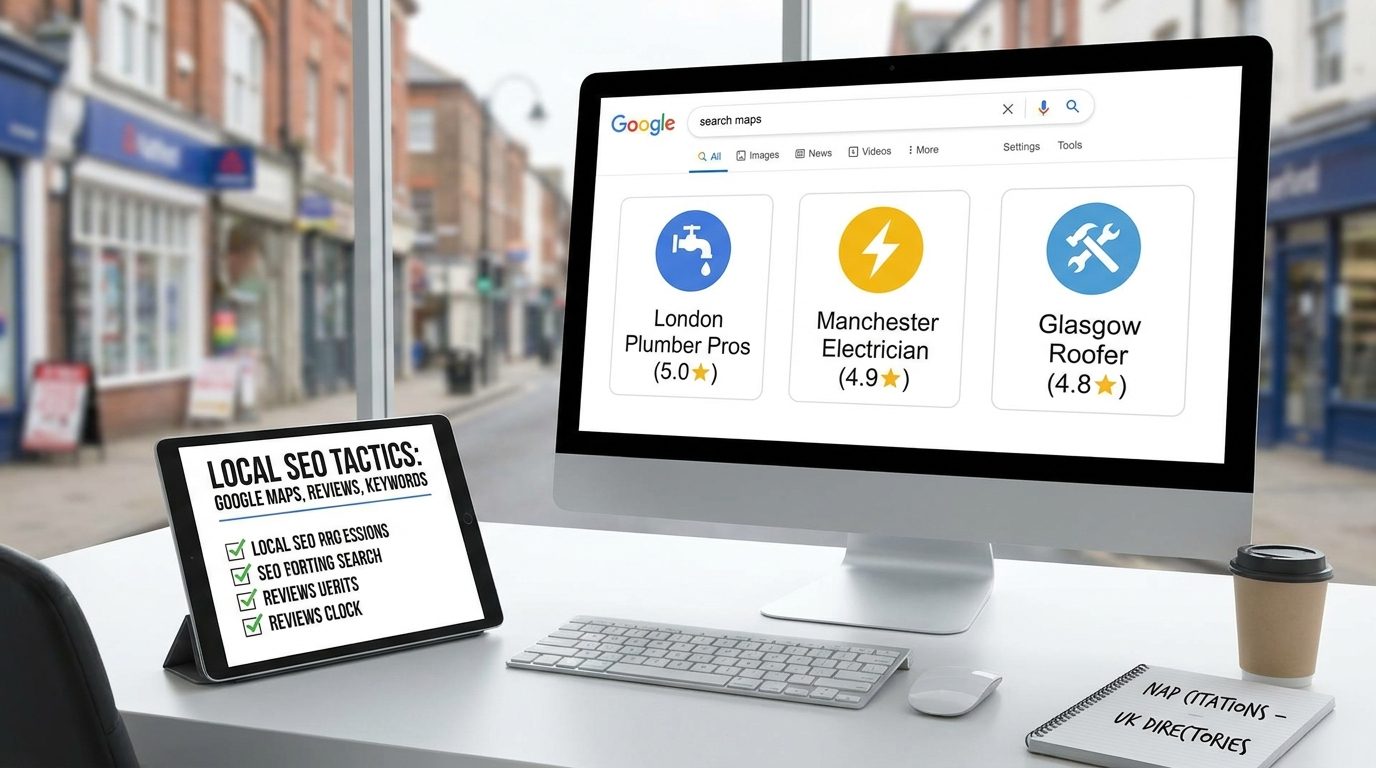
Local SEO Tactics: How UK Tradespeople and Service Providers Get Found First
A plumber in Worthing. An electrician in Leeds. A landscaper in Bristol. What do they all have in common? If a local customer searches for their trade right now and they're not showing up in Google Maps, someone else is getting that call.
Local SEO is the practice of making your business visible when people nearby search for what you offer. For trades and service businesses, it's arguably the most valuable kind of marketing you can do. Here's how to do it properly.
Start With Your Google Business Profile
Your Google Business Profile (formerly Google My Business) is the single most important asset in local search. It's what powers your appearance in Google Maps and the local pack, which is the map with three business listings that appears near the top of many search results.
If you haven't claimed your profile yet, go to Google and search your business name. If there's an unclaimed listing, claim it. If there isn't one, create it. Either way, filling it out properly matters more than most people realise.
These are the details you should complete in full:
- Business name, address, and phone number (exactly as they appear on your website)
- Business category (choose the most specific option available)
- Service areas if you travel to customers rather than working from a fixed premises
- Opening hours, including whether you offer emergency or out-of-hours cover
- A description that includes what you do and the areas you serve
- Photos of your work, your van, your team
Google also lets you add individual services with descriptions and prices. A roofing company could list flat roof repair, guttering, chimney pointing as separate services. This helps Google match your profile to more specific searches.
Reviews Are Not Optional
Google uses reviews as a significant ranking signal for local search. More importantly, customers read them. A tradesperson with 40 reviews and a 4.8 rating will win the click over a competitor with 5 reviews almost every time.
The most effective way to build reviews is simply to ask. After finishing a job, send a short text or email with a direct link to your Google review page. Most happy customers are glad to leave a few words if you make it easy.
A few things to keep in mind:
- Never buy fake reviews. Google is good at detecting them and the penalty is not worth it.
- Respond to every review, positive and negative. A polite, professional response to a complaint often impresses potential customers more than five-star reviews alone.
- Spread requests over time. A sudden flood of reviews after a long gap can look suspicious to Google's algorithms.
Use Keywords That Reflect How People Actually Search
People searching for a local tradesperson rarely type something vague. They type emergency boiler repair Chichester or kitchen fitter near me. Your website content needs to reflect these patterns.
For most service businesses, the essentials are a homepage that clearly states what you do and where you work, plus individual service pages for each main offering. If you cover multiple towns, consider a short location page for each one. A single page for bathroom fitting in Worthing and another for bathroom fitting in Brighton gives you a much better chance of ranking in both places.
When writing this content, think about how your customers phrase their problems, not how you'd describe your trade. Someone isn't searching for EICR certification services, they're searching for electrical safety certificate Horsham. Use plain language that mirrors real searches.
Build Citations Across UK Directories
A citation is any mention of your business name, address, and phone number online. Google cross-references these to verify that your business is real and consistent. The more reputable sources that list your correct details, the more trustworthy your business looks to the algorithm.
For UK businesses, the key directories to target are:
- Yell.com
- Thomson Local
- Bing Places
- Apple Maps
- Checkatrade or Rated People (especially for trades)
- TrustATrader
- Your local chamber of commerce directory
Consistency matters here. If your Google Business Profile shows your business as Samson Plumbing Ltd but your Yell listing says Samson Plumbing with a different phone number, that inconsistency can hurt rather than help. Do an audit of your existing listings before creating new ones.
Make Sure Your Website Does Its Part
Your Google Business Profile and your website need to work together. Google looks at your website to confirm the signals your profile is sending.
A few things to check:
- Your name, address, and phone number appear on your website, ideally in the footer of every page
- Your site loads quickly on mobile devices (most local searches happen on phones)
- Pages have title tags that include your service and location, for example: Boiler Servicing in Worthing | Smith Heating
- You have a contact page with your full address and an embedded Google Map
If you're using structured data markup (also called schema), adding LocalBusiness schema to your site tells Google exactly what type of business you are, your service area, and how to contact you. This is a slightly more technical step, but a web developer can implement it in an hour.
Track What's Actually Working
Local SEO isn't a one-off task. Google's algorithm shifts, competitors catch up, and what works in one town might need adjusting for another. Set aside time every month or so to check a few things.
Inside your Google Business Profile, the Insights section shows how many people found you in search, how many clicked through to your website, and how many asked for directions. These numbers are a useful indicator of whether your profile is gaining or losing ground.
Google Search Console (free to set up) shows which search terms are bringing visitors to your website. If you notice you're getting clicks for a service you haven't built a page for yet, that's a prompt to create one.
The fundamentals here aren't complicated. Claim your profile, earn genuine reviews, write pages that match what local customers search for, and make sure your details are consistent everywhere they appear. Done consistently, this work compounds over time, and the businesses that put it in now are the ones getting called first.
What goes into every article
Research, writing, images, search basics and publishing. We handle every part of it for you.
Real research behind every article
We look at the sites already ranking for your keywords and the news in your industry, so each article answers what people search for right now.
Original, in your voice
We write every article from scratch in a voice that matches your brand. We learn that voice once, when we set you up.
A custom image for every article
Each article gets its own hero image, in a style we choose to suit your brand, so your blog stops looking like everyone else's stock photos.
Search basics done for you
Meta titles and descriptions, proper headings, links to your other pages and the keywords your customers use.
Published to your site
Articles go live on your WordPress site on the schedule we agree, sent straight to it. No copying and pasting, no plugin to install.
We set it all up
Send us your WordPress login and we connect your site, free. If you have no blog page yet, we build one for you.

We look at the sites already ranking for your keywords and the news in your industry, so each article answers what people search for right now.

We write every article from scratch in a voice that matches your brand. We learn that voice once, when we set you up.

Each article gets its own hero image, in a style we choose to suit your brand, so your blog stops looking like everyone else's stock photos.
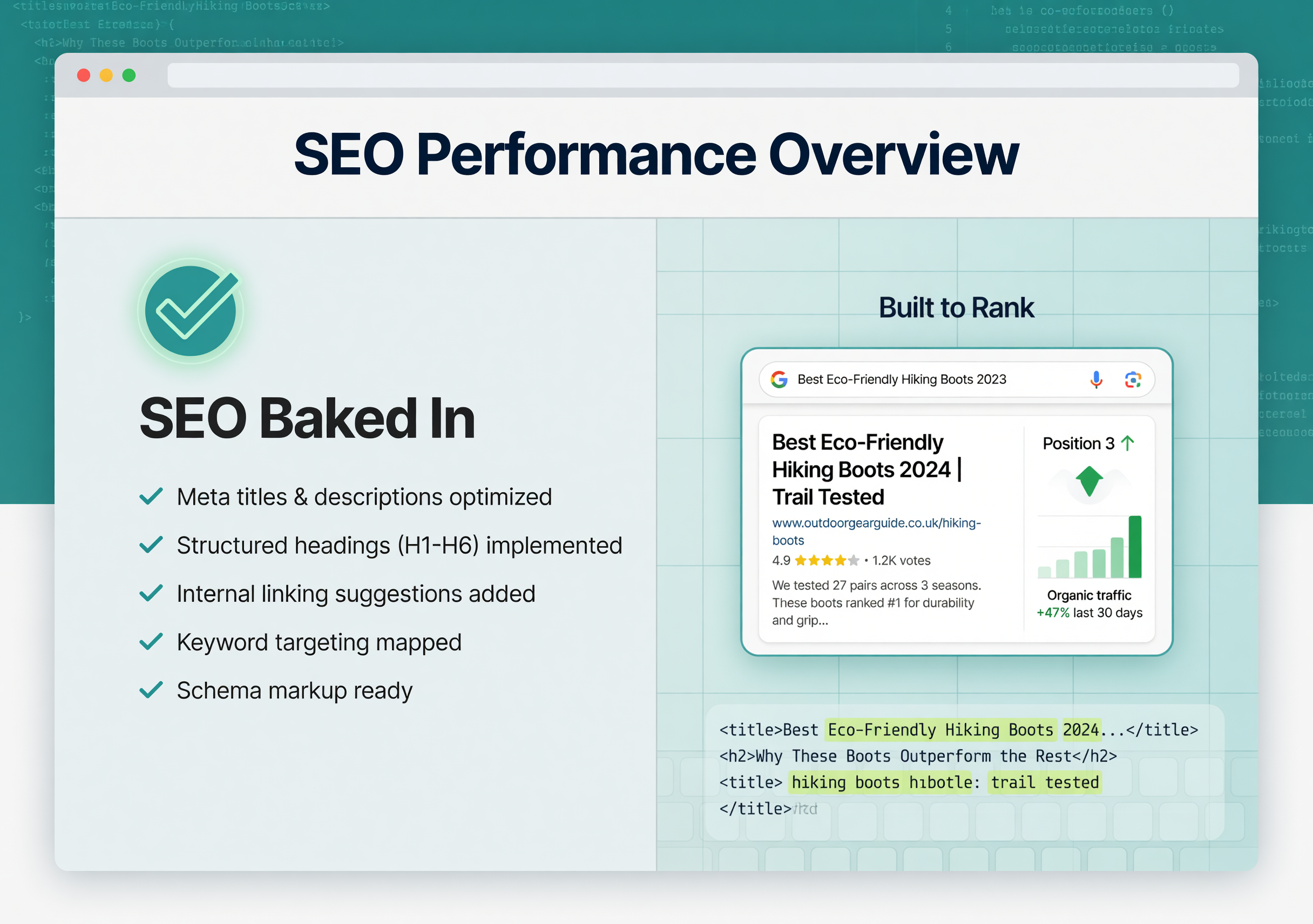
Meta titles and descriptions, proper headings, links to your other pages and the keywords your customers use.

Articles go live on your WordPress site on the schedule we agree, sent straight to it. No copying and pasting, no plugin to install.
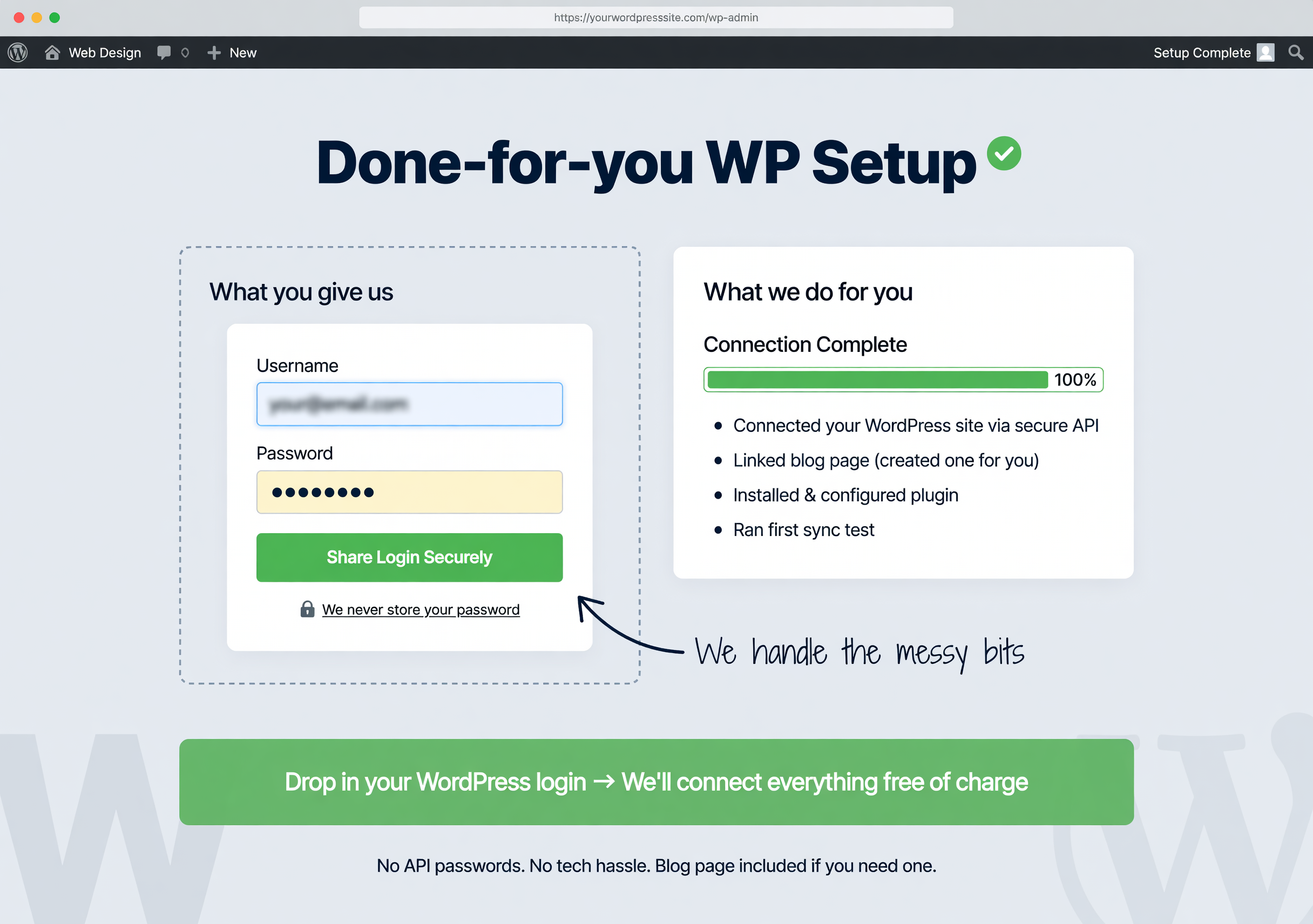
Send us your WordPress login and we connect your site, free. If you have no blog page yet, we build one for you.
All of that, done for you every week
Research, writing, custom images and publishing, on the schedule we agree with you. No setup fee and no minimum term.
Pay per article, and the more you have, the less each one costs
All prices include VAT. Each month your first 10 articles are £5.00 each, the next 10 are £4.25 each, and so on down to £1.75 for every article over 50. You pay monthly, with no setup fee.
No setup fee
We connect your website and build a blog page if you need one, at no extra charge.
Cancel any time
There is no minimum term. Tell us and we stop your subscription. Articles already published stay on your site.
Rewrites on us
Not happy with an article or its image? Tell us and we redo it, at no extra cost.
Ready? Choose your articles and see your monthly price as you slide.
Questions people ask before ordering
Get your blog working for you
Fresh articles in your voice, with their own images, published every week. No setup fee, no minimum term, cancel any time.
That is 9 articles a month, about £5.00 each.
Each month your first 10 articles are £5.00 each, the next 10 are £4.25, and so on, so every extra article costs less.
Secure checkout by Stripe