A growing number of B2B buyers are now using AI tools like ChatGPT, Perplexity, and Google’s AI Overviews to find suppliers. One piece of research puts the figure at around 32% of buyers discovering new vendors through generative AI chatbots. That is not a niche behaviour any more. It is becoming a standard part of how purchasing decisions are made.
What makes this even more pressing is the funnel dynamic at play. Buyers typically start with around 7 or 8 potential vendors, then cut that list down to 3 or 4 before ever speaking to anyone. If your business is not surfacing in AI-generated answers early in that process, you are not even in the running.
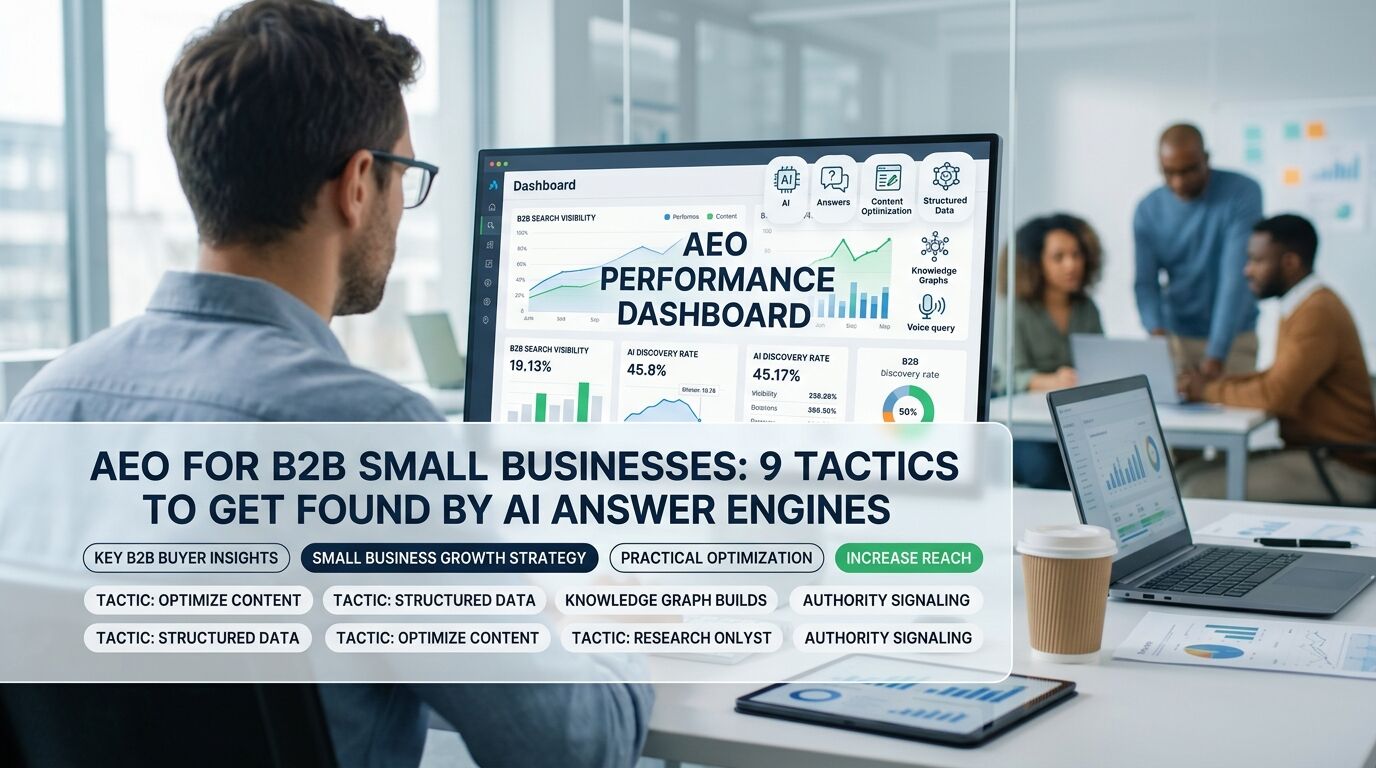
This is where Answer Engine Optimisation (AEO) comes in. Unlike traditional SEO, which focuses on getting clicks from search result pages, AEO is about getting your business cited, referenced, or recommended by AI tools when buyers ask relevant questions. Here is how to do it as a small B2B business.
1. Build Content Around Questions Buyers Actually Ask
AI answer engines pull from content that directly answers questions. Think about the real queries your prospects type into ChatGPT or Perplexity: “What should I look for in a [service]?”, “How much does [X] cost for a small business?”, or “What is the difference between [option A] and [option B]?”
Write dedicated pages or blog posts that address these questions clearly and specifically. Avoid waffle. Get to the answer in the first paragraph. Tools like AnswerThePublic or even a quick look at Google’s “People Also Ask” results can show you exactly what your buyers are searching for.
2. Use Clear, Structured Formatting
AI tools love content that is easy to parse. Use short paragraphs, descriptive H2 and H3 headings, and bullet lists where appropriate. If you are explaining a process, number it. If you are comparing options, use a simple table or a clearly labelled list.
The easier your content is to read and extract from, the more likely an AI is to reference it when constructing an answer. This is not about gaming anything. It is just good writing discipline applied with AI readability in mind.
3. Make Your Expertise and Credentials Visible
AI answer engines, particularly those underpinned by Google, factor in what is known as E-E-A-T: Experience, Expertise, Authoritativeness, and Trustworthiness. For B2B businesses, this means making your credentials obvious on your website.
- Add author bios with professional backgrounds to blog posts and articles
- List relevant accreditations, certifications, or industry memberships
- Include case studies with real results and named client sectors
- Show how long you have been operating and who you have worked with
A small accountancy firm with 20 years of experience serving construction companies should say that, clearly, everywhere it matters.
4. Get Cited on Third-Party Sites
When AI tools cite sources, they tend to favour content that has been referenced or linked to from other credible websites. Think of this as the digital equivalent of word of mouth. Guest posts on industry publications, being quoted in trade articles, getting listed in curated directories for your sector, all of these help build the kind of external profile that AI engines notice.
Start small. Reach out to one or two relevant industry blogs or local business publications. Offer to contribute a practical article in your area of expertise. A single well-placed guest post on a respected site can do more for your AEO than dozens of posts on your own site alone.
5. Optimise Your Google Business Profile
Even in a B2B context, your Google Business Profile matters. AI tools integrated with Google, including Gemini, pull information from these profiles when generating local or specific vendor recommendations. Make sure yours is complete, up to date, and populated with the right service categories and a detailed business description.
Encourage clients to leave detailed reviews that mention the specific services they used and the business challenges you helped them solve. Reviews that contain relevant keywords and context are far more useful than generic five-star comments.
6. Create Comparison and Evaluation Content
B2B buyers in the evaluation stage often ask AI tools to help them compare options. Content that helps buyers make informed decisions, honestly and without overselling, tends to get surfaced in these moments.
Consider writing pages or posts such as:
- “Freelancer vs Agency: Which Is Right for Your Business?”
- “What to Ask Before Hiring a [Your Service] Provider”
- “[Your Service] Pricing: What Affects the Cost?”
This kind of content positions you as a trusted advisor rather than just another vendor trying to make a sale. That tone tends to do well with both human readers and AI tools pulling together balanced answers.
7. Add Schema Markup to Your Key Pages
Schema markup is a small piece of structured data code added to your website that helps search engines and AI tools understand what your content is about. For B2B small businesses, the most useful types include FAQPage schema (for Q and A content), LocalBusiness schema, Service schema, and Review schema.
You do not need to be a developer to add basic schema. Plugins like Yoast SEO or Rank Math on WordPress handle a lot of this automatically, or your web agency can add it for you. It is one of those behind-the-scenes improvements that quietly makes a real difference.
8. Build a Strong FAQ Section
FAQ pages are one of the most direct ways to feed AI answer engines the content they are looking for. Structure your FAQ around the genuine questions prospects ask you during sales conversations, not the softballs you wish they would ask.
For a B2B services business this might include questions about pricing transparency, typical project timelines, contract terms, onboarding processes, or how you handle specific industry requirements. Each answer should be thorough enough to be genuinely useful, but concise enough that an AI can extract and present it cleanly.
9. Be Consistent Across the Web
AI tools build a picture of your business from multiple sources: your website, social media profiles, directories, review platforms, press mentions, and more. Inconsistencies in your business name, location, services, or contact details create noise that can dilute how confidently an AI represents you.
Do a quick audit. Check that your business name, address, phone number, and core services are stated consistently across your website, LinkedIn, Google Business Profile, Bing Places, any trade directories you are listed on, and your social media bios. It sounds mundane, but consistency signals credibility.
Start Small, but Start Now
You do not need to overhaul your entire digital presence overnight. Pick two or three of these tactics, start there, and build from that point. Even modest AEO improvements can have a meaningful impact on whether your business appears when a potential client asks an AI tool who they should talk to.
If you want help putting this into practice for your business, the team at Samson Web Design works with UK small businesses on exactly this kind of digital strategy. Get in touch and we can talk through where to start.