Not long ago, getting found online meant ranking on page one of Google. That’s still important, but something has shifted. More and more people are typing questions into AI tools like ChatGPT, Google’s AI Overviews, Perplexity, and Microsoft Copilot, and they’re accepting the answers those tools give without scrolling through a list of websites.
If your business isn’t showing up in those AI-generated answers, you’re invisible to a growing chunk of your potential customers. The good news is that small businesses can absolutely compete here. You just need to understand what these AI tools are looking for, and how to give it to them.
Why AI Search Is Different From Traditional SEO
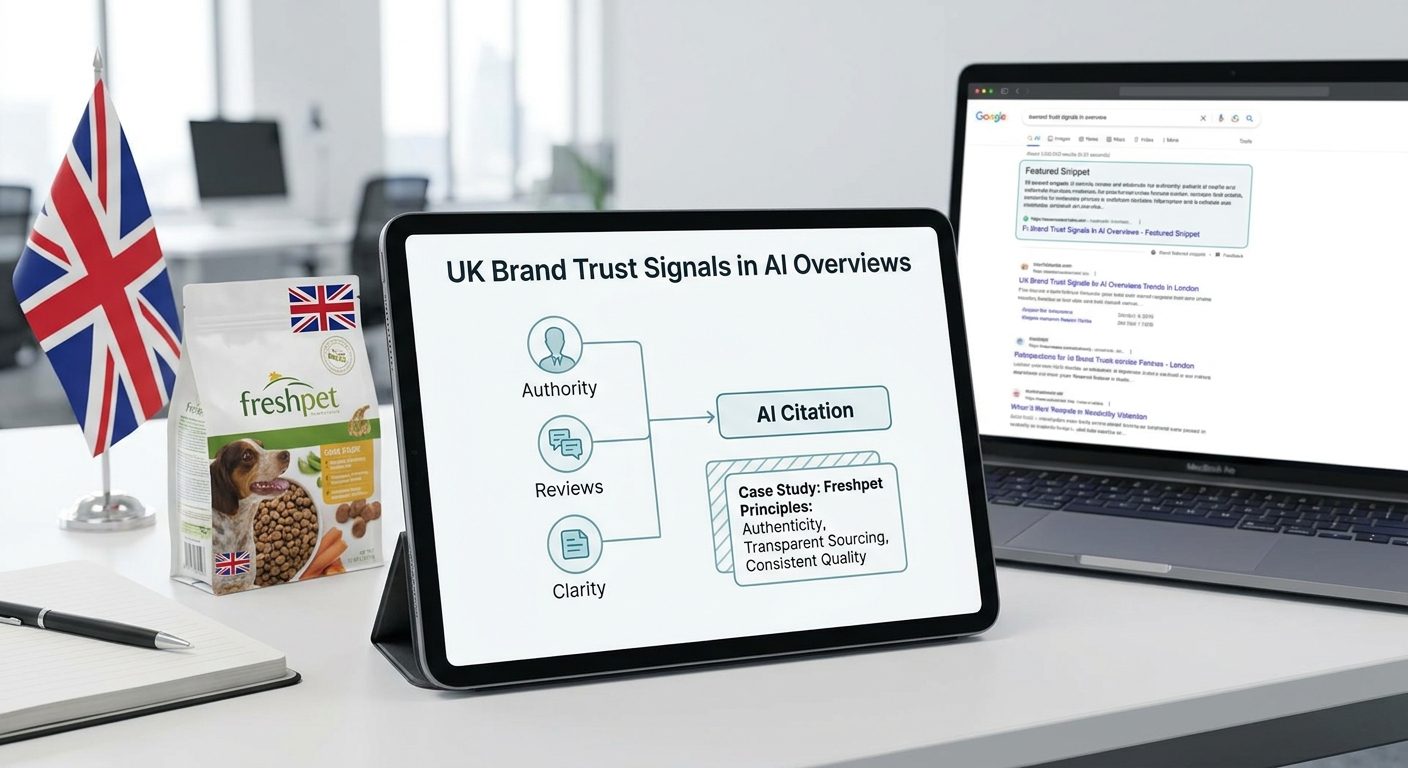
Traditional SEO is about getting your website to rank for keywords. AI search is about being recognised as a credible, trustworthy source of information on a topic. The AI tools pulling together answers are drawing on a huge range of signals: your website content, online reviews, mentions on third-party sites, your Google Business Profile, social media presence, and more.
Think of it this way. When someone asks ChatGPT for a recommendation for a local plumber or a web designer in West Sussex, the AI isn’t just checking Google rankings. It’s drawing on everything it knows about your business from across the web. The businesses that get named are the ones with a consistent, credible presence in lots of places, not just the ones with the most backlinks.
Start With the Basics: Your Website Content Still Matters
Your website is still the foundation of everything. AI tools read and reference web pages, so the content on your site needs to clearly answer the questions your customers are actually asking.
A few things worth focusing on:
- Write dedicated pages or blog posts that answer specific questions in your niche. Think ‘How much does a kitchen extension cost?’ or ‘What should I look for in a local accountant?’
- Use plain language. AI tools tend to pull content that reads naturally and directly addresses a question, not content stuffed with keywords.
- Add an FAQ section to key pages. These are perfect for AI to lift direct answers from.
- Make sure your About page clearly states who you are, where you are, and what you do. Location and specificity matter.
Structured content, such as numbered steps, clear headings, and defined answers, makes it much easier for AI to understand and reference your site. This is sometimes called being ‘AI-readable’, and it overlaps heavily with what already makes good web content.
Build Your Presence Beyond Your Own Website
One of the biggest differences between traditional SEO and AI visibility is how much weight is given to third-party mentions. If other credible websites, directories, and platforms are talking about your business, that builds trust signals that AI tools pick up on.
Some practical steps to take:
- Claim and fully fill out your Google Business Profile. This is one of the most powerful free tools available to small businesses, and it feeds directly into Google’s AI Overviews for local searches.
- Get listed on relevant UK directories. Yell, Checkatrade, Trustpilot, FreeIndex, and industry-specific directories all help build that wider footprint.
- Encourage customers to leave reviews on Google, Trustpilot, or whichever platform is most relevant to your industry. Volume and recency of reviews both matter.
- Look for opportunities to get mentioned in local news, trade publications, or reputable blogs. Even a brief mention with a link back to your site adds credibility.
Consistency matters here too. Your business name, address, and phone number should be identical across every listing. Discrepancies confuse both search engines and AI tools.
Use Social Media as a Visibility Tool, Not Just a Broadcasting Channel
AI tools increasingly pull from social platforms to understand what a business is about and how it’s perceived. You don’t need to be on every platform, but you should be active and consistent on the ones your customers actually use.
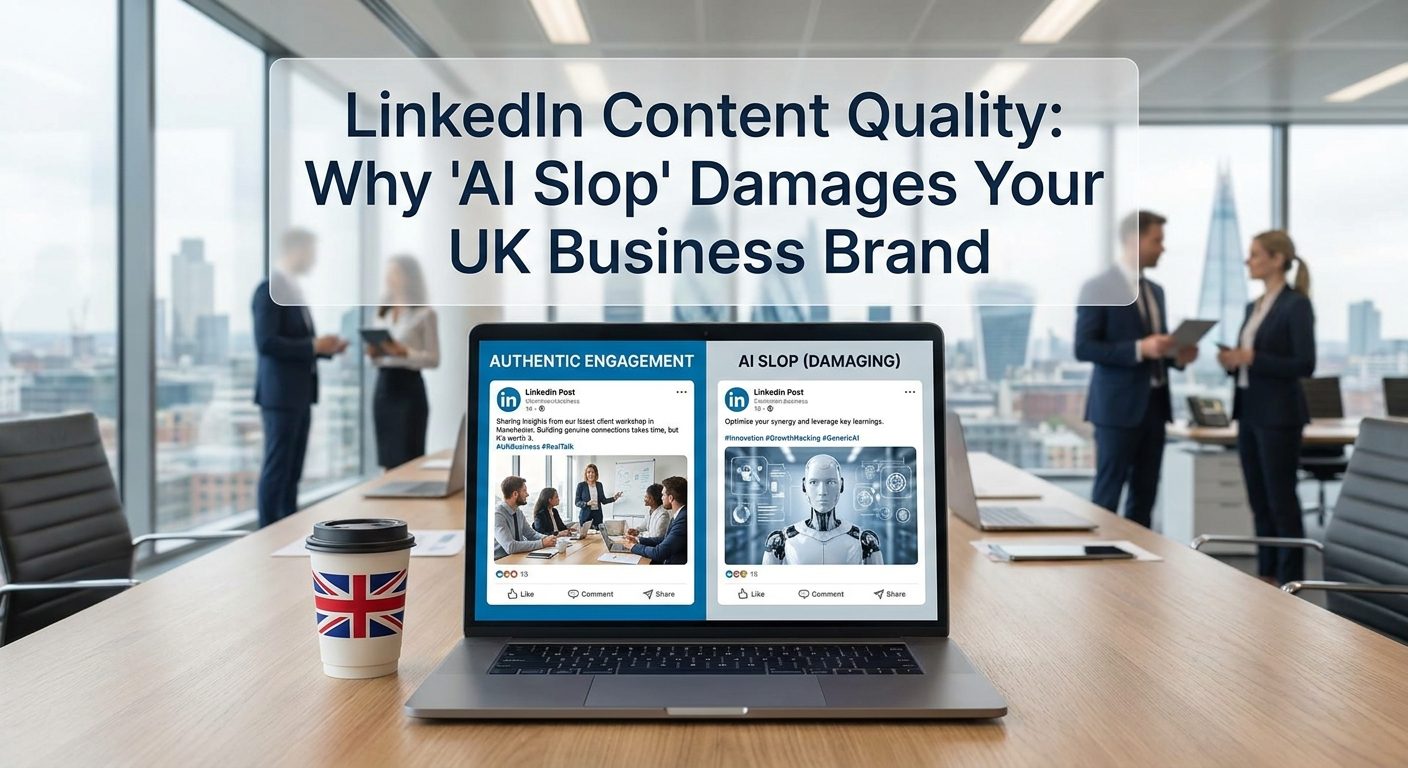
For most small businesses, that means keeping a reasonably active presence on one or two platforms, whether that’s Facebook, Instagram, LinkedIn, or even TikTok depending on your audience. Post content that demonstrates expertise. Answer common questions. Share behind-the-scenes glimpses of your work. Respond to comments and messages promptly.
The goal isn’t to go viral. It’s to show up consistently enough that both your customers and AI tools see you as a real, active, trustworthy business.
Establish Yourself as an Authority in Your Niche
AI tools give more weight to businesses and people that are known as authorities in their field. For a small business, this doesn’t mean becoming nationally famous. It means being recognised as the go-to expert in your local area or specific niche.
Some ways to build that authority:
- Write helpful, in-depth blog posts that genuinely inform your audience rather than just promote your services.
- Offer to write guest posts or be interviewed for other local or industry websites.
- Share your knowledge on LinkedIn or in relevant Facebook groups where your target customers spend time.
- Get involved with local business organisations like your Chamber of Commerce, which often provides extra online mentions and credibility signals.
Over time, this kind of activity builds what’s sometimes called ‘topical authority’, the sense that your business genuinely knows its stuff in a specific area. That’s exactly what AI tools are trying to identify when they decide whose business to recommend.
Keep an Eye on What AI Says About You
One habit worth developing is occasionally searching for your own business, and your type of business in your area, using AI tools directly. Try asking ChatGPT or Perplexity something like ‘Who are the best web designers in Worthing?’ or ‘What should I look for in a local solicitor in West Sussex?’ and see what comes up.
If your business isn’t appearing, that tells you something. Either your content isn’t detailed enough, your third-party presence is thin, or your reviews need attention. It’s a useful diagnostic exercise that costs nothing and gives you a direct sense of where the gaps are.
The Bottom Line
AI search isn’t replacing the need for a good website and solid SEO. It’s adding another layer on top. The small businesses that will thrive over the next few years are the ones that show up consistently, present themselves clearly, and build genuine credibility across multiple channels.
None of this requires a big budget or a huge team. It requires clarity about what you do, a willingness to share that knowledge online, and a bit of discipline in keeping your presence up to date. If you’d like help getting your website and digital presence ready for this new era of search, we’re happy to have a conversation.