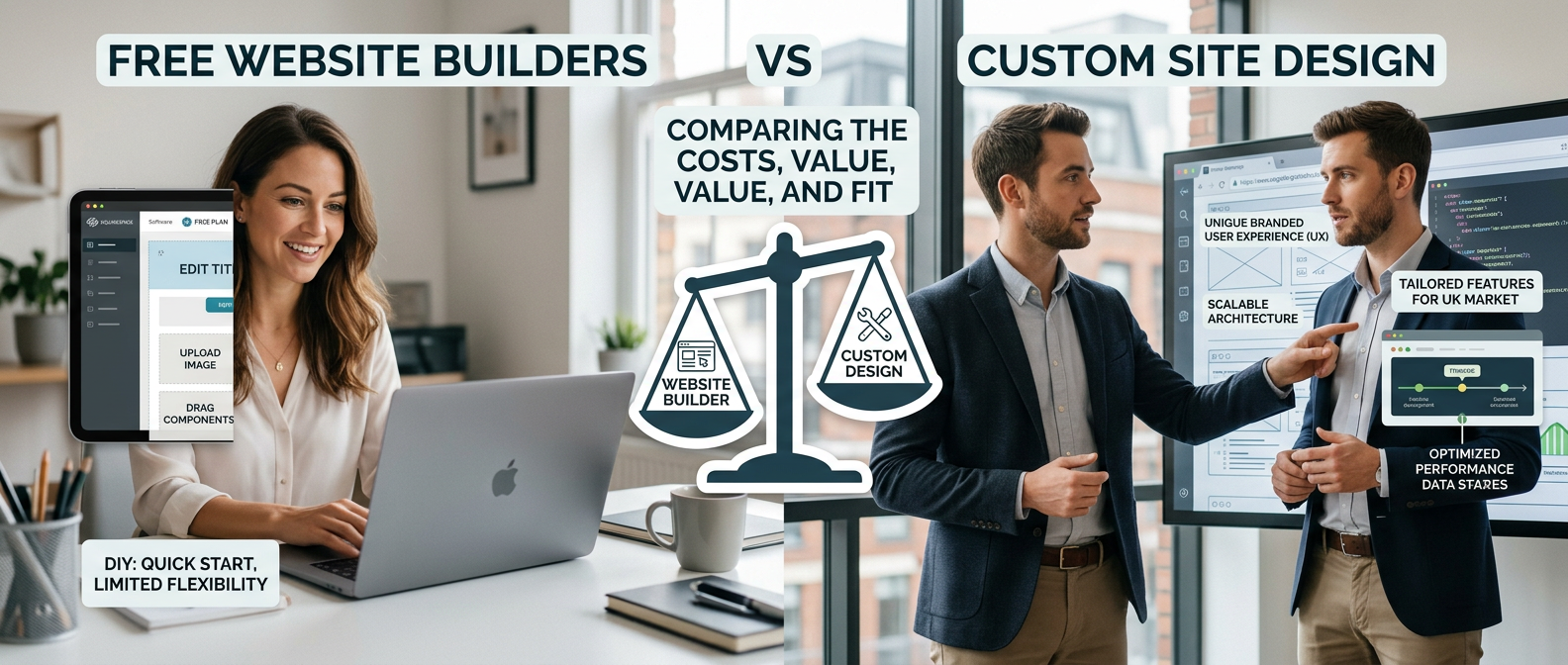
There are more ways to get a website live in 2026 than ever before. Free and low-cost builders like Wix, Squarespace, and Shopify have made it genuinely possible to have something online in an afternoon. So the question a lot of UK business owners ask us is: why would I pay for a custom-built website at all?
It's a fair question. The honest answer is that it depends entirely on what you need your website to do.
What Free Website Builders Are Actually Good At
Let's give credit where it's due. For certain types of businesses, a DIY builder can be a perfectly sensible starting point.
Wix is currently the most capable all-round option, with a drag-and-drop editor and a large library of templates. SITE123 is worth a look if you've never built a site before and just want something clean and simple online quickly. Square Online stands out if you want to sell a small number of products without paying upfront for an e-commerce platform.
Free builders tend to work reasonably well if you fit into one of these situations:
- You're testing a business idea and not yet sure it will stick
- You need a basic online presence to back up a social media profile
- You have a very small product range and no complex checkout requirements
- You have time to learn the platform and maintain the site yourself
The Catch With "Free"
Most free plans come with limitations that become a problem the moment your business starts to grow. The platform's branding appears on your site, your domain name includes the builder's name (something like yourbusiness.wixsite.com), and storage or bandwidth caps can restrict what you publish.
Moving to a paid plan on Wix or Squarespace typically costs between £10 and £30 a month depending on the tier. That's not expensive in isolation, but it adds up, and you're still working within someone else's system. If you want to add a specific feature that the builder doesn't support natively, you're often stuck.
There's also the SEO question. Free and entry-level builder sites can rank in Google, but they tend to have structural limitations that make it harder to compete for anything beyond very local or low-competition search terms. Page speed, technical SEO settings, and site architecture are areas where custom builds have a consistent edge.
When Custom Design Pays for Itself
A bespoke website costs more upfront. There's no way around that. But for many UK businesses, it's not a cost, it's an investment that pays back in leads, sales, and time saved.
Custom design makes more sense when:
- You want to rank on Google for competitive local or industry keywords
- Your business has a process that needs automating, such as booking forms, quote calculators, or client portals
- You're selling online with a growing product range and need proper e-commerce functionality
- Your brand needs to stand out in a crowded market
- You've outgrown a builder and are losing customers to competitors with more professional-looking sites
A well-built WordPress site, for example, gives you full control over your hosting, your code, your SEO settings, and your integrations. You're not locked into a platform's pricing structure or restricted by what their app marketplace happens to offer.
The Hidden Cost of Doing It Yourself
Time is the thing most business owners underestimate. Getting a Wix site looking professional takes longer than the adverts suggest, especially if you've never done it before. Then there's ongoing maintenance, updating content, troubleshooting when something breaks, and figuring out why your contact form stopped sending emails.
A builder site that took you two weekends to build and still doesn't quite look right is not actually free. Your time has real value, and that time could have gone into running your business.
Custom web design agencies handle all of that for you. A good agency also builds the site with conversion in mind from the start, which means the design choices are made to turn visitors into enquiries, not just to look attractive.
A Practical Decision Framework
Here's a straightforward way to think about it.
Go with a free or low-cost builder if you're pre-revenue, on a very tight budget, and just need a placeholder while you get started. Wix on a paid plan is probably your best bet for general use. Shopify is the most capable option if e-commerce is your main goal.
Consider custom design if your business is established, if you're spending money on Google Ads or SEO and your site isn't converting well, or if you need functionality that builders can't provide. The investment in a properly built site typically starts around £1,500 to £3,000 for a small business site from a UK agency, with larger or more complex projects priced accordingly.
One more thing worth knowing: switching from a builder to a custom site later is harder and more expensive than starting with the right solution. If you're fairly confident your business has legs, it's often better to invest properly from the beginning.
The Bottom Line
Free website builders have a genuine place for certain businesses at certain stages. But they are not the right answer for every business, and the free tier almost always has a catch. The key is being honest with yourself about what you actually need your website to achieve.
If you're not sure, talk to a web designer before committing to either path. A decent agency will tell you honestly whether a builder might suit your situation rather than push you into a project you don't need. That conversation costs nothing and can save you a lot of frustration later on.