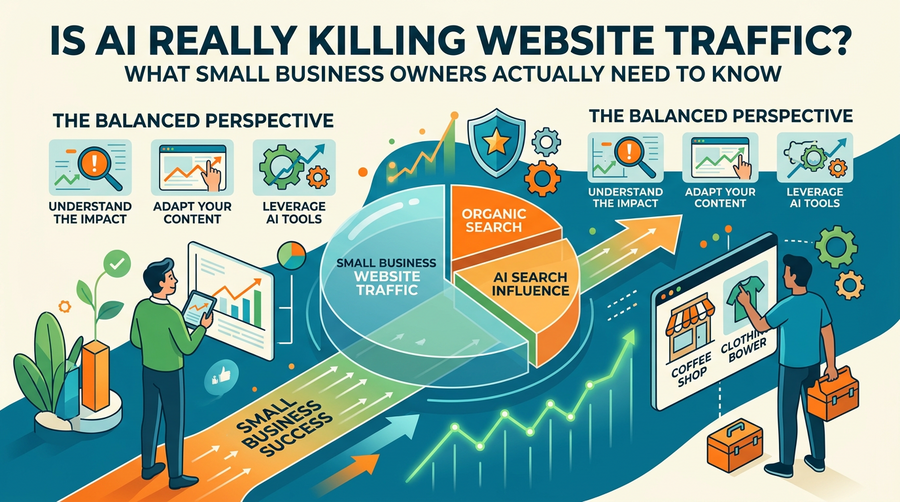
Every few years, a new wave of marketing panic sweeps through small business forums and LinkedIn feeds. Email is dead. Blogging is pointless. Google is over. Now the worry is AI, and specifically that Google’s AI Overviews are hoovering up clicks that should be landing on your website.
Is there any truth to it? Yes, some. Is it the catastrophic collapse the headlines suggest? Not quite. Here’s what’s genuinely happening, and more importantly, what it means for a small business in Worthing, Bristol, or anywhere else in the UK.
What Are AI Overviews and Why Do They Matter?
Google’s AI Overviews (previously called Search Generative Experience) sit at the top of search results and give users a direct answer pulled together from multiple sources. If someone types “how long does it take to build a website”, Google might generate a paragraph-long answer right there on the results page, saving the user from clicking anything at all.
This is called a zero-click search, and it’s not new. Featured snippets, knowledge panels, and local packs have been doing something similar for years. AI Overviews are simply a more capable version of that same idea.
The honest truth is that some informational queries will generate fewer clicks than they used to. If someone can get a quick answer without visiting your site, some of them will take that shortcut. Studies in 2024 suggested click-through rates for certain query types dropped noticeably after AI Overviews rolled out more widely in the US.
But Here’s What the Panic Misses
The traffic story is far more nuanced than the headlines suggest. A few things worth keeping in mind:
- AI Overviews appear most often on broad, informational queries. These were rarely the searches that converted browsers into paying customers anyway.
- Transactional searches, things like “web designer near me” or “plumber in Worthing”, still heavily favour traditional results, map packs, and local listings.
- Branded searches, where someone already knows your business name, are largely unaffected.
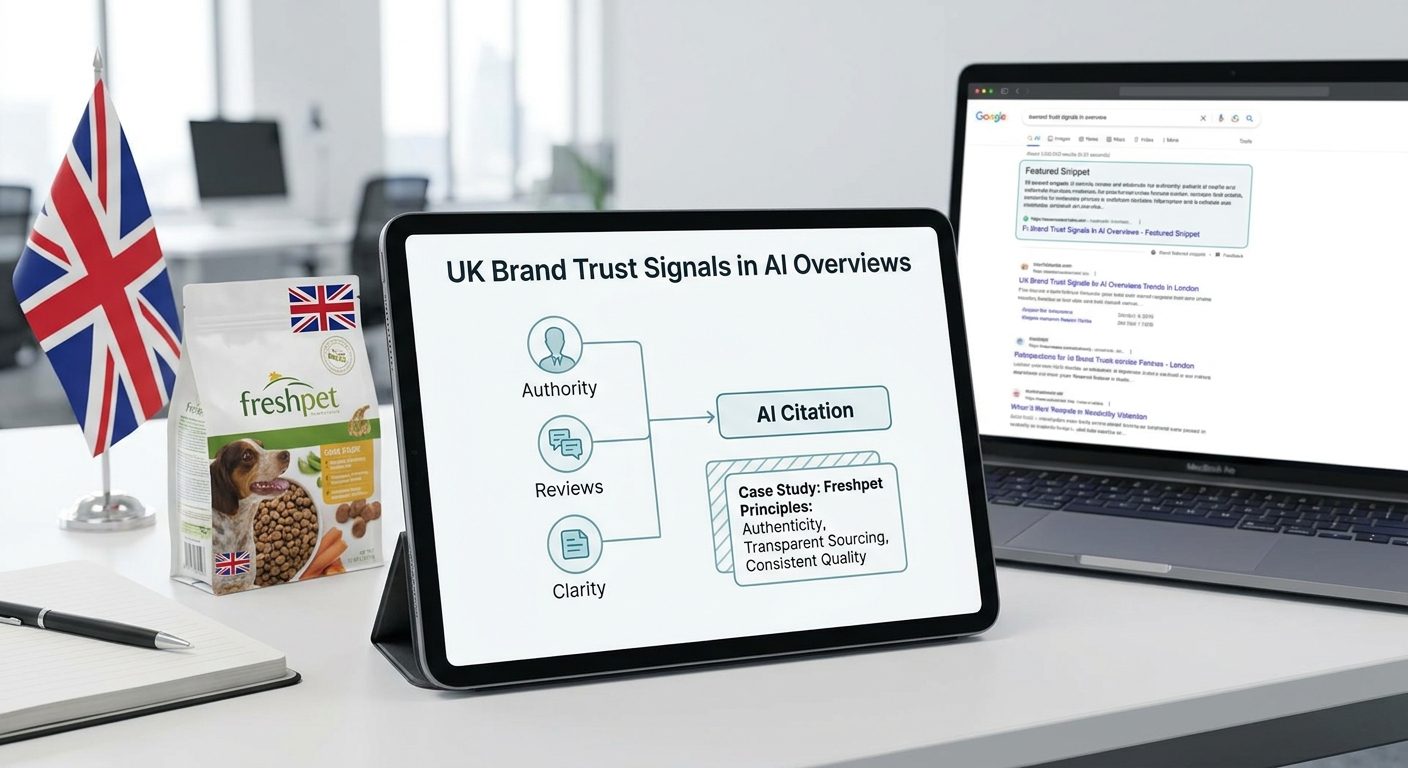
- Google still needs websites to exist. It pulls its AI answers from real pages. If your content is strong enough, you might actually be cited inside an AI Overview, which builds credibility even without a direct click.
The businesses seeing the sharpest drops tend to be those who built their entire content strategy around answering generic questions. If your site exists mainly to explain what a mortgage is, or define marketing buzzwords, yes, AI is a threat to that model. But that was never the right strategy for a small business trying to win local customers.
What Actually Drives Enquiries for Small Businesses
Let’s be direct: most small business websites don’t live or die on informational blog traffic. They survive on a mixture of:
- Local search visibility (Google Business Profile, local SEO)
- Referrals and word of mouth directing people to check out the site
- Repeat visits from existing customers
- Paid advertising like Google Ads or Meta campaigns
- Social media driving traffic directly
If someone referred to your business tells a friend to look you up, that person will search your name or visit your URL directly. AI Overviews don’t intercept that journey.
Local intent searches are also holding up well. When someone types “accountant in Chichester” or “florist near me”, Google still shows a local map pack and a list of websites. That’s where small businesses actually compete, and that hasn’t changed dramatically.
The Real Risk Is Ignoring It Completely
None of this means you should shrug and carry on as if nothing has changed. There are genuine shifts happening in search behaviour, and the businesses that adapt early will be better placed in two or three years’ time.
A few practical adjustments worth making now:
- Prioritise content that shows expertise and real-world experience. Google’s own guidance increasingly rewards what it calls EEAT (Experience, Expertise, Authoritativeness, Trustworthiness). Write as someone who has actually done the work, not just researched it.
- Focus on specific, niche topics rather than broad overviews. A post titled “How to choose a wedding photographer in West Sussex” is far more useful than “What does a wedding photographer do?”
- Keep your Google Business Profile updated. Name, address, phone number, opening hours, photos, and fresh reviews. This feeds directly into local results that AI doesn’t disrupt.
- Build content that earns citations. In-depth, original content, case studies, local statistics, and genuine opinions are the kinds of things AI Overviews reference and link back to.
- Don’t rely solely on organic search. Email newsletters, social media, and even occasional paid campaigns give you traffic that no algorithm change can take away.
The Bigger Picture for Small Business Websites
Search has always changed. The businesses that struggled through every previous shift were the ones who had found a single loophole and relied on it exclusively. Keyword stuffing in 2011. Cheap link building in 2014. Thin affiliate content in 2017. Each time, the businesses with genuine substance survived and often thrived because the competition thinned out.
AI is another evolution, not an extinction event. Your website still needs to exist. It still needs to communicate clearly what you do, who you help, and why someone should choose you. It still needs to be fast, mobile-friendly, and easy to navigate. None of that has changed.
If anything, the noise around AI is a good prompt to ask yourself an honest question: does my website actually serve my customers well, or is it just sitting there? If the answer is the latter, that’s the real problem to solve, not the algorithm.
If you’re unsure where your site stands or whether your current SEO strategy is still working, get in touch with the team at Samson Web Design. We work with small businesses across the UK every day and can give you a straight answer about what’s worth your time and what isn’t.