Every week, someone asks us whether they should just build their own website on Wix or Squarespace instead of commissioning a professional design. It is a fair question. These platforms have come a long way, and for some businesses they genuinely do the job. But "some businesses" is doing a lot of work in that sentence, and the devil is very much in the detail.
Here is our honest, no-fluff breakdown of the main builders available to UK small businesses right now, what they are good at, where they fall short, and how they stack up against a properly built custom site.
Wix: The All-Rounder Most People Start With
Wix is the obvious starting point for most small business owners. The drag-and-drop editor is genuinely easy to use, there are hundreds of templates, and the pricing starts from around £9 a month for a basic plan. For a local trades business, a freelancer, or a startup that needs a credible online presence quickly, Wix can absolutely work.
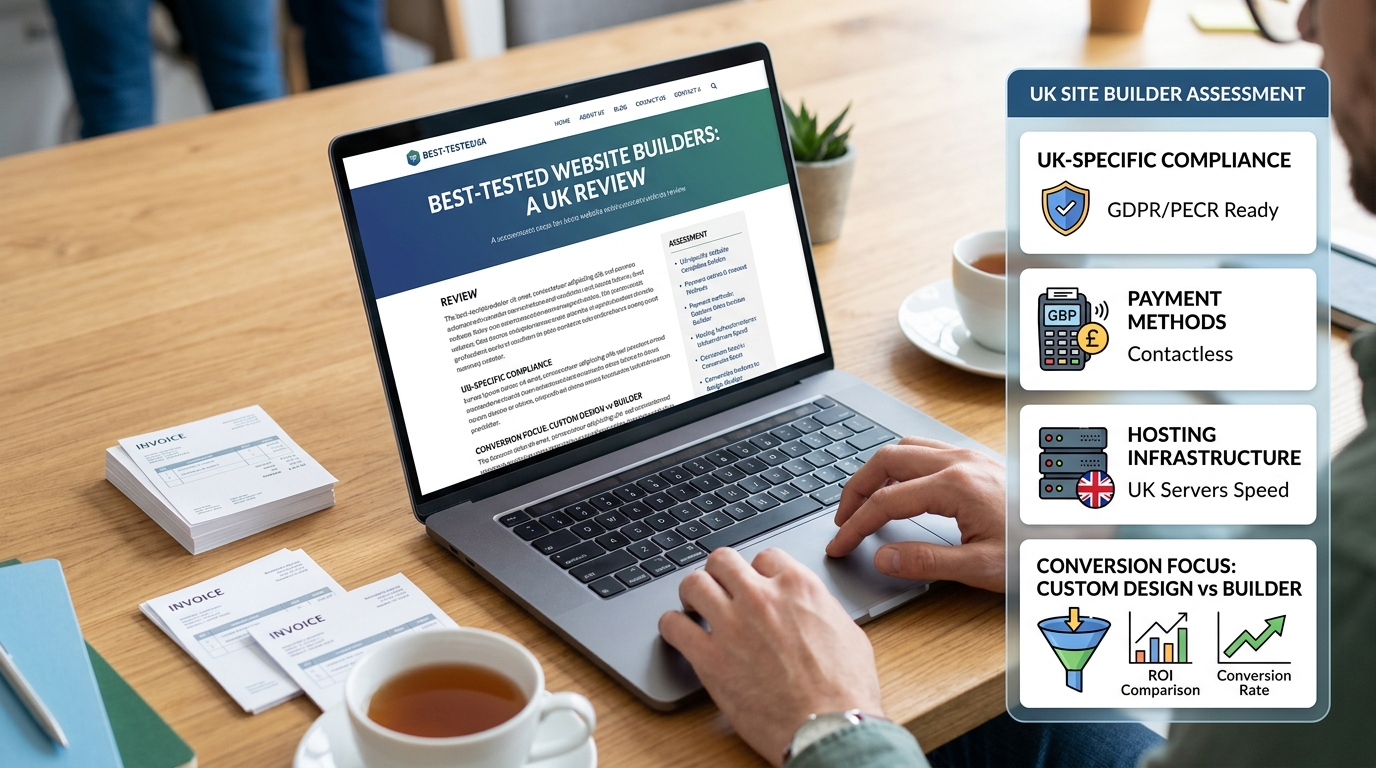
On the UK-specific side, Wix supports PayPal and Stripe out of the box, which covers most payment needs. It hosts on servers with European data centres, which helps with GDPR compliance, though you will still need to configure cookie consent and privacy policies yourself. The built-in SEO tools are decent for beginners, but they have limits once you start chasing competitive local search terms.
The main frustration we see with Wix sites is that they can become difficult to customise once a business grows. The editor gives the impression of flexibility, but you are always working within its constraints. Switching templates later is also more painful than it sounds.
Shopify: Strong for E-Commerce, Weaker for Everything Else
If you are selling physical products online, Shopify is hard to argue against. It handles inventory, shipping integrations, and checkout flows better than any other builder at this price point. It supports UK payment methods including Stripe, PayPal, and Klarna, and it meets PCI DSS compliance requirements for card processing without you needing to think about it.
Shopify's hosting infrastructure is robust and fast, which matters for conversion rates. Studies consistently show that a one-second delay in page load time reduces conversions, and Shopify's CDN handles that well globally, including for UK visitors.
Where Shopify struggles is outside pure e-commerce. If you want a content-heavy site, a services business, or anything beyond a shop, the experience feels shoehorned. The blog functionality is limited, and the template ecosystem, while large, skews heavily toward retail aesthetics. Transaction fees also apply on most plans unless you use Shopify Payments, which catches some business owners off guard.
Squarespace: Good-Looking but Conversion-Light
Squarespace consistently produces the best-looking sites of any builder. If your business lives or dies on visual presentation, such as photography, interiors, fashion, or creative services, Squarespace templates are genuinely impressive.
The trade-off is that Squarespace prioritises aesthetics over conversion optimisation. You have less control over page structure, calls to action, and the finer points of user journey than you would with a custom build. For businesses where generating enquiries or leads is the primary goal, this matters more than it might seem.
UK payment support is solid, with Stripe and PayPal covered, and GDPR cookie controls are available. Pricing runs from around £11 a month, stepping up quickly once you add e-commerce features.
Webflow: Powerful, But Not for the Faint-Hearted
Webflow occupies an interesting middle ground. It gives you far more design and structural control than Wix or Squarespace, and the output can be genuinely impressive in terms of performance and flexibility. It is the builder we would point a technically confident business owner toward if they wanted to self-manage something more sophisticated.
That said, Webflow has a steep learning curve. It is built around web design concepts like box models and interactions that most non-designers find confusing. If you need to make quick changes under pressure, Webflow can become a liability rather than an asset. The pricing also climbs quickly for e-commerce functionality.
What the Builders All Have in Common
Whatever platform you choose, there are limitations that apply across the board:
- You are renting space on someone else's infrastructure, not owning it. If the platform changes its pricing, terms, or features, your site is affected.
- Template designs are shared across thousands of businesses. Standing out takes extra effort.
- SEO performance tends to plateau. These platforms generate code that works, but rarely as cleanly or efficiently as a properly coded custom site.
- Conversion rate optimisation is limited. You cannot always place elements where you want them, test layouts freely, or integrate with every third-party tool.
When a Custom Website Makes More Sense
For a business that is just getting started and needs a basic presence, a website builder is a perfectly reasonable way to get online affordably. We would never pretend otherwise.
But there are clear situations where a custom-built site pays for itself:
- Your business model depends on enquiries or leads rather than passive browsing.
- You operate in a competitive local market where ranking on Google for the right terms is critical.
- You need integrations with booking systems, CRMs, or industry-specific tools.
- Your brand needs to convey quality, trust, or expertise at first glance.
- You have outgrown a builder and are fighting its constraints every time you try to grow.
A well-built custom site typically outperforms a builder template on conversion rate because it is designed around how your specific customers think and what makes them act. That is not a vague claim. It comes from designing sites with clear calls to action, fast load times, and user journeys built around actual business goals rather than generic template layouts.
Our Honest Take
Wix is the best all-round builder for most UK small businesses starting out. Shopify wins on e-commerce. Squarespace is the right pick if visual presentation is your priority. Webflow suits those who want more control and are prepared to invest time in learning it.
But if your website is a key part of how your business earns money, the question worth asking is not which builder is best. It is whether a builder is the right tool at all. For businesses in competitive markets, that distinction tends to show up pretty quickly in your enquiry rate.
If you are unsure which direction makes sense for your situation, we are always happy to have a straight conversation about it. No pressure, no jargon, just practical advice based on what your business actually needs.