Most UK business owners notice a rankings drop and immediately panic, convinced Google has it in for them personally. The reality is far more mechanical and, once you understand it, far less frightening. Google made somewhere in the region of several thousand algorithm changes in 2024 alone, and the pace has not slowed heading into 2026. But panic is the wrong response, because almost every single one of those changes is pointing in the same direction.
What follows is a practical breakdown of the principles driving Google's ranking decisions right now, what they mean for a small UK business website, and the specific actions you can take to stay on the right side of every update that follows.
Why Google Keeps Moving the Goalposts (And Why It Actually Makes Sense)
Google's underlying goal has not changed since the day it launched: surface the most genuinely useful result for each query. Every algorithm update, no matter how disruptive it feels in the moment, is an attempt to close the gap between that goal and the messy reality of what the web actually contains.
The early updates make this pattern obvious in hindsight. Panda, launched in 2011, was a direct response to content farms flooding search results with thin, low-quality pages that ranked purely because they existed. Penguin followed in 2012 to tackle manipulative link-building schemes that were artificially inflating rankings for sites that did not deserve them. The Helpful Content update, introduced in 2022 and refined repeatedly since, targeted a newer version of the same old trick: content that looks helpful on the surface but was written primarily to rank rather than to actually assist a reader.
None of these were arbitrary punishments. They were corrections to stop low-quality sites gaming a system that was always meant to reward real value.
The March 2026 core update continued a trend that has been building since 2025: Google is getting measurably better at distinguishing content that genuinely helps from content that merely performs helpfulness. The signals it uses to make that distinction are becoming more sophisticated with every cycle. Sites that appeared to answer a question but left the reader needing to search again fared poorly. Sites that demonstrated real knowledge and satisfied the intent behind a search held their ground or gained.

The December 2025 core update provided a clear signal about who the real targets of these changes are. Sites hit hardest were affiliate-heavy sites and YMYL (Your Money or Your Life) content lacking real expertise, with affiliate sites seeing 71% impacted and health-related content not far behind at 67%. Small service businesses doing honest work, a plumber in Worthing, a solicitor in Brighton, a kitchen fitter in Chichester, were not the intended casualties of that update, and data reflects that.
For a small UK business owner, understanding the WHY behind updates removes most of the fear. It replaces a vague anxiety about algorithm changes with a simple, testable question you can ask about every page on your site: does this page genuinely help the person reading it? If the honest answer is yes, you are already aligned with where Google is heading. If the honest answer is no, or not as much as it could, that is where the work is.
E-E-A-T: The Four Letters Every UK Business Owner Needs to Understand
E-E-A-T stands for Experience, Expertise, Authoritativeness, and Trustworthiness. It is the evaluative framework Google's quality raters use to score content, and while quality raters do not directly control rankings, their assessments train the systems that do. Treating E-E-A-T as abstract guidelines you can safely ignore is a mistake that costs businesses rankings every time a major core update lands.
What each letter actually means
Experience is the newest addition to the framework, added when Google expanded from E-A-T to E-E-A-T in late 2022. It asks a specific question: has the person producing this content actually done the thing they are writing about? A blog post about replacing a boiler written by someone who has never touched one scores differently to the same topic covered by a heating engineer with twenty years of callouts behind them. Google is trying to reward first-hand, real-world knowledge, not just the ability to research and rephrase.
Expertise refers to the depth of subject knowledge demonstrated in the content itself. Authoritativeness is about how the wider web perceives the source, links, mentions, and citations from relevant sites. Trustworthiness sits underneath all three and asks whether the site and the business behind it are who they say they are.
Why small UK businesses have a genuine advantage here
Here is something that often gets overlooked in the conversation about E-E-A-T: a Worthing plumber or a Sussex accountant is actually better positioned to score well than a generic content site. Genuine trade experience, real client outcomes, local knowledge built over years of working in a specific area, these are things a content farm cannot fake and a large generalist site cannot replicate. E-E-A-T, properly understood, is a framework that rewards exactly what honest small businesses already have.
The challenge is making sure that expertise is visible on your website. Google cannot read your mind or your CV. It needs signals it can measure.
Practical signals Google looks for
- Named authors with brief credentials or bios on any articles or guides you publish
- Case studies with specific, real outcomes rather than vague claims about quality work
- Photos of actual completed projects, real team members, and recognisable local locations
- Verified reviews on Google or Trustpilot, with your business actively responding to them
- Consistent, accurate business information across your website, Google Business Profile, and directory listings
Industry analysis from Whitehat SEO, covering the 2025 update cycle, confirmed that sites with strong E-E-A-T signals emerged as consistent winners while sites with thin or generic content were suppressed. This is not a soft recommendation buried in Google's guidelines document. The framework is algorithmically applied, and the results of updates show it.
Trust signals your website should already have
Several trust signals feed directly into the Trustworthiness component of E-E-A-T and are straightforward to implement on any website.
- A visible phone number and physical address on your contact page and ideally in your site footer
- An SSL certificate (the padlock in the browser bar), which has been a Google ranking signal for years and is now simply expected by users
- A clear, up-to-date privacy policy, particularly important after UK GDPR requirements
- Named team members, even a short paragraph about who runs the business, rather than a faceless corporate tone
- Testimonials that link through to a verifiable platform such as Google Reviews or Trustpilot, rather than just sitting as text on your site with no way to check their authenticity
None of this requires a large budget or a technical background. It requires being deliberately transparent about who you are and what you do. For most small UK businesses, that is the natural way to operate anyway. The gap between how you behave with a customer face-to-face and how your website presents you is often where E-E-A-T problems begin.
What Topical Authority Means and How a Small Business Builds It
Topical authority is the idea that Google comes to recognise certain websites as genuinely reliable, comprehensive sources on a specific subject. It is not about having the right keyword in the right density on a page. It is about the overall signal your site sends when Google looks at everything you have published and asks: does this site actually know what it is talking about?
A single well-optimised homepage cannot achieve topical authority on its own, no matter how well it is written. Google builds its understanding of what your site covers from the full pattern of your content. One page is a claim. A cluster of interlinked, detailed pages on related topics is evidence.
How content clusters work in practice
Consider a Worthing kitchen fitter trying to rank for relevant local searches. A core service page covering kitchen fitting is the starting point, but it is only the starting point. Supporting pages built around related topics, kitchen styles and finishes, typical costs and what affects them, how to plan a kitchen refit from scratch, a guide to worktop materials, an FAQ covering the questions clients ask at every first meeting, create a web of content that together covers the subject thoroughly.
Each of those pages links to the others where relevant, and all of them link back to the core service page. Google crawls that structure and builds a picture of a site that demonstrably knows its subject. That picture is topical authority, and it is what allows a smaller, focused site to outrank a larger generalist competitor who has one thin page on kitchen fitting buried among fifty other services.
Google's 2026 updates have increased the weight given to content depth and relevance signals. A 15-page local tradesperson website with a well-developed content cluster around its core service can outrank a 500-page agency site that treats kitchen fitting as one line item in a long list. Specificity and focus beat breadth and thinness every time now.
The length question, and the real answer
One persistent myth in SEO is that longer content automatically ranks better. It does not. A 600-word article that fully answers a specific question, covers the follow-up angles a reader is likely to have, and leaves them with something they can act on will outperform a 2,000-word article padded with repetition, filler subheadings, and restated conclusions. Google measures whether a piece of content satisfies the intent behind a search. Word count is a side effect of doing that well, not a target in itself.
What has shifted in 2026 is how Google evaluates the quality of that satisfaction. Keyword-focused content is now the floor, not the ceiling. Getting the right terms on the page is table stakes. What separates content that ranks and holds from content that briefly appears and fades is whether it demonstrates genuine subject knowledge and answers the follow-up questions the reader did not yet know they had.
A useful test: after reading your page, would a typical customer need to go back to Google to find out something they still need to know about the topic? If yes, the page has not finished its job. The goal is to be the last click, not a stepping stone to somewhere more useful.
Building topical authority takes time, but the path is clear. Pick the subject area at the core of your business. Map out every question a potential customer might have about it, from first awareness to post-purchase. Create a page for each meaningful cluster of those questions. Link them to each other in a logical structure. Revisit them regularly as your work evolves and as customer questions change. That is a content strategy, and it is the one Google's 2026 direction consistently rewards.
AI Overviews and What They Mean for Your Organic Traffic
Google's AI Overviews (rolled out from what was previously called SGE, the Search Generative Experience) now sit at the very top of many UK search results, offering a summarised answer before the user ever reaches an organic listing. For queries like 'how do I write a business plan' or 'what is the difference between a sole trader and limited company', Google is essentially answering the question itself. The result is a measurable drop in click-through rates on purely informational searches.
The businesses most affected are those whose content strategy leans heavily on generic 'how-to' articles with no commercial purpose. If your entire blog exists to answer questions that Google can now summarise in two paragraphs, that traffic will shrink. However, if you run a local service business, a trade, a consultancy, or any kind of practice where the end goal is someone actually hiring you, AI Overviews cannot replace that transaction. A plasterer in Brighton, a family solicitor in Leeds, or an accountant in Cardiff does not lose a booking to an AI-generated paragraph. The action of engaging a professional is still a human one.

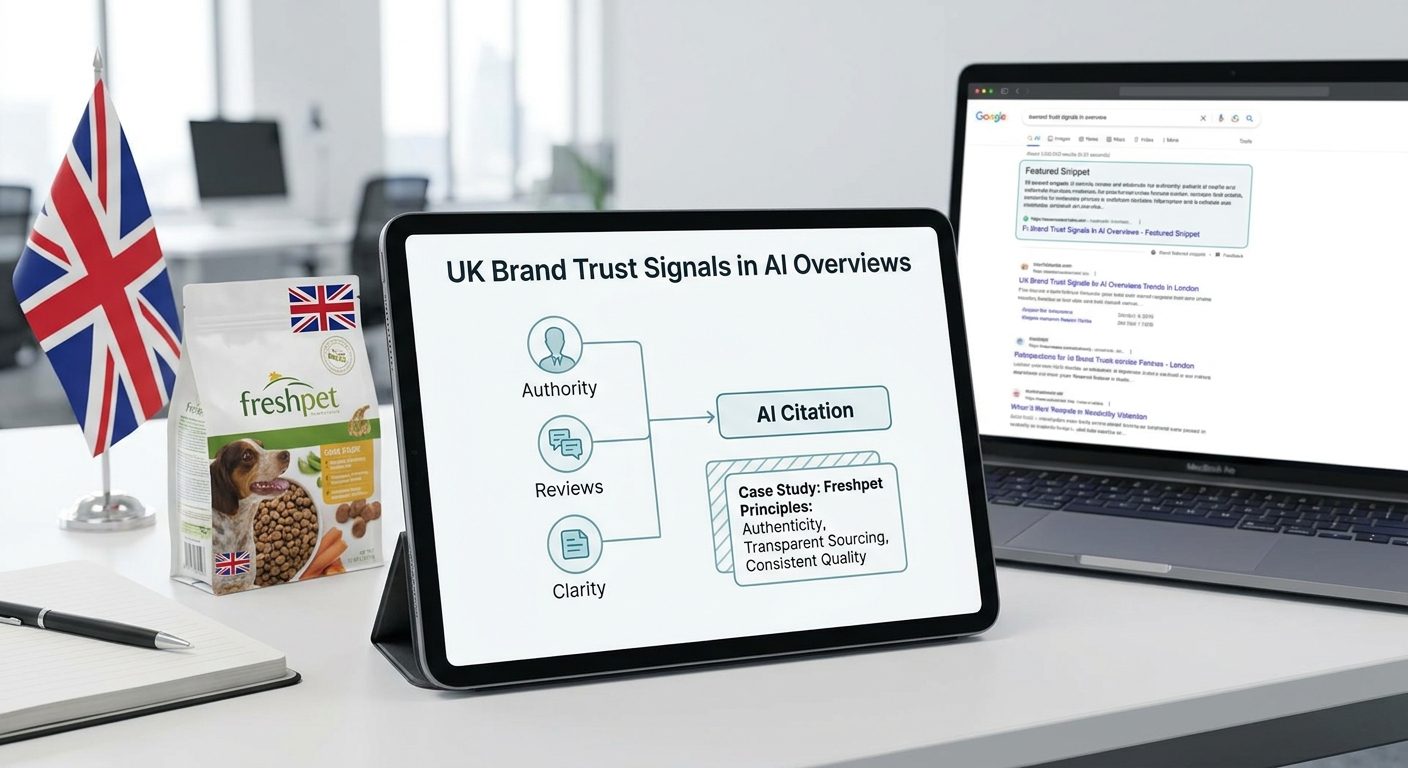
To get cited inside an AI Overview rather than bypassed by one, your content needs clear structural signals. Use a proper heading hierarchy so Google can parse what each section is about. Put a concise, direct answer near the top of each section before expanding into detail. Make sure every factual claim is accurate and attributable. These are exactly the same E-E-A-T signals discussed earlier in this article, applied at a page-structure level.
Implementing FAQ schema and structured data also increases the probability that your content gets pulled into AI-generated summaries. Even if the user does not click through to your site, appearing as a cited source builds brand recognition and signals authority to Google's systems over time.
The practical takeaway for UK small businesses: do not panic and do not start deleting content. Just redirect your effort. Informational blog posts still have value for topical authority and internal linking, but your primary content energy in 2026 should go into service pages, location pages, case studies, and anything that drives a commercial action. Pages that answer 'can you help me with this specific problem' will always outperform pages that answer 'here is some general information about this topic'.
The SEO and Web Design Connection Most Small Businesses Miss
Most small businesses think about SEO and web design as two separate purchases: first you build the site, then you bolt on some SEO. In practice, retrofitting optimisation onto a live website is always a compromise. Core Web Vitals, mobile performance, structured data, and crawl architecture are all far easier and cheaper to implement correctly when they are designed into the site from day one.
Design decisions that look harmless often cause serious SEO damage quietly over time. Common culprits include:
- Loading large, uncompressed hero images that destroy Largest Contentful Paint (LCP) scores on mobile
- JavaScript-heavy sliders and animated carousels that delay page rendering and confuse crawlers
- Navigation menus built in a way Google cannot follow, orphaning whole sections of the site from the index
- Key text and headings placed inside images rather than real HTML, making them invisible to search engines
None of these feel like SEO decisions to a designer focused on aesthetics. But they each carry a ranking cost that compounds over months.
The good news is that conversion-focused design and solid SEO point in exactly the same direction. Clear calls to action, readable font sizes, logical page hierarchy, and fast loading times all serve the user and the algorithm simultaneously. There is no design versus SEO trade-off when both disciplines are approached properly from the start.
When commissioning a new website or a redesign, ask your designer directly about Core Web Vitals targets, schema implementation, and mobile-first build approach. Their answer will tell you very quickly whether SEO is genuinely part of their process or something they plan to hand off to someone else after launch. A designer who cannot give you a straight answer on PageSpeed Insights targets probably has not factored technical performance into the build.
Hosting quality is another factor most businesses do not think about until something goes wrong. Cheap shared hosting with slow server response times and frequent outages sends consistent negative signals to Google. Uptime and time-to-first-byte are ranking inputs, not just IT concerns. Investing in quality managed hosting is part of SEO, not separate from it.
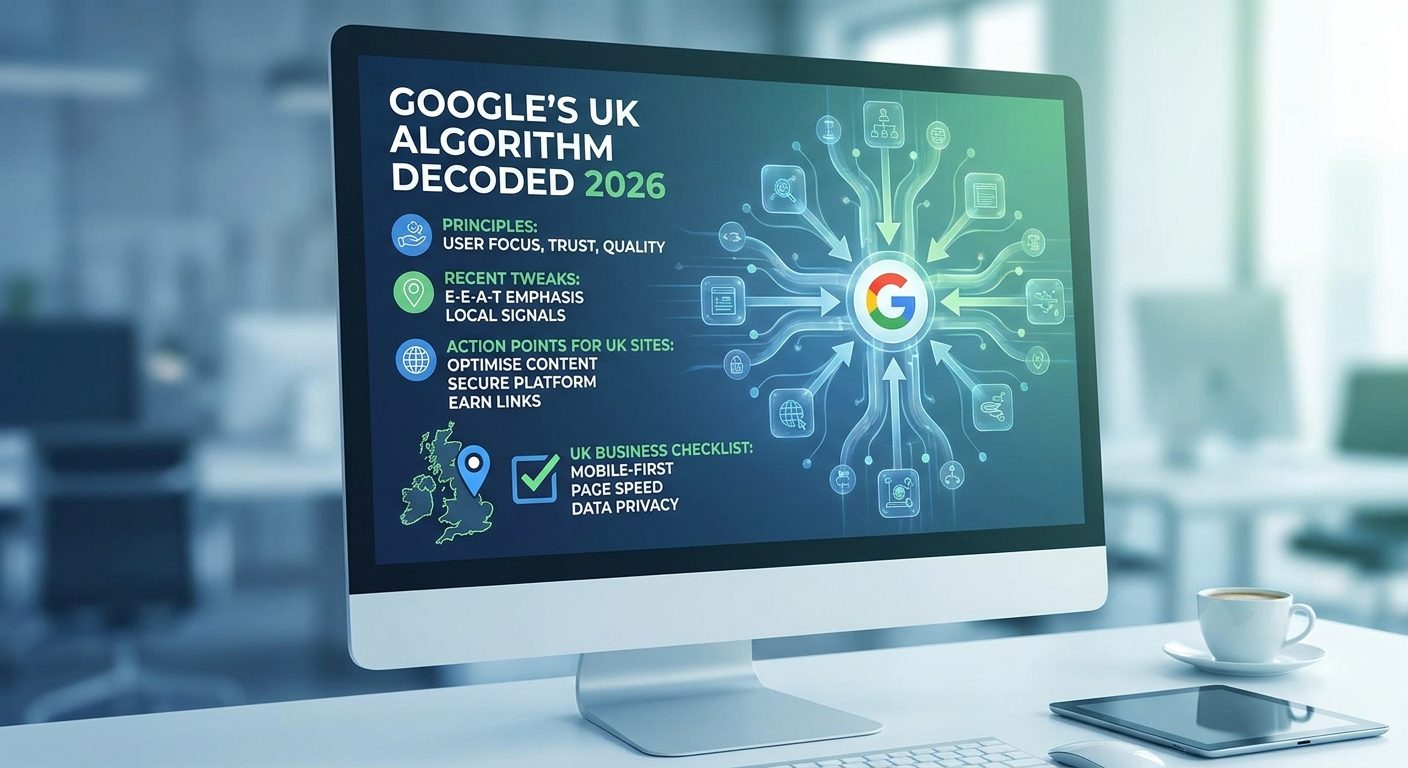
Your 2026 Google-Ready Checklist for a UK Business Website
Use this as a working document, not a one-time exercise. Print it, share it with your agency, and revisit it every quarter.
Content
- Every service page answers a genuine customer question rather than describing what you do in generic terms
- Content is written by or clearly attributed to someone with real, demonstrable experience in the subject
- No padded, repetitive, or thin text exists purely to fill word counts
- At least one new or substantially updated page goes live per month to maintain an active, authoritative presence
E-E-A-T Signals
- Named team pages or author bios with real credentials and photos
- Genuine testimonials linked through to Google Reviews or Trustpilot rather than pasted anonymously on the page
- Full contact details visible, including a physical address where the business has one
Technical Health
- PageSpeed Insights mobile score above 75 (aim for 85 or higher if your sector is competitive)
- HTTPS active across every page, with no mixed-content warnings
- XML sitemap submitted to Google Search Console
- No crawl errors, coverage issues, or manual actions showing in Search Console
Structured Data
- LocalBusiness schema implemented with accurate NAP details
- Service schema applied to individual service pages
- Review schema in place where eligible
- All schema validated using Google's Rich Results Test before and after any site changes
Local Presence
- Google Business Profile fully completed, including categories, service descriptions, opening hours, and photos
- Profile updated at least twice per month with posts, photos, or offers
- NAP identical across every directory listing, social profile, and citation
- Review responses posted within 48 hours of any new review appearing
Links
- Backlink profile reviewed quarterly via Google Search Console or Ahrefs Webmaster Tools (free tier is sufficient for most small businesses)
- Any toxic or spammy links identified and disavowed via Search Console
- At least one active outreach effort per quarter targeting relevant local press, trade associations, or supplier directories
Monitoring
- Google Search Console checked monthly as a minimum, not just when something breaks
- Core Web Vitals report reviewed each time a significant design or content change goes live
- Any manual actions or coverage issues resolved within two weeks of first appearing
None of this requires a large budget or a specialist in-house team. It requires consistency. A small business that checks this list every three months and fixes what it finds will, over 12 to 18 months, outperform competitors who commissioned a website and left it untouched. Google rewards active, well-maintained sites with genuine content and real-world credibility. That is a description of a business run with care, not an algorithm to be cracked.