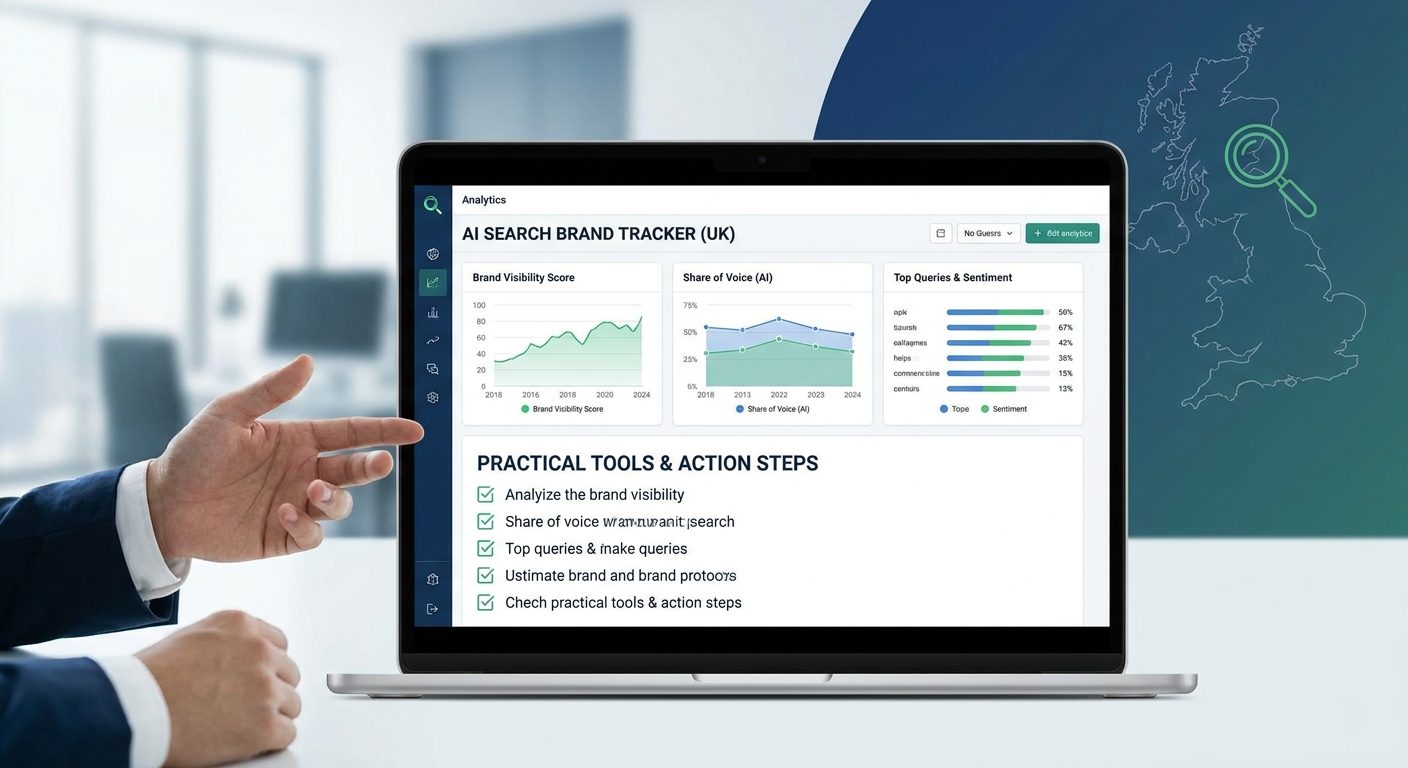
Most small business owners think about their online reputation only when something goes wrong. A one-star review lands, a complaint shows up on Facebook, and suddenly it feels urgent. But by then, the damage is already being read by prospective customers who have no idea what came before it.
The businesses that consistently win new work through their online presence are not the ones reacting to fires. They are the ones who built something robust long before any complaint appeared.
Why Your Reputation Is Now a Business Asset Worth Protecting
The scale of investment going into online reputation management tells you something important. The global ORM market was valued at $8.9 billion in 2025 and is projected to reach $28.4 billion by 2034, growing at a compound annual growth rate of 13.8%. That is not a niche concern. That is an entire commercial ecosystem built around the fact that what people find when they search for a business name has direct financial consequences.
For UK small and medium businesses, the stakes are particularly clear in local markets. When someone in Worthing searches for a plumber, a solicitor, or a kitchen fitter, they are often choosing between two or three businesses that look broadly similar on the surface. At that point, trust becomes the deciding factor. The business with 47 reviews averaging 4.8 stars will beat the one with 11 reviews averaging 3.9 stars almost every time, regardless of which one is genuinely better at the job.
It is worth being precise about what ORM actually means in practice, because there are real misconceptions. It is not a one-off exercise in deleting bad reviews. It is the ongoing discipline of shaping what people find, read, and feel about your business before they ever pick up the phone or fill in an enquiry form. That means being active, not reactive.
A practical ORM strategy for any UK business rests on three pillars:
- Proactive review generation: building a consistent, compliant system for asking satisfied customers to leave reviews
- A clear negative feedback protocol: knowing exactly how to respond when something goes wrong, and doing it quickly
- Brand search management: taking deliberate control of what appears when someone searches your business name directly
Each pillar supports the others. Strong review volume makes a single bad review less damaging. Good responses to negative feedback can actually improve trust. And clean, well-managed brand search results mean your best content, not someone else's complaint, is the first thing a potential customer sees.
There is one idea worth sitting with before we go further. A business that ignores ORM does not have a neutral reputation online. It has an unmanaged one, and unmanaged reputations almost always drift negative over time. Unhappy customers are more motivated to leave reviews than satisfied ones. Outdated information sits in search results unchallenged. Competitors fill the space you have left empty. Doing nothing is not a safe default.

How to Generate a Steady Stream of Genuine Reviews
The single most common ORM mistake UK small businesses make is the passive approach: do a good job, hope someone leaves a review, check occasionally to see if anyone has. The problem is that satisfied customers have lives to get on with. Without a prompt, most of them simply will not think to leave a review, even if they were genuinely delighted.
The fix is not complicated, but it does require a system rather than good intentions. Reviews need to be requested, and the request needs to happen at the right moment.
Timing the Ask Correctly
The best window to ask for a review is within 24 to 48 hours of completing a job or delivering a service. At that point, the experience is fresh, the customer's satisfaction is at its peak, and the effort required to leave a review feels small in proportion to how they are feeling about you. Leave it a week and that warmth fades. Leave it a month and they may struggle to remember the specifics well enough to write anything useful.
Three Ask Methods That Actually Work
There is no single channel that works for every business, so it helps to think in terms of a small set of options you can deploy depending on how you interact with your customers.
- Follow-up SMS with a direct link. A short text message sent the day after a completed job works well for trades and service businesses. Keep it brief and human: something like "Hi, it was great working with you. If you have two minutes, a Google review would mean a lot to us" followed by a direct link to your Google review form. Direct links remove friction. Every extra click the customer has to make reduces completion rates.
- Short post-purchase email sequence. For e-commerce or businesses that collect email addresses at point of sale, a single follow-up email at the 24 to 48 hour mark performs well. If the first email gets no response, a gentle second message three to five days later can pick up a portion of the remainder. Keep both emails short and personal in tone.
- QR code on receipts or packaging. For businesses where face-to-face or physical delivery is part of the process, a QR code that links directly to your review profile is low-effort and surprisingly effective. Print it on invoices, the inside of a delivery box, or a small card left with the completed work. Customers who scan it are already inclined to engage.
Where to Send Them
For most UK local businesses, Google Business Profile is the priority. Google reviews feed directly into local pack rankings (the map listings that appear for searches like "electrician near me") and are the first thing most potential customers see when they search a business name. A strong Google review count is one of the most practical things you can do for both your visibility and your conversion rate.
Beyond Google, Trustpilot and Checkatrade are worth building for trades and service businesses specifically. Both platforms carry independent credibility with cautious buyers who do not fully trust reviews hosted by the business itself, and Checkatrade in particular is a trusted name with homeowners making higher-value decisions about who to let into their property.
What You Cannot Do
It is important to be clear on this: you cannot offer a discount, gift, or any other incentive in exchange for a review. This breaches Google's review policies and the UK Advertising Standards Authority's rules on undisclosed incentives. The consequences are real. Reviews generated through incentives can be removed in bulk, and in repeated cases, account suspension is a genuine risk. Ask sincerely, make it easy, and let the quality of your work do the rest.
Setting a Realistic Target
For a small service business, a realistic goal is five to ten new reviews per month. That might sound modest, but the compounding effect over a year is significant. A business with 80 reviews averaging 4.7 stars, with the most recent posted two weeks ago, looks dramatically more trustworthy than a competitor sitting at 12 reviews with the last one from 18 months back. Recency matters as much as volume to both Google's algorithm and to the humans reading the results.
If managing review requests manually feels like it will fall off the to-do list, tools like BirdEye can automate the request sequences and consolidate responses from multiple platforms into one dashboard. For a one-person operation where time is the actual constraint, that kind of automation can make the difference between a system that runs and one that does not.
Responding to Negative Reviews Without Making Things Worse
A negative review is not the end of the world, but a bad response to one can be. Every reply you write is visible to every future customer who reads that review. They are not just watching how you treated one unhappy customer. They are deciding whether you are the kind of business they want to deal with.
The standard cited by local SEO practitioners is responding to every review, positive or negative, within 48 hours. This matters for two reasons. First, it signals to Google that the profile is actively managed, which is a positive ranking signal for local search. Second, it shows prospective customers that you are present and responsive before they have even made contact.
A Framework for Negative Reviews
When a negative review arrives, the instinct to defend yourself or correct the record is natural but almost always counterproductive. The following four-part structure keeps your response calm, professional, and useful.
- Acknowledge the experience. Do not argue with the facts as they have described them, even if you believe they are wrong.
- Apologise without admitting liability. Where a commercial dispute is involved, a general expression of regret that the experience fell short is appropriate without conceding a legal position.
- Offer to resolve it offline. Provide a name and a phone number or email address. This moves the conversation away from the public forum.
- Sign off with a named contact. This makes the response feel human rather than corporate.
A worked example that fits this framework: "Thank you for letting us know, [Name]. We're sorry the experience did not meet the standard we hold ourselves to. Please call us on [number] and ask for [Name] so we can put this right." That response is under 50 words, calm, and gives the customer a clear next step. It also tells every other reader that you take complaints seriously without escalating the situation publicly.
When the Review Is False
Not every negative review reflects a genuine customer experience. If a review contains statements that are factually untrue, not just a negative opinion, UK businesses have recourse. Google's review policies allow you to flag and request removal of reviews that violate their guidelines, including fake reviews and those containing false statements of fact. In serious cases, where the content is genuinely defamatory, you can raise a complaint with the ICO or take legal advice under UK defamation law. That is a higher threshold than simply disagreeing with a review, but the option exists.
Positive Reviews Deserve a Response Too
A brief, personalised reply to a positive review does more than common sense might suggest. It tells the reviewer their comment was noticed and appreciated. It signals to Google that the profile is actively managed. And it makes your business feel like a real operation run by real people, which matters to the prospective customer reading through your reviews before they call.
Finally, treat patterns in negative feedback as operational information. If three separate reviews in the space of a month mention slow response times, you are not looking at a reputation problem. You are looking at a process problem, and the reviews are the data pointing to where it is. Fixing the underlying issue is the most effective long-term reputation strategy there is.
Controlling Your Brand Search Results Before Someone Else Does
Most business owners think about SEO in terms of ranking for what they sell. But there is a more urgent question: what does Google show when someone types in your actual business name? That first page of results is your digital shopfront, and if you are not actively shaping it, you are leaving it to chance, to competitors, or to a three-year-old complaint on a forum.
Brand search management means making deliberate decisions about what appears on page one for your business name, then taking the practical steps to make those decisions stick. It is not complicated, but it does require consistency.
Start with your own website
Your homepage should be the undisputed number-one result for your brand name. That means your business name needs to appear in three places: the title tag, the H1 heading, and the meta description. This sounds obvious, but a surprising number of small business sites use a generic tagline in the title tag and leave the meta description blank. Fix those two things and your site will hold the top organic spot for brand searches in most cases.
Claim every platform profile that matters
Google does not just show websites. It shows directory listings, social profiles, and review platforms, and those pages frequently rank on page one for brand searches because they carry strong domain authority. Every profile you claim and fully complete is a result you control rather than one that sits empty or, worse, contains outdated information.
The profiles worth prioritising for most UK businesses are:
- Google Business Profile (the single most important one)
- Bing Places
- Yell
- Trustpilot
- LinkedIn company page
- Any trade directory relevant to your industry (Checkatrade for trades, Rated People, Law Society listings, RICS for property, and so on)
Fill every field. Add photos, opening hours, a description that includes your business name naturally, and a link back to your website. A half-complete profile is almost as bad as no profile at all because it signals neglect.
Build positive content as a long-term strategy
Publishing useful content on your own site creates additional pages that can rank for your brand name. A case study of a recent project, a photo gallery with captions, a short how-to guide relevant to your trade: these all become searchable assets. When a customer or journalist searches your business name, they find evidence of your work rather than a thin homepage and nothing else.
The same applies to content published on social platforms. A LinkedIn post about a completed project, a Facebook update with before-and-after photos, an Instagram reel of your team at work: each of these can appear in brand searches and pushes any unflattering older content further down the page.
If a negative news article or forum post is already ranking for your business name, attempting to get it removed is usually a dead end. Platforms and publishers rarely comply with removal requests unless there is a clear legal basis. The tactic that actually works is creating and earning links to five or more authoritative positive pages so the negative result drops to page two. Wikipedia entries, local press features, Chamber of Commerce listings, and industry association pages all tend to rank well because they carry third-party credibility that your own website simply cannot replicate.
Monitor so you can act fast
Set up a free Google Alert for your business name and any common misspellings. It takes three minutes and means you will be notified within hours whenever your brand is mentioned anywhere Google has indexed. That early warning is the difference between catching a problem when it is manageable and discovering it after it has already influenced prospective customers.
For businesses that do not have time to check multiple platforms manually, tools like Rankure offer monthly reputation health reports that combine brand mention monitoring across Google, review platforms, and social media into a single summary. It is a practical option if you want oversight without spending an hour each week logging into six different dashboards.
According to UK reputation management software comparisons, monitoring range is one of the most important factors when choosing a tool, since a narrow scope can miss relevant brand mentions entirely. That is worth keeping in mind whether you are evaluating paid tools or simply deciding which platforms to check manually each week.
Putting It All Together: A Simple ORM Routine Any UK SME Can Follow
ORM does not require a dedicated agency or a significant budget to get started. Most of the foundational work is a one-off setup job, and once that is done, maintaining a healthy reputation takes around twenty minutes a week. The key is front-loading the setup properly so the ongoing routine stays light.
Week one: the setup tasks
Treat the first week as a focused project with a clear checklist:
- Claim and fully complete all relevant platform profiles (Google Business Profile first, then the others listed above)
- Enable Google Alerts for your business name and common misspellings
- Add a review request step to your post-sale or post-job process (a follow-up email or text with a direct link to your Google review page)
- Write two or three response templates covering common negative scenarios: a dissatisfied customer, a factually incorrect complaint, and a vague one-star review with no detail
That setup does not need to be perfect. Done and functional beats perfect and delayed.
The weekly routine
Each week, set aside a short block of time for three things:
- Check Google Alerts for any new mentions of your brand
- Respond to any new reviews within 48 hours (response rate affects both rankings and first impressions)
- Note any recurring patterns in feedback that point to a genuine service issue worth addressing internally
That last point matters more than most business owners realise. Reviews are free market research. If three separate customers in two months mention that your quoting process is confusing, that is a signal worth acting on, not just defending against.
Monthly: add a positive asset
Once a month, publish one piece of content that adds to your brand footprint: a project case study with photos, an FAQ post addressing a question you get asked regularly, or a short video of your team at work. This does not need to be polished or lengthy. A 300-word write-up with two photos takes less than an hour and creates a searchable, positive result that compounds over time.
The economics of consistent prevention are straightforward. Businesses maintaining a healthy profile consistently spend far less than those dealing with an active reputation crisis, where the work is faster-paced and more intensive. Building good habits now is the cheaper option by a considerable margin.
If ORM eventually takes more than an hour a week, that is a reasonable point to consider a managed service. UK agencies offering review monitoring, response management, and monthly reporting typically start from a few hundred pounds per month. That cost is easily justified once your reputation is generating measurable enquiries.
The goal here is not a flawless review score. A 4.6-star profile with 80 reviews and regular owner responses will outperform a 5-star profile with 8 reviews and no activity almost every time. Customers trust volume and engagement. They are not looking for perfection; they are looking for evidence that a real, attentive business is behind the listing. Give them that, consistently, and your reputation becomes one of the most durable assets your business owns.