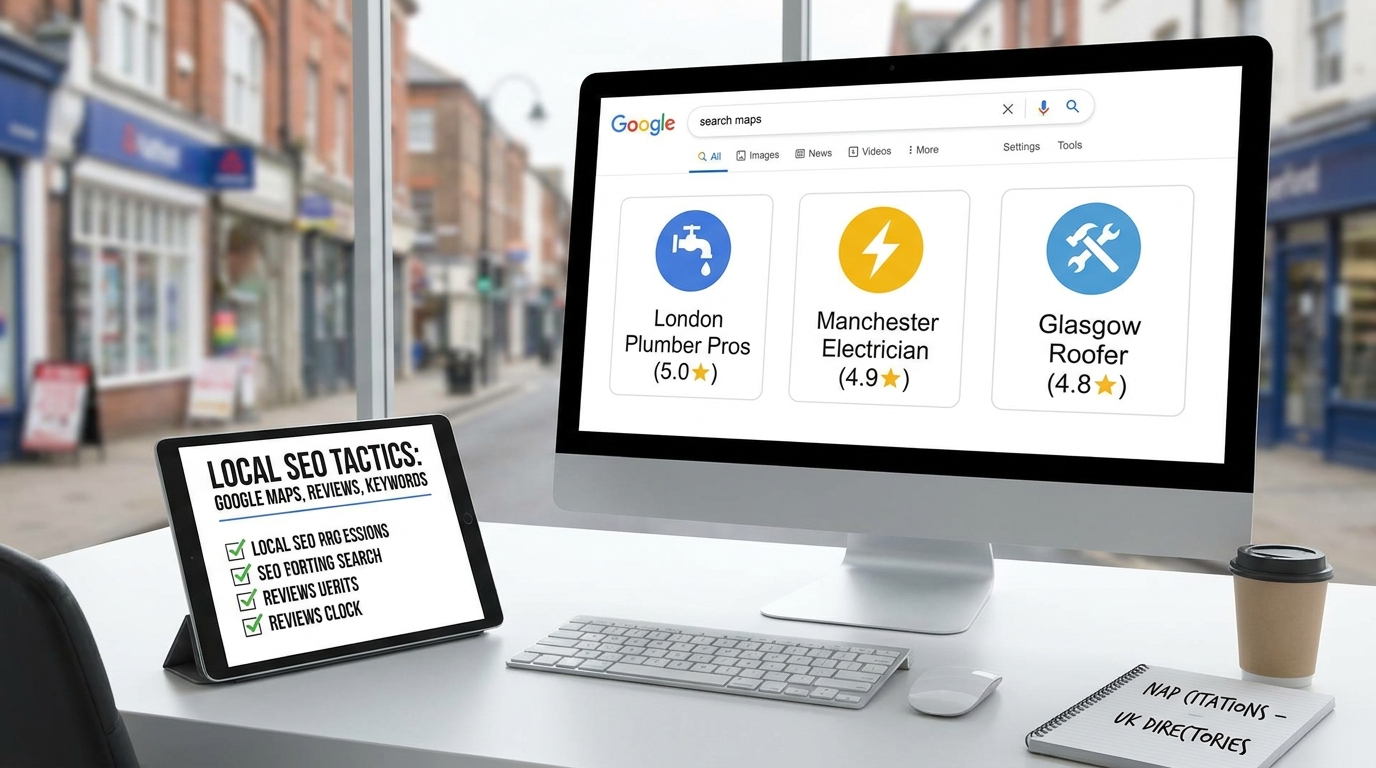
A plumber in Worthing. An electrician in Leeds. A landscaper in Bristol. What do they all have in common? If a local customer searches for their trade right now and they're not showing up in Google Maps, someone else is getting that call.
Local SEO is the practice of making your business visible when people nearby search for what you offer. For trades and service businesses, it's arguably the most valuable kind of marketing you can do. Here's how to do it properly.
Start With Your Google Business Profile
Your Google Business Profile (formerly Google My Business) is the single most important asset in local search. It's what powers your appearance in Google Maps and the local pack, which is the map with three business listings that appears near the top of many search results.
If you haven't claimed your profile yet, go to Google and search your business name. If there's an unclaimed listing, claim it. If there isn't one, create it. Either way, filling it out properly matters more than most people realise.
These are the details you should complete in full:
- Business name, address, and phone number (exactly as they appear on your website)
- Business category (choose the most specific option available)
- Service areas if you travel to customers rather than working from a fixed premises
- Opening hours, including whether you offer emergency or out-of-hours cover
- A description that includes what you do and the areas you serve
- Photos of your work, your van, your team
Google also lets you add individual services with descriptions and prices. A roofing company could list flat roof repair, guttering, chimney pointing as separate services. This helps Google match your profile to more specific searches.
Reviews Are Not Optional
Google uses reviews as a significant ranking signal for local search. More importantly, customers read them. A tradesperson with 40 reviews and a 4.8 rating will win the click over a competitor with 5 reviews almost every time.
The most effective way to build reviews is simply to ask. After finishing a job, send a short text or email with a direct link to your Google review page. Most happy customers are glad to leave a few words if you make it easy.
A few things to keep in mind:
- Never buy fake reviews. Google is good at detecting them and the penalty is not worth it.
- Respond to every review, positive and negative. A polite, professional response to a complaint often impresses potential customers more than five-star reviews alone.
- Spread requests over time. A sudden flood of reviews after a long gap can look suspicious to Google's algorithms.
Use Keywords That Reflect How People Actually Search
People searching for a local tradesperson rarely type something vague. They type emergency boiler repair Chichester or kitchen fitter near me. Your website content needs to reflect these patterns.
For most service businesses, the essentials are a homepage that clearly states what you do and where you work, plus individual service pages for each main offering. If you cover multiple towns, consider a short location page for each one. A single page for bathroom fitting in Worthing and another for bathroom fitting in Brighton gives you a much better chance of ranking in both places.
When writing this content, think about how your customers phrase their problems, not how you'd describe your trade. Someone isn't searching for EICR certification services, they're searching for electrical safety certificate Horsham. Use plain language that mirrors real searches.
Build Citations Across UK Directories
A citation is any mention of your business name, address, and phone number online. Google cross-references these to verify that your business is real and consistent. The more reputable sources that list your correct details, the more trustworthy your business looks to the algorithm.
For UK businesses, the key directories to target are:
- Yell.com
- Thomson Local
- Bing Places
- Apple Maps
- Checkatrade or Rated People (especially for trades)
- TrustATrader
- Your local chamber of commerce directory
Consistency matters here. If your Google Business Profile shows your business as Samson Plumbing Ltd but your Yell listing says Samson Plumbing with a different phone number, that inconsistency can hurt rather than help. Do an audit of your existing listings before creating new ones.
Make Sure Your Website Does Its Part
Your Google Business Profile and your website need to work together. Google looks at your website to confirm the signals your profile is sending.
A few things to check:
- Your name, address, and phone number appear on your website, ideally in the footer of every page
- Your site loads quickly on mobile devices (most local searches happen on phones)
- Pages have title tags that include your service and location, for example: Boiler Servicing in Worthing | Smith Heating
- You have a contact page with your full address and an embedded Google Map
If you're using structured data markup (also called schema), adding LocalBusiness schema to your site tells Google exactly what type of business you are, your service area, and how to contact you. This is a slightly more technical step, but a web developer can implement it in an hour.
Track What's Actually Working
Local SEO isn't a one-off task. Google's algorithm shifts, competitors catch up, and what works in one town might need adjusting for another. Set aside time every month or so to check a few things.
Inside your Google Business Profile, the Insights section shows how many people found you in search, how many clicked through to your website, and how many asked for directions. These numbers are a useful indicator of whether your profile is gaining or losing ground.
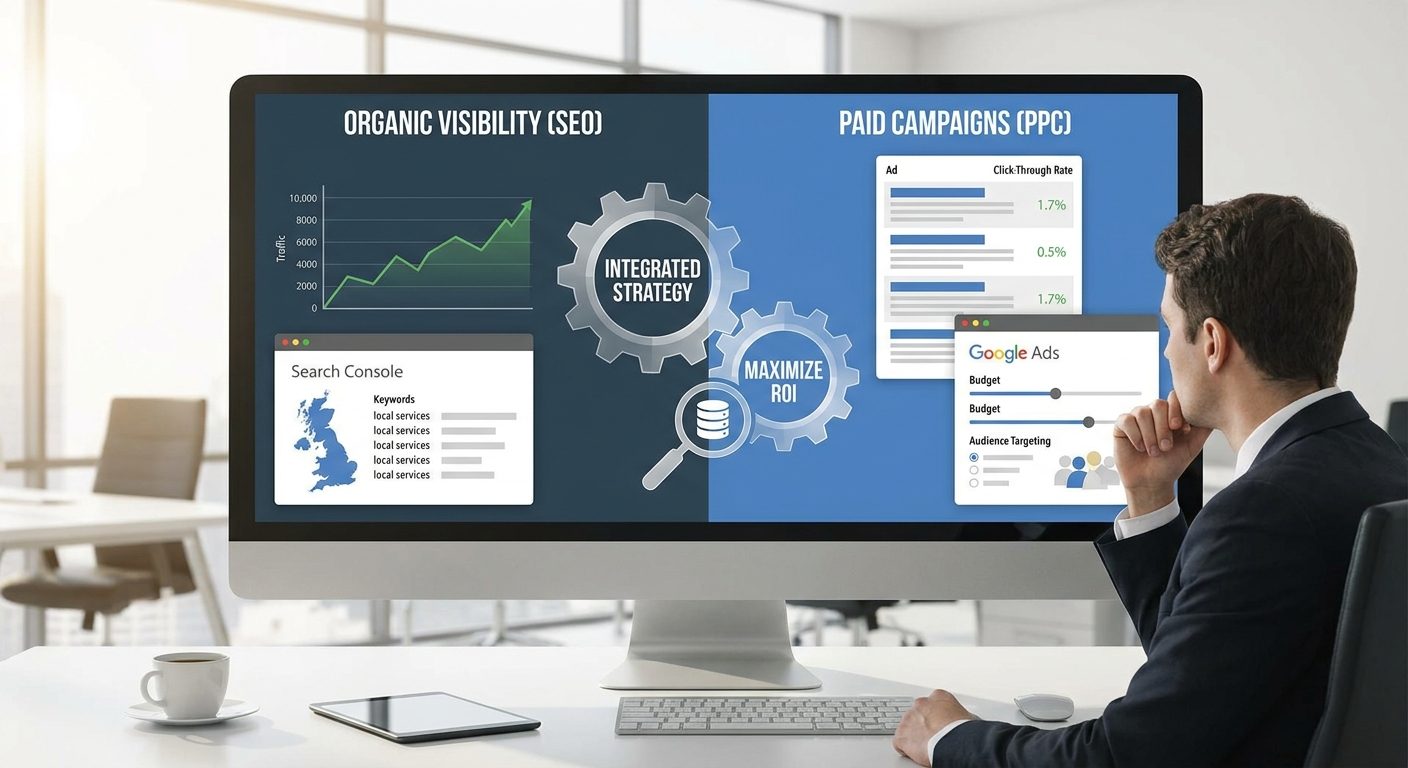
Google Search Console (free to set up) shows which search terms are bringing visitors to your website. If you notice you're getting clicks for a service you haven't built a page for yet, that's a prompt to create one.
The fundamentals here aren't complicated. Claim your profile, earn genuine reviews, write pages that match what local customers search for, and make sure your details are consistent everywhere they appear. Done consistently, this work compounds over time, and the businesses that put it in now are the ones getting called first.